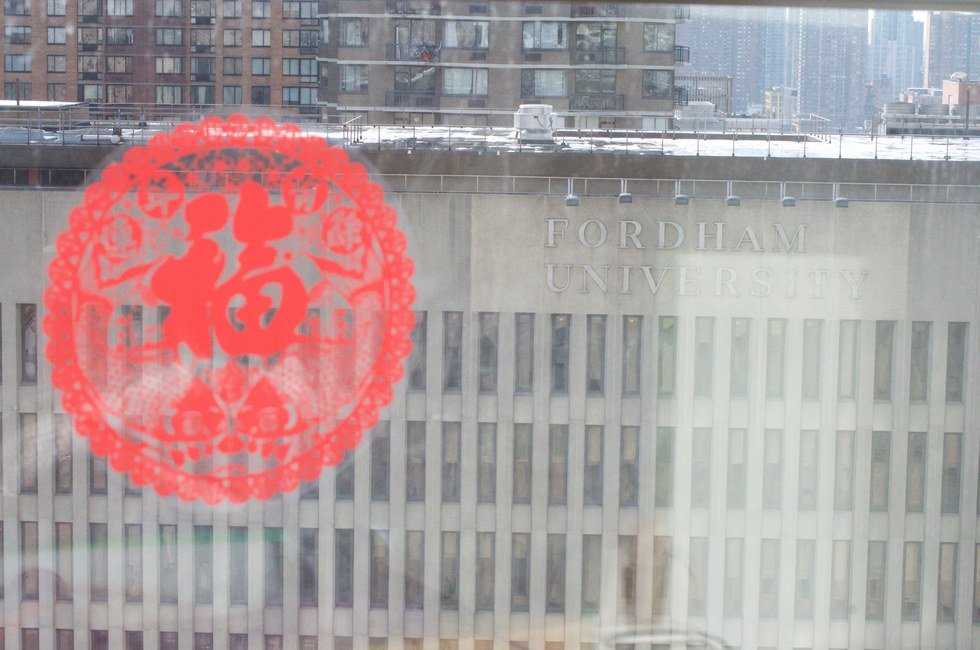
The video below was filmed in late 2015. When it was presented in a Multimedia class at Fordham University Lincoln Center, the American students were intrigued.
“This is so interesting. I’ve never read any articles or watched any videos on international students at Fordham,” said one American student.
Others nodded.
“It makes sense that there’s cultural difference problem for foreign students, but I didn’t know that it’s really a thing,” that student added.
Cultural difference is not the only dilemma foreign students face in America. In Chinese International Students in America, Chinese students have been struggling to find the balance between Western and Eastern culture—acclimating themselves to American culture while maintaining their Asian identity.
In 2016, according to Institute of International Education, over 300,000 international students came to America for education, and there are total 1 million foreign students studying in America. In the same school year, about 20.5 million students enrolled in American colleges and universities, which means that about 14% of the students who will graduate in 2020 are from countries outside of America. However, compared with 14.5% African American students and 16.5% Hispanic students (no specific data for Asian students) in American colleges in 2016, international students are as visible on college campuses but more invisible in media, daily conversations, and campus issues.
Currently, 31% of the foreign students come from China, 14.9% from India, and 5.9% from Saudi Arabia. In 2016, New York University hosts the highest number of international students (15,543), and coming up next are University of Southern California (13,340), Arizona State University – Tempe (12,751), and Columbia University (12,740). Also located in New York City, Fordham University has only over 2,500 international students.
The lives of those foreign students are unknown. Based on simple reasoning, one can easily assume that cultural difference and language barrier must have been their top concerns. However, almost from every perspective of the college life--college assignments, interaction with professors, learning new subjects, making friends, food, and culture--foreign students are loaded with pressure in and outside of school, and those problems are correlated. For example, because English is their second language, foreign students tend to be less active in class, which can result in low participation and accordingly getting lower scores and increasing the course difficulty. In their daily lives, due to cultural differences, they may find it hard to have common grounds with American students. In the end, it is not unusual to see international students forming their own cliques and speaking their native languages.
That said, the problems foreign students faced are not widely noticed, and on campus, few will speak out for them. When facing language and cultural barriers, foreign students go back to their comfort zone and American students fail to give them a hand. When Trump is attacking illegal immigrants, legal immigration that foreign students care about the most is not usually mentioned by American students. During class discussions, foreign students refrain themselves from speaking out their ideas, and professors sometimes take it as a sign of “uninformed.”
In America, a country that honors diversity and inclusiveness, international students, the most invisible student minority group in colleges and universities, should not be removed from or ignored in the discussion, and both sides, foreign and American students, should make the effort.