Recent events including Trump's immigrant ban have inspired me to share this paper that I wrote. I could share my anger, my confusion, my sadness and terror, but this paper is informative and has the highest chance of educating people and helping them to better understand. Enjoy!
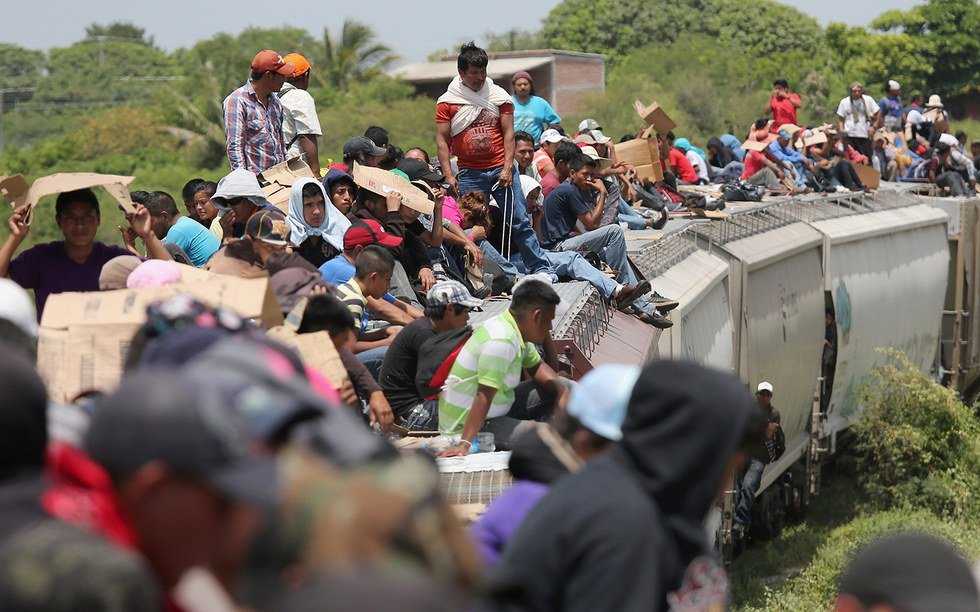
Miller, 18, works at a restaurant in a small coastal town in Massachusetts. He currently attends the Lynn English High School, is an aspiring police officer, and a witty young adult. Those who know him can attest to his kindness, his sense of humor, his drive, and his compassion for those less fortunate than him. Upon meeting Miller, his astounding humanity is apparent. He has achieved honor-level grades at school, works four days a week to support himself and is loved by all his friends and family. Historians say that the United States is currently in its third large-scale wave of immigration as millions of laborers pour in from Central and South America, often leaving everything they have ever known to earn a better life for themselves and their loved ones at home. No one knows this better than Miller, who left his homeland of Guatemala at the young age of 16 to emigrate by himself to the United States. Rampant stereotypes and fear of immigrants have resulted in cruel and unfair treatment of these dedicated and kind-hearted workers that do not reflect the true hard work and dedication they display every day.
“I emigrated to America last year because I have goals that reach them here,” says Miller, in very broken English, “There are racist people but I must face it, I do not worry about being deported because I have a residence now, and Trump does not scare me either.”
Miller explains that he has just been approved for a Green Card, a process that is difficult for immigrants that do not have family in the United States, according to the United States Citizenship and Immigration Services. “I came here without the Green Card. I have friends who don't have one and I am very scared for them,” he says, likely referring to many of his co-workers, who are living in constant fear of deportation. Here illegally or not, immigrants from South America are subject to cruel stereotypes and misconceptions about their character, their intentions, their impact, and frankly, their race.
A common misconception about immigrants from Central and South America is that they are violent and drug-ridden when in actuality over 76% of immigrant crime was related to immigration status. Their crimes are anything but rampant — in fact, undocumented immigrants have a higher incentive than that of U.S. citizens to not commit crimes: “Immigrants in general — unauthorized immigrants in particular — are a self-selected group who generally come to the U.S. to work. And once they’re here, most of them want to keep their nose down and do their business, and they’re sensitive to the fact that they’re vulnerable,” says Marc Rosenblum, deputy director of the U.S. Immigration Policy Program at the Migration Policy Institute. Data from the 2010 American Community Survey shows that roughly 1.6 percent of immigrant males ages 18 to 39 are incarcerated, compared to 3.3 percent of native-born males — that’s more than double. Another common stereotype is that immigrants are stealing jobs from Americans and are driving down wages.This, however, is untrue: “immigration laws that allow big businesses to exploit workers who lack legal status are what drive down wages for all workers.”
The aforementioned stereotypes are detrimental to immigrant success. These misjudgements of immigrants have widely affected the way they are treated: “If you think Mexicans and Muslims and other foreigners will eventually fit right in then you are as big a part of the problem as they are,” says Frosty Wooldrige, an anti-immigration activist ("Examples of Racism from the Anti-Immigrant Movement in 2013."). Immigrant labor is often exploited and the people themselves are paid less because of their lack of citizenship and vulnerability to being used. They live in fear because they do not have legal documents stating their residency in the United States, yet the path to obtaining a Green Card of citizenship is nearly impossible. This unfair treatment of immigrants cannot go on, or it will demolish any chance of their success.
The true, hard work and dedication of immigrants is not honored but it is evident. Bright and optimistic, Miller shares, “My goals are to create a foundation to help children and hospitals, and also be an FBI agent!” Miller sends half his income to his family in Guatemala and uses the other half to support himself and his humble lifestyle here in the United States. His greatest fear of poverty and hunger is already true in many parts of the world, including his homeland, and it is his goal to provide every child in Guatemala a warm home and food to eat. “The hard part of living here is to work and study at the same time.” Miller works four days a week, sometimes until after midnight. Often, he arrives home after work only to do three hours of schoolwork — a sign of Miller’s dedication. Miller’s character is not unusual for immigrants--this attitude of hard work and devotion is one that many undocumented immigrants possess that keeps them motivated in even their hardest of times.
Overt stereotypes and fear of immigrants have resulted in the mistreatment of these dedicated workers that does not reflect the hard work and effort they display on a day to day basis. These misconceptions have inhibited immigrant success in the United States of America and have only insinuated that racism is normal and acceptable. To people like Miller, this racism could shape their lives and determine the future of themselves and their loved ones. To assume is to judge, to judge is to refuse, and to refuse is to close the door to progress.