
"And sometimes I have kept my feelings to myself because I could find no language to describe them in." -- Jane Austen, Sense and Sensibility
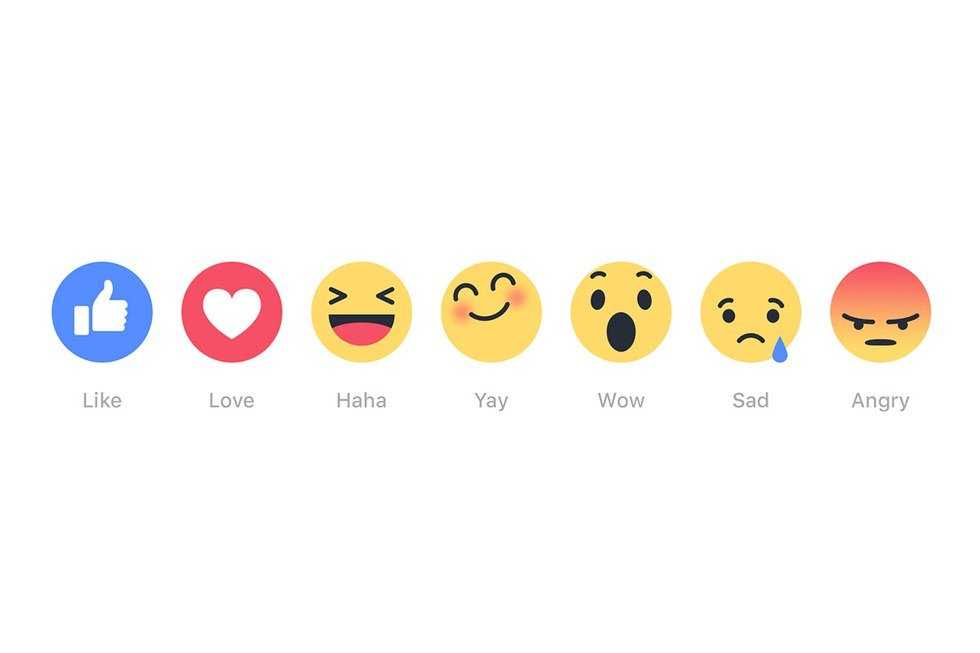
Last week, Facebook recently unveiled its reaction emojis and people went a little crazy. For me, while I liked the former Facebook format, I could see the challenges of only having a "like" button. There would be times where someone posted a status about the loss of a friend or a similar life challenge and it would be hard to gauge whether or not it would be appropriate to "like" that status. Even with changes, which were in response to numerous complaints about the lack of a "dislike" button, people have decidedly taken issue. One issue that grabbed my attention was the possibility that the Facebook reaction emojis could contribute to the loss of language.
Comparing the reaction emojis to Newspeak in George Orwell's classic, 1984, the author pulled out this quote from the novel:
"It’s a beautiful thing, the destruction of words. Of course the great wastage is in the verbs and adjectives, but there are hundreds of nouns that can be got rid of as well. It isn’t only the synonyms; there are also the antonyms. After all, what justification is there for a word which is simply the opposite of some other word? A word contains its opposite in itself. Take ‘good’, for instance. If you have a word like ‘good’, what need is there for a word like ‘bad’? ‘Ungood’ will do just as well -- better, because it’s an exact opposite, which the other is not. Or again, if you want a stronger version of ‘good’, what sense is there in having a whole string of vague useless words like ‘excellent’ and ‘splendid’ and all the rest of them? ‘Plusgood’ covers the meaning, or ‘doubleplusgood’ if you want something stronger still. Of course we use those forms already. But in the final version of Newspeak there’ll be nothing else. In the end the whole notion of goodness and badness will be covered by only six words -- in reality, only one word...‘Don’t you see that the whole aim of Newspeak is to narrow the range of thought?’”
I took issue with this comparison for a number of reasons. First of all, language is not simply verbal. We express ourselves with our expressions, our art, and our movements. Oftentimes, these modes enhance our thoughts and creativity, rather than limiting them. Perhaps comments like, "I LOVE this photo so much" might not be expressed as much on Facebook because of the redundancy but such loss should not be equated with an Orwellian society. Additionally, I find it hard to believe that these new Facebook reactions would hinder some of the Facebook political arguments we bear witness to from time to time. So often we want to blame emojis or texting or Twitter for the loss of the variety of language but we too are culpable. It feels easier to blame technology's advancement as the direct cause of the average American's attention span becoming equal to that of a goldfish. If society's current relationship with communication and technology troubles you, challenge it. Learn new adjectives to describe experiences (you can witness the hearts of English professors rejoicing now), read books for pleasure, choose to communicate in a way that convenes a better level of expression. I do find complacency and antipathy to be issues that plague our generation and contribute more to the loss of language than Facebook's new reaction emojis. Worry less about the overuse of pictures to describe feelings on social media and worry more about finding a passion and staying curious.