
Fitness enthusiasts, especially new lifters, pride themselves with how hard and how often they workout. Fitness celebrities online boast about monster workout sessions that can last up to 8 hours for a single muscle group. Fitness is one of those things where it is usually better to work smarter not harder. Too many people workout 7 days a week for a few hours every day and sooner or later the burnout will come. Your body becomes more prone to injuries, your numbers start to go down, and your workouts in general start losing the fire that they once had.
Some common signs of overtraining include:
- Higher resting heart rate than normal: Overstressing the body causes the nervous system to be strained. Too much time in the pre-workout fueled fight or fight response can lead to a strained nervous system. This has negative effects throughout the body, including a higher resting heart rate.
- Severe muscle soreness: Having some muscle soreness after a workout is normal. An excessive amount of soreness could be an indicator of severe muscle damage called Rhabdo, which can be extremely harmful to the body, especially the kidneys.
- Problems getting a good night sleep: This is tied in to a higher heart rate and an overactive nervous system.
- Becoming sick more often or more easily: Too much training can weaken your immune system which can make you become sick more easily.
- Higher amount of injuries/aches and pains: Overtraining stresses the muscles, tendons, and ligaments. When you train too frequently you become numb to your bodies indicators of stress and fatigue. This can cause injuries often minor but sometimes major injuries can occur due to overtraining.
- Decreased motivation: Spending too much time in the gym and not enough time recovering and relaxing can make working out seem like a chore. If you don’t look forward to the time you have to exercise, your workouts will start to lack the appeal they once had.
- Decreased performance in the gym: Probably the biggest issue people have with overtraining is a lack of performance. Chasing a new PR or goal in the gym can be a great motivator, but without having balance in the gym, it is easy to try so hard to reach a goal that you actually do more damage to your body than good. Your ripped up muscles aren’t recovering from the last workout and all you are doing is tearing them up more.
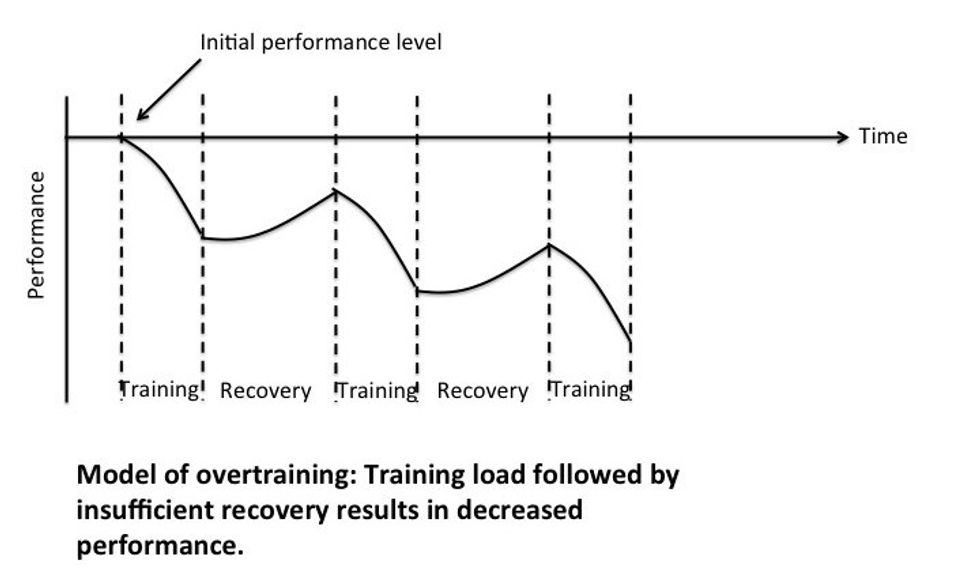
Tips to avoid overtraining:
- Always have a balanced workout program. You can have an emphasis on a goal or weakness, but without an overall balance to the system it is easier to overtrain
- Get enough sleep
- Recover properly
- Make sure that you are eating enough high quality food to fuel your progress
- Have built in rest days or active recovery days
- Occasionally switch up the training stimulus
Remember: taking a few days off from the gym doesn’t have to be a bad thing. You may realize that by taking a few more days of the week away from the gym your body will actually grow faster than it did when you spent more time in the gym.