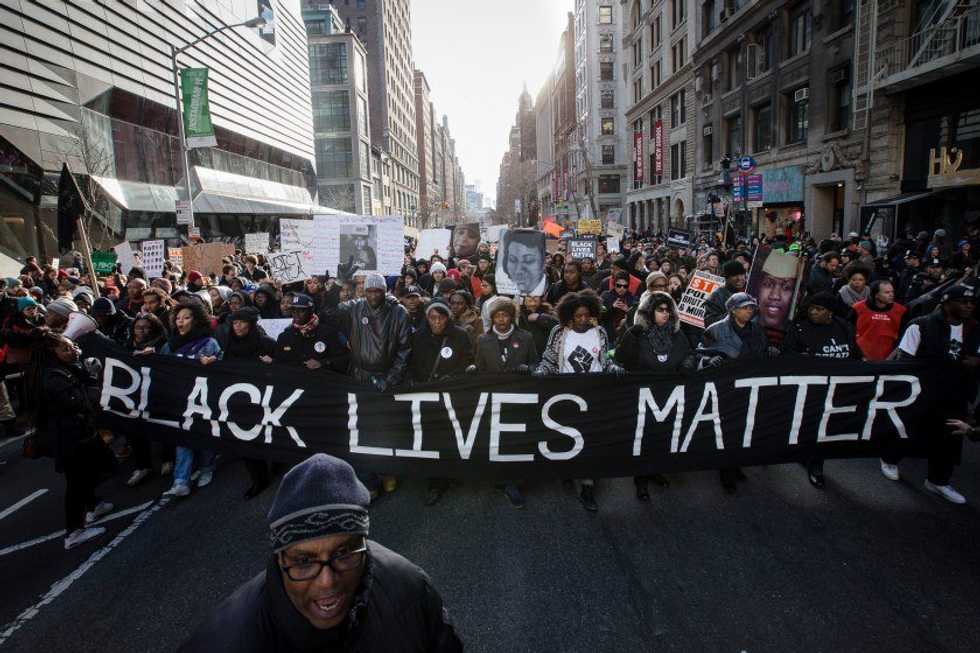
Police brutality towards people of color in the United States has been a growing epidemic for too long. It is vital to acknowledge the notorious war between authority and African-Americans during the Civil Rights Movement to the scrutiny being placed on police today in matters involving the deaths of black people such as Michael Brown and Sandra Bland. It was over fifty years ago that this country saw its first Civil Rights Act being passed...
But it was just last year that Freddie Gray died in police custody.
It was just last year that Sandra Bland was found hanged in a jail cell after being subjected to racial violence brought upon by Waller County police.
It was just last year that at least “120 black, unarmed individuals” were fatally shot by men and women who are employed to keep the nation’s communities safe.
With people of color feeling unsafe to walk through their own neighborhoods, to express their opinion, to feel comfortable in their own skin- the one that has been persecuted since what seems to be the beginning of time- the options to demonstrate their feelings toward the systemic oppression are limited. Fortunately, black artists have been able to use their notable platforms to provide odes and melodies to reverberate the idea that people of color stand in unity and nothing will come between them. Whether that song is either one of pride or of retaliation, the alluring harmonies leave lasting impacts that a person may carry with them forever.
Specifically, in response to police brutality, music lends a hand to the emotionally wounded. It is something about the repetition of a chorus that can engrave itself into any listener’s brain, unlike the familiar statistics broadcasted on television every day that this society has become numb to. Musicians use words and instruments to paint pictures, whether they are violent or hopeful so that any demographic can understand the implication; however, this message is extended further when artists perform their pieces. In reference to the 1960’s and even today, music has played an enormous role in mending the wounds of the oppressed. This idea is only heightened when artists of higher social currency use their platforms to do good and shed light on social and political issues.
James Brown and Beyoncé are just two of the many artists over the years that have made it a point to address the widespread and everlasting racial injustice through songs that have created media frenzies and instant online backlash. I'd like to compare the two to shed light on their (unfortunate) similarities.
Despite the decades between, the similar themes and song structure between Beyoncé’s Super Bowl performance of “Formation” and James Brown’s Soul Train rendition of “Say It Loud (I’m Black and I’m Proud)” showcase the lack of steps forward being taken in rectifying police brutality against people of color. James Brown, a man who always had his finger on the pulse of black empowerment and ultimate groove, utilized the structure of a mantra-like anthem to capture the essence of the problem surrounding heightened police brutality in the wake of Martin Luther King Jr.’s assassination. This method allowed for its targeted African-American audience to feel the power and undermined pride of being a person of color. With Beyoncé, there is a call-to-action weaved through the anthem that doesn’t stop at empowering people of color but addresses police forces and groups of people who are ignorant to the lack of equality between the races.
In 1973, James Brown performed his most controversial hit, “Say It Loud (I’m Black and I’m Proud) live on Soul Train. James Brown in his striking plaid suit preached into the microphone what people of color needed to hear at the time: declare pride for who you are despite the surrounding political turmoil. Soul Train was more or less a safe haven for rhythm and blues, funk, jazz, and gospel artists to pour their soul into what they do until they had nothing left. James Brown deemed the "Godfather of Soul", was at a peak in his music career when he released his hit and nonetheless drew an enormous, lively audience to his live performance.
Now in 2016, this nation faces the same racial upheaval. With her hit “Formation”, Beyoncé caused an uproar by performing this black-lives-matter laced anthem at Super Bowl L. With a couple dozen backup dancers dressed in Black Panthers-risque costumes, the music mogul had her mind set on making her performance a fiery response to the ethnic inequity brought on by police forces nationwide. She completely shattered the holiness that is Super Bowl Sunday. In other words, she didn’t care that it was America’s most prized afternoon- it was time to take action.
The issue between the two art pieces is not that one is better or more important than the other, but that the topic of each performance is in light of an issue that should have been resolved decades ago. James Brown’s anthem was televised and viewed by an audience that, by a majority, had no animosity or hatred toward people of color. It was where the soul-hungry found refuge. Musicians were welcomed and encouraged to let loose on the Soul Train stage where any message being reverberated was one worth listening to. Legs flying across the dance floor, James Brown’s message was interpreted the way people of color have always done funkiest- through grooving to the music.
On the other hand, you have Beyoncé’s vision to simultaneously capture black pride and growing animosity between police forces and African-Americans for the first time- in Black Panthers costumes- for an audience that is primarily white, male, and conservative. This is an entirely different approach to the epidemic. The Black Panthers stood for racial equality and linked arms to create a defense from racist police oppression. Although both performances sparked controversy during the time they were aired, Beyoncé’s goal to make her stance known on the growing issue of police brutality is a step up from James Brown’s doing what he did best on a stage familiar with topics of this sort.
With that being said, it is a sad fact that police brutality is not something of the past- or is even a part of the past to begin with. James Brown releasing “Say It Loud” was a pivotal moment in not just music history, but in the movement to claim civil rights. He was a pioneer in using music as a method of retaliation against Uncle Sam in light of Martin Luther King Jr. being assassinated four months prior to the creation of the song. It was so timely and essential to the healing and growth of people who had lost their leader at a time where progress seemed to have picked up.
Now that we are in 2016, with police shooting black people at consistently high rates, a woman with an immense amount of influence internationally is exactly what people needed. The way she commanded attention at the beginning of the performance, clad in attire similar to the Black Panthers, is exactly what the people needed to see. The only issue with this is that James Brown essentially did the same thing on the Soul Train stage, demanding that his voice was heard and for it to not be taken lightly. It is not that black people haven’t been in formation for the last fifty years, ready to fight against the current for rights and respect, but the reality that people of authority still feel entitled to bring them down because of the color of their skin. That is what makes James Brown a pioneer to protest art regarding these tragedies because music can be so much more than something to dance to- it can be something to chant.
“I’m black and I’m proud” was a phrase reiterated by the Black Panthers who are unofficially the reason behind Brown’s “sudden interest” in the Civil Rights Movement in the late 60’s, when his hit single became a turning point in black music. The simplicity behind his chorus which is just the reiteration of the timeless lyric “Say it loud, I’m black and I’m proud” speaks volumes within itself. Written in light of the assassination of Martin Luther King Jr., African-Americans needed that empowerment dipped in his signature fierce funk.
The chorus for “Formation” wastes no time expressing the pride she feels for being black by stating “I see it / I want it / I stunt / yellow-bone it”, with most importantly the line “yellow-bone it” which refers to a black person being light-skinned. This particular line communicates the idea that despite the authorities stopping at nothing to bring this body of people down, they will take it in stride to show what they are made of. As the chorus repeats “'Cause I slay”, the central part of the chorus is when she exclaims “Okay ladies now let’s get in formation.” This refers to a sort of resistance practice of black women standing together before a movement takes place. It is as if the alignment of powerful and adamant black women is the calm before the storm.
It goes without being said that music can start a revolution and act as a backbone for a variety of different protests. Dependent on the nature of the issue, one may gravitate towards a song that proves itself to be a mantra-like anthem that acts as a solace for those suffering. As an issue continues to plant itself into society and grow into something that seems bigger than a body of people, songs that list the injustices in a call-to-action manner is an art form that people can channel their anger and animosity through. Nonetheless, music is inevitably one of the greatest art forms due to its timelessness, which in this case is a hindrance when it comes to music being created in light of police brutality and racial inequality.