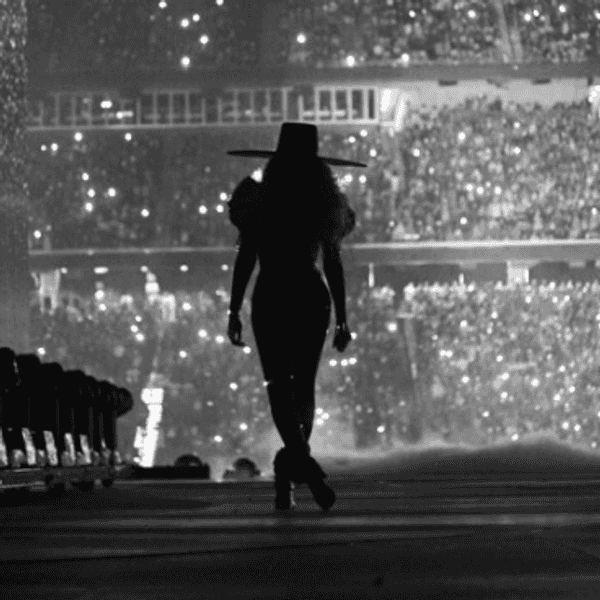
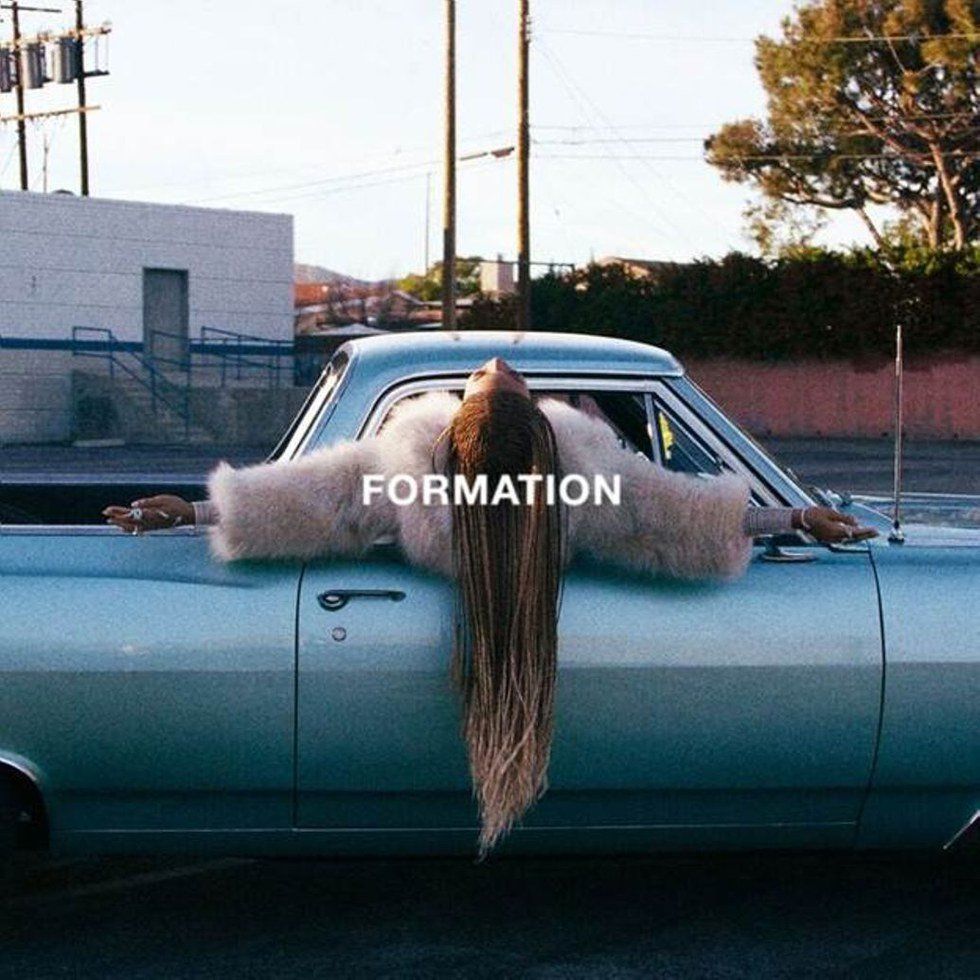

This past Saturday, Beyoncé graced us with a new single and music video that could very well be America’s new pro-black anthem. Despite the slight controversy over a “stolen scene,” Beyoncé’s message is clear: Black culture and black lives prosper.

First and foremost, “Formation” seems to be a tribute to Beyoncé’s roots and Black culture, specifically Louisiana. “My daddy Alabama, Momma Louisiana / You mix that Negro with that Creole make a Texas bamma.” The first scene of the video shows Beyoncé on top of a sinking police car amid flooded houses, alluding to Hurricane Katrina. Throughout the video there are scenes of a Black church, a parade, and a wig shop, locations all prominent in Black culture. She even shouts out “cornbread and collard greens.”
Not to mention, Messy Mya and Big Freedia (the Queen of Bounce, a dance originated in Louisiana) is on the track. Regardless of how much success Queen B obtains, she’ll never forget where she came from. It's through her culture that her success originated: The industry didn’t make her, Houston did. “Earned all this money but they never take the country out me / I got hot sauce in my bag, swag”

Not only is this a praise of Black culture, Beyoncé is also empowering herself, along with other women. The dancers in the video are all shades of brown and rock natural hair. “I slay, OK, I slay OK / We gon’ slay, slay”

Beyoncé’s lyric, “I like my baby hair, with baby hair and afros / I like my Negro nose with Jackson Five nostrils” defies the social norm of black women needing to have anything but kinky, curly afro hair, and affirming that all of the characteristics of black people are beautiful. All throughout history, there has been such a pressure on people of color, and especially black people to look more white and exaggerating their features like in minstrel shows. For example, hair relaxers, weave, skin lightening treatments, etc, were created to make black people, especially women, less black. Granted, many black women today wear weave proudly and simply because they can, and it does not suggest they have an insecurity with their natural hair.
Beyoncé is also reminding us of her power while simultaneously empowering others. “You just might be a black Bill Gates in the making, cause I slay / I just might be a black Bill Gates in the making, cause I slay.” Although there are still some social structures and norms that continue to hinder people of color, in recent years, music has called out and pushed back at these social structures. “Formation” definitely pushes back at these social norms and is, in a way, reminding us of our power. “OK, ladies now let’s get in formation.”

Finally, Beyoncé uses her platform to address Black issues that have been invading the Black community. Beyoncé has blurred the lines between entertainer and activist. Since the recent assassinations by police on unarmed Black men and women, like Michael Brown, Trayvon Martin, Rekia Boyd, Eric Garner, Sandra Bland and the list (unfortunately) goes on and on, Beyoncé has shown a solidarity with the Black Lives Matter movement. Over the last few scenes of her video, Beyoncé shows a newspaper with Martin Luther King, Jr, a little boy dancing in front of a line of police officers, and graffiti wall that reads “Stop shooting us.” Although all these scenes are significant, the “hands up, don’t shoot” movement by the police officers, on his call, is so powerful. It shows a very prominent belief that Black people are taking ownership of everything that is theirs, and in doing so, are showing that this movement is here to stay.

Through this video, Beyoncé has showed the power in Black culture and especially within the Black community. In addition to empowering Black women, Beyoncé has also managed to empower herself by invalidating harmful stereotypes towards the Black community and embracing those differences, all while highlighting crucial and significant moments of our time. The very last image of the music video shows Beyoncé on top of the car sinking into the flooded waters. Perhaps she is trying to communicate that we float and sink as a whole. All of us. Together. And we will die for our movement.