

Every four years, Americans from all walks of life come together to bitch about the way our country is run.
Welcome everyone, to the presidential campaign of 2016.

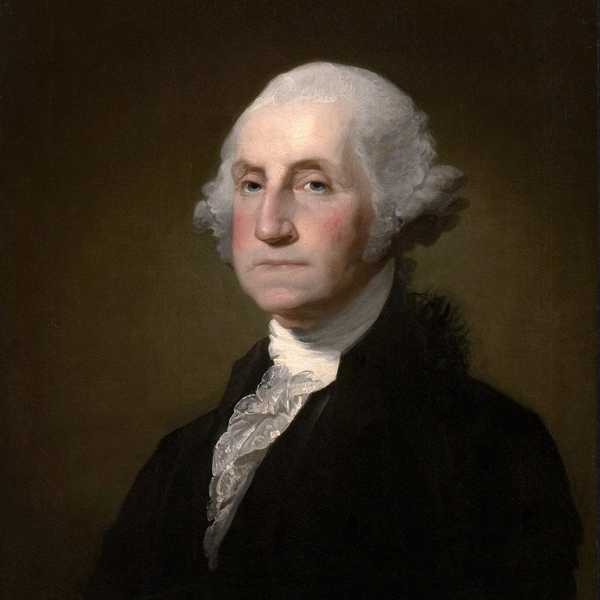
George Washington warned about the political party system from the very beginning, suggesting such a system may unnecessarily divide a government that should strive for unity. In this day and age, it’s not hard to see why. For decades, American politicians have been playing tug-of-war on an endless list of topics and yet continually fail to find concrete solutions for most of our countries most pressing issues. However, despite their uncompromising nature, politicians have been able to set their differences aside to be able to agree on one matter: Washington sucks.
Even America’s finest politicians, who have dedicated their lives to government expertise, have absolutely no problem bashing the very institution they are apart of. This mentality was reflected clearly in the opening statements of the Republican Debate on September 16th.
Ted Cruz was among the first to contribute to this political gangbang when he said, “If you’re fed up with Washington, if you’re looking for someone to stand up to career politicians from both parties, I’m the only one of this stage who has done that over and over again and if we stand together, we can bring America back.”
This was furthered when Ben Carson said, “I am very concerned about the future of our children, the direction of our country is one that does not pretend well unless, we, the people intervene and retake our rightful place at the pinnacle.”
Later, Carly Fiorina chimed in: “We are at a pivotal point in our nations history where our nations potential is being crushed by a government grown so big, so powerful, so corrupt, and a political class that refuses to do anything about it.”
Chris Christie, however, took the most dramatic stance by panning to the (almost exclusively republican) crowd and asking them to raise their hands if they believe that in an Obama-Clinton America, their children will have a better life than they did. When not a single audience member raised their hand, he furthered, “In 7 short years this president has stripped away their trust and their faith and belief that the next generation will have a better life. He has stolen it from us, and I’m gonna take it back.”
The constant libel that is overtly present in these debates is impossible to ignore. The “campaign against Washington approach,” is one that is persistently used by politicians to gain legitimacy in the eyes of the American public.
Based on this self-deprecating language that is used, an outsider to the nation would think that America is constantly on the brink of a major world crisis. Yet, in the minds of Americans, we may as well be.
In fact, later in the debate, Carly Fiorina sited that nearly 75% of Americans believe that the government is corrupt. Comparably to the supposed 55% of Syrians who think the same about their government, this seems like a bit of a dramatic overstatement on the part of the public. (Freedom House 2013 and Media Freedom Status).
According to European Professor Adam Fairclough, an expert on American history, this disconnect between the American people and their government has a lot to do with the mentality of “government by the people,” that has been embedded into the minds of Americans since the very beginning. He said, “Americans lack the respect for government that Europeans have. There is an ideal that anyone’s opinion is as good as anyone else’s, which makes for a great democratic conversation but not a functioning government.”
This mistrust in Washington has gone so far in fact, that those who are new to the political game are able to exploit this “anti-establishment image” as the entirety of their campaign front. The most notable example of this, of course, is the one and only Donald Trump. Despite his lack of experience, knowledge on relevant policies, realistic solutions to essential issues, and manners, Trump has stumped political experts everywhere with his substantial lead in the polls for the last several weeks over seasoned politicians.
Fairclough went on to explain that this anti-government mentality may have a lot to do with the roots that American democracy grew from. In America, strong nation states came before a strong federal government was established. In contrast, in Europe a strong central government was always present and democracy came into the equation later.
Americans were also the pioneers in Democracy at a time where other forms of government were undoubtedly corrupt. Lincoln believed that a monarchy could never come to reflect a republic and that the people needed to play an essential roll in government for it to be fair (Fairclough).
Ironically, today monarchical governments house some of the most progressive cities in the world. A prime example of this is Amsterdam, which has been governed by a monarchy since Napoleon appointed his brother king of The Netherlands in the early 1800’s.
In Europe, the common people are not nearly as active in the government as the citizens of America are. They vote on substantially less elective positions, even the Mayor of the city of Amsterdam is directly appointed by the current monarch. Despite this, only 33% of people in the Netherlands believe that their government is corrupt, one of the lowest percentages across the board (Freedom House 2013 and Media Freedom Status).
Amsterdam boasts a reputation of tolerance and has shown it to be an effective governing style. In stark contrast to the stereotypical concept of a monarchy, the Dutch government prides itself on their dedication to the ideal of individual right, which has been the inspiration behind many of its most controversial policies.
For example, the Dutch government was the first to legalize gay marriage, soft drugs, prostitution, and assisted suicide, all things that remain raging social issues in the United States today. After they were passed, the community as a whole immediately embraced these laws with little to no resistance. Overall, there is a unified belief that if you cannot make a problem disappear, than it is best to regulate it and make it safe. Ignoring such issues only pushes the practices underground where it becomes more dangerous.
Babs Boter, current Amsterdam resident and Emerson Professor for the college’s international program, says the following in order to explain why the Dutch government reaches compromises on controversial issues more easily than the US: “Our country has a long history of what is now called the “polder model”: a political model that is focused on agreement, harmony, mutual understanding and compromises. Actually, those politicians who are best at working in this polder model are the most successful.”
While Boter admits that she would like to see the mayor of Amsterdam be elected by the people, she says that she basically trusts the local government and their judgment.
With this being said, American people are given more opportunities than anywhere else in the world to participate, and given far more power from the government than perhaps we deserve. John Locke, in his Second Treatise of Government, emphasizes the role and essential power of the common people in a Democracy. He assures that the community may be said to always be the supreme power, as opposed to the federal government.

Ironically, though we live in a country whose government thrives upon the unity and compromise of the people, America is a country of extremes. Our political parties are in a constant state of opposition. The American people pride ourselves on freedom, and simultaneously complain of corruption.
Then, when we are asked what is wrong with our system, we do not look at ourselves and instead blame the nameless, faceless monster of “Washington,” who is just telling us what we want to hear.
What we have failed to realize in the midst of our constant complaints, is that if the government is truly corrupt, then it is by definition, our fault.
Since Donald Trump launched the news of his presidential campaign, Americans have rallied behind his Make America Great Again slogan. Perhaps it is not that America stopped being great, but that the people, who were entrusted by our founding fathers to guide this country into the future, have become our government’s greatest enemy.
The founding fathers entrusted the people to rise up and take control of the way their country is run. In the presidential race of 2016, politicians are calling for the same. If the public wants to see a change, then we need to take a leap of faith, and follow the call of “Washington” for once.