
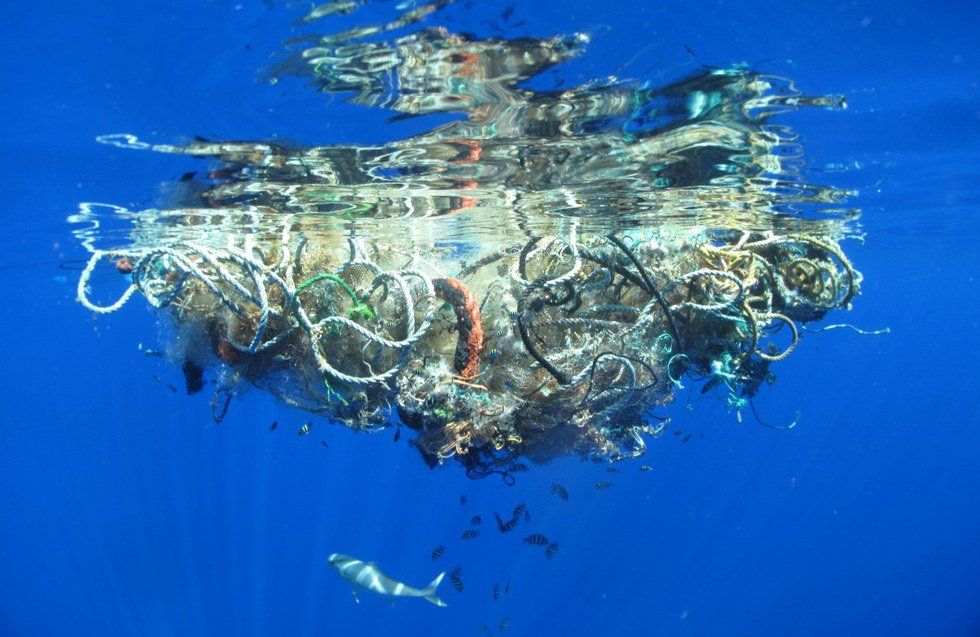
The Pacific Garbage Patch is a rapidly growing environmental, health and economic threat to the entire planet.
It was last calculated that 8 million tons of plastic enter our oceans every year. The trouble with plastic is that it does not biodegrade. It takes at least five-hundred years for plastic to break down completely. Meaning, the amount of plastic we put into our oceans annually far exceeds the rate of degradation. Most of the plastic entering the ocean will most likely end up in the Pacific Garbage Patch.
The Patch is formed by the North Pacific Gyre. The gyre is comprised of four major oceanic currents that meet in the Pacific Ocean between the North American and Asian coasts. The water inside of the currents circulates slowly, causing debris to accumulate in the middle.
This area of the Pacific Ocean is home to one of the largest ecosystems on Earth. Plastic can have a direct effect on the organisms within this ecosystem through ingestion of entanglement. As the plastic breaks down, it gets closer to the size of phytoplankton, which lay at the bottom of the ecosystem's food chain. The plastic is then ingested with the zooplankton causing toxins to bioaccumulate up the food chain, which ultimately will effect humans. Plastic currently outnumbers zooplankton at a ration of six to one in the Garbage Patch. Plastic also leeches these harmful toxins into the water where they are then absorbed through the tissue of marine organisms.
Plastic found in the Pacific Garbage Patch can also cause negative health effects of humans. Bioaccumulation of plastic up the food chain has already been discussed but, let's break it down further. A filter feeder consumes massive amounts of plastic mistaking it for plankton. A larger fish eats the filter feeder and an even larger fish eats that. This continues all the way up the food chain until a fish ends up on one of our dinner plates. Why is this harmful? Plastic contains chemicals such as plasticizers and pesticides that are proven carcinogens. If the problem of plastic in our oceans goes unchecked, the result will be an increase in cancer cases.
Along with adverse environmental and health effects, plastic in the Pacific Garbage Patch has negative effects on economies around the world. This part of the Pacific Ocean is an important area for international trade. The propellers and intake valves of large shipping freighters can be destroyed by the plastic floating in the water. This area of water is home to another important industry, fishing. Fisherman want to avoid areas of highly concentrated plastic so they fish where there are less fish, warranting a smaller catch. If they choose to fish where the catch will be larger, it is likely that a large part of the catch will be plastic.
There are no current international policies in place that address the Pacific Garbage Patch. There are smaller initiatives emerging from several smaller entities and private organizations. In 2014, California created legislation that banned single-use plastic bags from all of the state's large retail stores. In order to get any type of bag at a store, there is a 10 cent minimum fee. So far, the initiative has been successful in encouraging California shoppers to use reusable shopping bags. Private organizations all along the West Coast of the United States are educating their communities on the dangers of the Garbage Patch.
The way to reduce the size of the Garbage Patch is to reduce the amount of plastic consumed around the world. Ultimately, an international policy will need to be developed in order to make a drastic impact on the size of the Patch. In coming years, it will be imperative for local and state governments to take action. They have a responsibility to educate the public and provide incentives to reduce plastic consumption. This issue can't be addressed overnight but, with a little help from people worldwide, we can begin to conquer the Pacific Garbage Patch.