


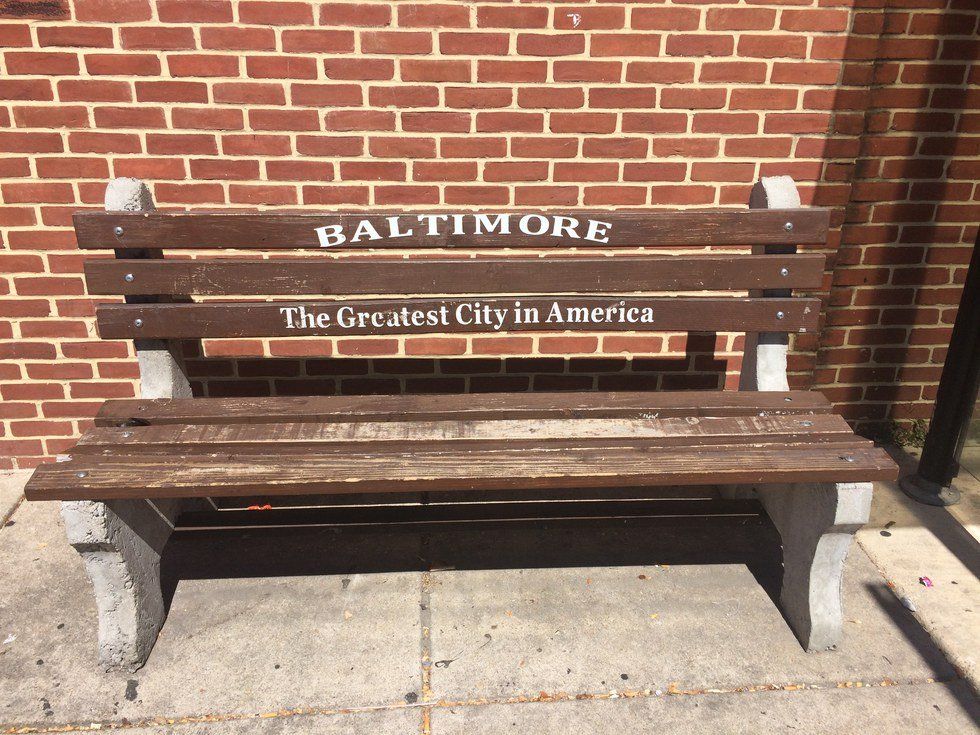
The City of Baltimore has undergone many nicknames - “Charm City” and “Baltimore Is Best.” If one were to visit the Maryland city today, every bench is inscribed with the slogan “Baltimore: The Greatest City in America.”
It is also known as the heroin capital of the US.
An estimated 60,000 residents are addicted to heroin. As explained in the documentary "Drugs Inc: The High Wire," in the 1990’s, the drug of choice for many residents was prescription pain medicine, such as Percocet. As law enforcement became tougher, it became increasingly risky to sell the drug on the streets. As a result, the prices increased substantially, up to 60 dollars a pill. Many people turned to heroin as an affordable substitute, and it became known as the working man’s drug. Consequently, this has led to a new generation of heroin addicts in the Charm City.
Police began to crack down harder on the drug problem once it began to affect Baltimore’s more affluent surrounding neighborhoods. Heroin slowly but surely made it's way out of the hood, and into the suburbs, with dealers routinely making trips to and from the inner city, and residents driving into the city in order to get their fix, sometime multiple times per day. Clearly, though, there is still much work to be done, as 1 in 10 Baltimore citizens are thought to be addicted to heroin. The people of the self-titled Greatest City in America are clearly suffering. Heroin has led to a high count of homelessness, gang activity, and violence in the city, with Baltimore having the 5th highest rate of homicide in the United States. Dozens of blocks in the city are burned out and abandoned, only to then be used by drug traffickers as headquarters for their business.The city is in complete disarray. With such problems, all of them having roots in heroin being rampant in the city, it has become obvious that something has to be done to help relieve Baltimore citizens of these burdens.
Rather than arresting heroin addicts, the goal has shifted to getting help for them. While drug traffickers should be arrested, those whose lives have been ruined by the drug should not. The police department has implemented a new program known as the Law Enforcement Assisted Diversion, or LEAD. They are an organization that believes addiction should be treated as an illness, not as a crime. Treatment is becoming more focused on by police. Government Larry Hogan’s task force targets heroin addicts in prison, so that they may remain sober once released from prison, and are more susceptible to turning back to the drug.
Programs like LEAD are taking the first step of many that will allow the city of Baltimore to shine once again.













