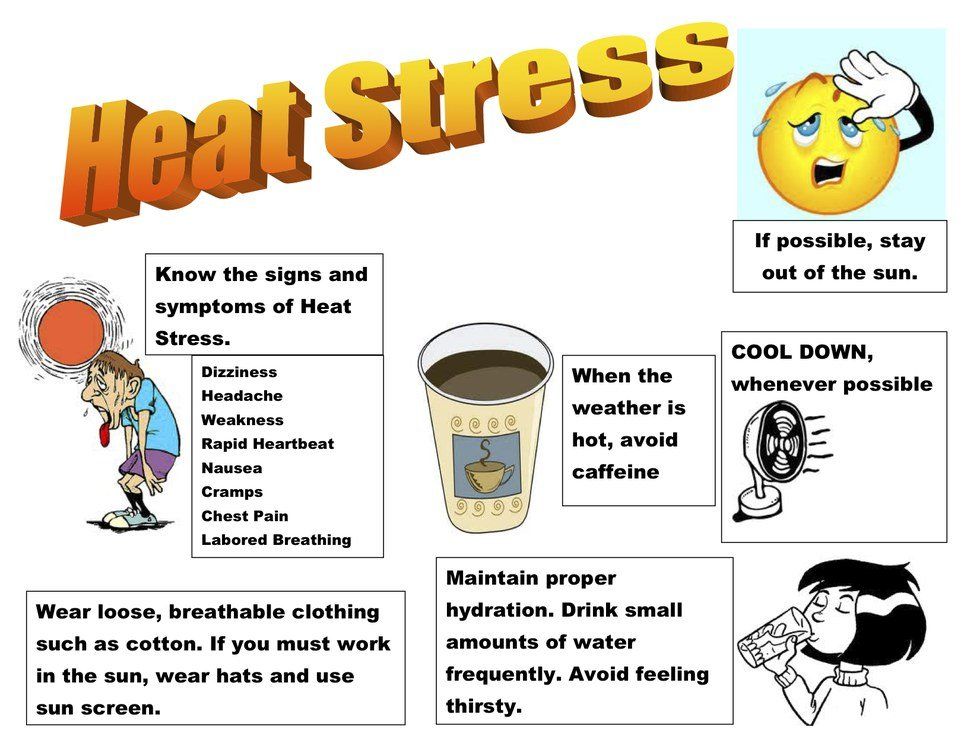
What is heat stress? Heat exhaustion, or heat stroke (commonly known as heat stress), is a potentially life-threatening condition. It occurs when the body is no longer able to regulate its temperature. This usually happens when the indoor or outdoor temperature is 90 degrees fahrenheit, or higher. Remember that humidity above 60 percent makes the body feel 10 to 20 degrees hotter! You need to prevent heat stress before it becomes life threatening.
Warning signs of heat stress
Loss of energy
Loss of appetite
Sick to stomach
Lightheadedness
Prickly heat
Muscle cramps
Heavy sweating
Thirst
Confusion/giddiness
Headache
What to do if any warning signs of heat stress are present
Go to a cool environment
Drink fluids
Remove excess clothing
Rest
Signs of severe heat stress
No sweating
Hot, dry, flushed skin
Throbbing headache
Confusion
Staggering
Combativeness
Body temperature 104 degrees fahrenheit or higher
Rapid heartbeat or breathing
Convulsions
Loss of consciousness
If the symptoms become severe you may not be able to recognize them in yourself. if you notice the above symptoms in yourself or others, CALL 911.
How to prevent heat stress indoors
Stay in cool areas. (If you do not have an air conditioner, consider a visit to a senior center, shopping mall or public library for a few hours.)
Use a fan, but only when there is cooler air blowing.
Take a cool shower or bath. It is an effective way to cool off.
Use your stove or oven less to maintain a cooler temperature in your home.
Avoid hot foods and heavy meals. They add heat to your body.
Keep insulated curtains, drapes or blinds closed during daylight hours.
Have a friend, relative or neighbor check on you twice a day during heat waves.
How to prevent heat stress outdoors
Drink plenty of water. Avoid alcohol or caffeine (they are dehydrating).
Wear lightweight, light-colored, loose clothing (cotton blends are best).
Wear a wide-brimmed hat or use an umbrella for shade.
Use a sun block with SPF 15 or higher. Sunburn affects your body's ability to cool itself and causes loss of fluids.
Pace yourself. Take frequent rest periods in the shade or a cool area.
Limit your physical activity.
Limit your time outdoors in the heat. Go out early morning or late afternoon.
Health Matters is produced monthly by the PrimeTime Health Promotion and Nutrition Unit staff of Philadelphia Corporation for Aging. They are located at 642 N. Broad Street, Philadelphia, PA 19130-3409. Call: 215-765-9000 ot visit PCA online at http://www.pcaphl.org.





 man running in forestPhoto by