You see it everywhere, ads with the skinny Victoria's Secret angels, guys with "8 pack" abs on covers of magazines, commercials for a revolutionary diet pill, books that claim to hold the secret to losing weight forever. It goes on and on and on. The noise never stops! The magical diet ends up failing. The revolutionary pill makes you sick and light-headed. You look at yourself in the mirror in shame, unhappy with your body because "it doesn't look good enough." It's a never ending cycle as you are constantly exposed to cover page models and people who haven't had a single diet or workout slip-up in their life. This is what leads to eating disorders and unhappiness. The want to look a certain way. Yes, not everyone who is unhappy with their body is going to develop muscle dysmorphia (it's actually a really serious issue, bro), anorexia, and/or bulimia...but it's a very slippery slope.
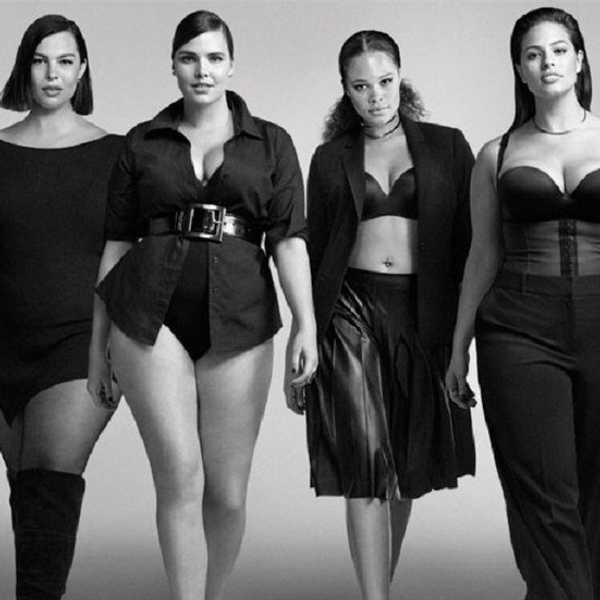
Some people think they have found the cure to this never ending cycle: the body acceptance movement. This movement, also known as "the fat acceptance movement," has a collective definition of a body positivity movement that seeks to change the anti-fat views in society. By definition, this sounds great! It really does! Everyone is happy, no one gets judged based on their body fat percentage, it doesn't matter if you don't have a crazy muscular definition, and life is awesome! For any of you out there who have a history of eating disorders or who are majoring and/or minoring in something such as exercise science, public health, nutrition, or dietetics, you might already have had a debate on this in class and listed off its pros and cons. For those of you who aren't, I already listed off the positive aspects of this movement, but here comes its cons. This train of thought doesn't take exercise into account, you can eat whatever you want, it doesn't take any aspect of health into consideration, and it is focused on something superficial. With all of that said, it seems there is a need for a different movement and a way to end unhappiness with your body at the same time.
I present to you...the health acceptance movement! By my own definition, a movement that seeks to eliminate eating disorders, poor body image issues, type 2 diabetes, hypertension, obesity, and types of diet and exercise-related preventable cancer in men, women, and children all together through adequate exercise, a proper diet, and the elimination of weighing one's self (unless it is required). How does that sound? I don't live in a movie where everything is perfect and I know that it's not always going to be possible to make everyone happy, but I believe that this is a good start. If you don't already know, people who often appear in commercials with their shirts off and what not do not always look like that and you're also only seeing their outside, not how their systems are firing on the inside. Many of those people have to go through rigorous diets and alter several aspects of their eating patterns (as well as sometimes taking enemas) to look like they do in that ad or picture. Also, many of those people have been touched up with digital imagery enhancement and/or have genetics that many people do not have. With that out of the way now, let's move on to how how "the health acceptance movement" works.
1. Elimination of the word "skinny"
This word just sucks in general. I cannot stand when people say they want to be skinny. Why would anyone want to be weak, frail, and sickly? Why would you want your bones protruding through your skin because you barely eat and you're emaciated? Doesn't quite make sense to me. That word has no place in "the health acceptance movement." Instead, I cast my vote for words such as lean, strong, healthy, and fit to take its place. These words describe someone's health rather than a state of their body.
2. Ditch the scale
Unless you're in some type of sport that requires weigh-ins, have you ever given thought to how ridiculous it sounds when someone says they want to lose 15 pounds? Where did that number come from? Why do they think 15 would make them look more appealing, why not 11 or 13.5 pounds? These numbers and that statement are ridiculous. When it comes to losing weight, it should be done to make someone healthier and possibly decrease their insulin resistance (this applies more to those who are obese, prediabetic, or have type 2 diabetes). In this movement, we do not base things off of weight or necessarily how you look in the mirror; we base things off of healthy eating and effort while working out. In the end, who really cares about your weight? Wouldn't you much rather live in a world where someone would praise you for your work effort in during your workout or your healthy meal cooking rather than praising you for only weighing a certain amount?
3. Adopt an 80/20 style diet
This method has a lot of merit. If you only eat until you are about 80% full (the Japanese call this hara hachi bu) and 80% of your diet (it means what you eat, the term does not imply "restrictive eating") is full of whole grains, fruits, vegetables, healthy fats, and lean sources of protein while 20% of it consists of treats, you're bound to stay relatively healthy. This way, you are neither restricting any foods out of your diet nor are you consuming enough sugar and sodium to increase your threshold for them and induce cravings. An example of this could be a vegetable stir fry with quinoa and tempeh (or chicken), a cup of fruit, and a small whole grain muffin or cookie. You get to treat yourself a little bit at every meal (if you desire to) and yet you are still consuming a wide array of healthy foods. The 80/20 style diet eliminates self-hatred after eating too much as well and any thought you might get of purging. You'll also have a lot more energy from not being bogged down by digestion (think the typical "post-Thanksgiving feels").
4. Get in a good workout (and stay active throughout the day)
In the sedentary world we live in, it can be very easy to become glued to a desk chair. Get up and walk around when you can and go for a walk while you consume your 80/20 lunch that you packed for yourself instead of sitting on your phone and browsing social media. It's good to get your blood flowing and steps in. After work, get in a good workout. By good, I mean one that is verging on exertion (if your doctor says you can tolerate it). That way, you can go home after if and say you worked your butt off and you can't feel guilty and wonder if you should have gone a little harder during it. If you gave it all you have, what else could you possibly give? Be sure to get in a muscular strengthening and cardiac output improving workouts because its important to be able to perform a wide variety of activities rather than just focusing on one. Balanced is healthy, one dimensional is not. Think being able to carry your groceries a block and up three flights of stairs without getting winded rather than one or the other.