It seems that we hear about some brand new Potter content at the same rate that North Korea threatens nuclear Armageddon. Ranging from portraying Native Americans as tree-drinking, animal dancing nature shamans because JK Rowling thought Disney’s Pocahontas was about all the research needed on the subject matter, to a new play about two bros named Scorpius and Albus who face a choice between learning how to put on condoms, or getting a subscription to CrunchyRoll so they can watch some JoJo’s Bizzare Adventure. At least that’s what I think Harry Potter and the Cursed Child is about. Might as well be because at this point, after seven books, eight movies (make that nine in December) 600 fan sites, 7,000 fan-fiction sites and Pottermore (hard to distinguish from the fan-fic sites) J. K. Rowling is still milking a franchise that was not even that good in the first place. But it sure made a lot of money, gave some millennial kids something else to do besides play Pokemon Ruby, and gifted many a tumblrite something to write about instead of oppression and pronouns. I admit that I myself partially grew up with the Potterverse, though I was introduced to Christopher Columbus’ saccharinely precious adaptation of The Sorcerer’s Stone before checking out the books and eventually I could have even professed to have been a fan at one point. I read the books, owned all the movies on DVD and my first crack at love was putting Emma Watson’s Goblet of Fire promo-pic with her in tight jeans and a white tee-shirt staring at the camera while she grasps the back of her hair as my screen-saver. However, as I got taller, my voice huskier and my balls slightly hairier, my perspective on Potter hasn’t exactly remained quite as enthusiastic. Even though a lot of people I grew up with still hold the series in an almost messianic regard like it was the Bible or their first bong hit.
“I think everyone can agree that the Harry Potter series (books AND movies) is perfect.”
“Harry Potter revolutionized the way I thought about the world, humanity and myself.”
“I want Seamus Finnigan to bite my tongue as I shove a firecracker up his prostate.”
I don’t hate Harry Potter and I do admit that it pulls off some of its element quite well. JK Rowling is a very good prose writer and some of her choices in detail and dialogue can be riveting and hilarious. Nonetheless I feel that a narrative as contrived, ridiculous and at times even hollow as the original seven tomes needs to be taken a look at from a less-nostalgia tinted piece of lens. Look, if Harry Potter has become an essential piece of your DNA like brown eyes and colon cancer, I in no way wish to rob you of that. “Different strokes for different folks” as I always say, because Rupert Grint is pretty much the ginger Gary Coleman, and that we all have our fandoms, tastes and standards for what makes us want to pay 59.99 for something. This is just my opinion on a very lucrative and revered franchise and if the Rowling estate loses 0.000002 percent as a result of this review, well then I apologize in advance
I. World-Building
If there is one thing Rowling excels at, it is crafting a fantasy world. She makes sure to give almost every environment our heroes visit the necessary detail to make it feel as organic as possible which can make for some immersive and at times even enthralling reading. With particular regards to Harry Potter and the Half-Blood Prince, Rowling can be successful at capturing the anxieties, awkwardness, and carefreeness of teenage life. Ron becoming obsessed over the first girl that gave him lip contact, Harry having all sorts of fluctuating self-esteem regarding him being the shit or just a tit, and Hermione stressing over trying to get a 6-figure salary once she graduates.
The mythology surrounding this fantastical version of Great Britain is also quite fascinating; a world in which humanity was divided up into those who harnessed the power of technology and those who held on to the power of the divine, a set-up from which all kinds of dynamics could have been explored. The Ministry of Magic is made up of a bunch of sycophantic elitists, hierarchies are developed via how much magic blood is in you, all the while having traditionally Medieval based creatures such as goblins, trolls, elves, dragons and most shockingly quills and 1930s photography causally existing in the modern world, all potential elements for some cracking subversion of fantasy tropes.
The problem is that the world ends being saddled to a storyline that ultimately becomes a retelling of The Lord of the Rings. There are so many fascinating elements that make up the world of the books that to have the narrative amount to just “evil guy returns to take over the world, hero of prophecy must defeat evil guy by destroying objects linked to him” is quite disappointing. What I find puzzling is as the books became longer and “more mature," their plotting became increasingly simplified and narrow fielded. Sure there continued to be some well-done expectation-playing moments but they were all in service to a Joseph Campbell-esque plot that we had seen done countless times before. Now to be fair having a simple overarching story does not necessarily have to be a bad thing as it can fine tune and focus the direction of the plot without everything getting overly muddled. What matters is the moving parts within the story ala the nuances the plot takes and the substantial development of the characters for while the basics of the narrative can be easy to pin-down, its substance ought to be much more multi-faceted. Unfortunately for Potter, not even that much is accomplished.
II. Harry Potter
The protagonist of your narrative is like the captain of a billion-dollar cruise ship. Tens of thousands of sunburned and sagging middle-aged patrons, five-star dining services filled with buttered lobsters and turkey stuffed with puffer fish, and Olympic sized pools where people can play nude water polo, rely on you to not steer that boat into a cliff. If the captain is drunk at the wheel, or refuses to turn it because it conflict with his neo-Foucauldian beliefs, the cruise ship’s going to crash into a whale and all those luxurious set pieces and flabby customers will sink into the ocean and possibly get eaten alive by a swarm of plankton. So Harry Potter as the main character…
This is actually one of the things that a lot of Potter fans will agree with me on. Harry Potter is not an interesting character by any means. He serves more as a flesh suit for the readers to step into in order to inhabit the world of the books. His personality can be summed up as confusedly determined with a penchant for hissy fits and teeth barring. Now the argument that Potter’s psychological simplicity is a result of the series being intended for the youth is torn apart by the fact that Harry Potter is seven books long, with three of those books being more than 700 pages and to have the main character basically remain static throughout the entirety of that saga is rather inexcusable. Harry does not really grow in magical skill, his mentality and morals remain basically the same, his relationships with other characters are almost never tested and when they are they get resolved pretty quickly. And this is the captain that’s steering my cruise ship? I wouldn’t be surprised if we rammed into Miami with how absent at the wheel he is.
However, the elements surrounding Potter, i.e his role as a “chosen one” and having numerous adult figures trying to guide him a certain way could have in fact led to the development of a fascinating protagonist. Case in point, Ender Wiggin from Orson Scott Card’s Ender’s Game, another young lad of destiny who goes to a school for the gifted in order to stop an evil force. Yet one of the prevailing themes of Ender’s Game is the push and pull of doing things your own way and doing what society tells you. Ender is expected to follow a certain trajectory that will lead him to becoming a masterful military commander and destroying the evil of the Bugger alien race. Yet this conflict causes a great deal of emotional stress within him as he is very unsure if this is the path he wants to follow. He constantly goes against the standards ascribed to him, notably during a simulation in which he keeps getting crushed by a computer-generated giant via only using the allowed strategies of dashing head on. Ender goes against this coding by jumping into the giant’s eye socket and killing him from the inside. When Ender inevitably does defeat the Bugger Race (via the genocide of their entire species) he feels cheated and torn that his role as a “hero of destiny” entailed him committing a great evil for the “greater good.”
Harry Potter however? Just does what he’s told by the “good guys” around him without ever stopping to question his own needs and wants. The only time he actually starts showcasing some agency is when he forms Dumbledore’s Army to teach underground Defensive Magic once Hogwarts starts going all Liberty University. Yet once Umbridge is ousted, Potter just goes back to being Dumbledore’s lap dog because why be an actual human being when you can just represent an “ideal?” Even when it’s revealed that Dumbledore ultimately meant for Harry to die in order to efface the Horcrux within him, Harry questions this notion for about 30 seconds before adhering to the exact same role that was pre-ordained. Remember kids, authority is only ever bad if it looks like a snake or a toad, always do what you’re told even if it means sacrificing your own individuality. Rowling displays no self-awareness about this, it’s all played up “very seriously” because Harry has to be a good boy and save the world instead of having an emotional breakdown from all the pressure and then masturbating on top of a comatose Hermione. Not everybody can pull a Shinji Ikari.
III. Ron, Hermione and Dumbledore
So Harry is blander than Mitt Romney’s choice of beverage, what about the colorful cast of characters helping him on his quest for heroics and poon? They fare slightly better though when your main character is an uncooked potato with Hellmann’s Light Mayonnaise globed on it, the bar is not exactly Yao Ming sized. The truth is that rather than being non-entities like Potter, much of the characters become stuck in a single developmental phase without making any significant change, much like a PC’s crash screen after clicking a YOU WON’T BELIEVE THIS! CHECK OUT ALL THIS CASH I MADE post on Facebook. The two most egregious examples being the deuteragonists of The Epic of Pottermesh, Ron Weasley and Hermione Granger who end up setting much of the character development framework for the rest of the cast.
Hermione effectively has all of her defining traits and ideologies laid out before her in the first book, with Book 2 and Book 4 subsequently making incremental shifts. Yes she is intelligent, rebellious, capable, arrogant at times, has an inconsistent self-esteem and that is fine in terms of development in a single story. Yet consider that she more or less has the second-most amount of page time in Potter of the Rings and that her arc effectively stops at Goblet of Fire, you can see how “basic” those traits end up being. A strong character is not solely a capable one and while Hermione does do a lot to help bring up the end of Sauron, I mean Palpatine, I mean Frieza, I mean Voldemort, the character behind those actions remains the largely the same. In Goblet of Fire, we see a much more vulnerable Hermione who finds herself excited at the prospect of pursuing a romantic connection with Viktor Krum and extolling in the virtues of being in a large party with loud music, good butterbeer and a euphoric atmosphere. She is finally finding the ability to be at ease with herself and her surroundings and has that newfound spiritual freedom interrupted by Ron’s increasing possessiveness and frustration at his inability to express his feelings. The scene in which Ron undermines Hermione’s exuberance at the Yule Ball with his pettiness about Krum’s ability to read and then Hermione’s subsequent chewing out of Ron’s immature bitchiness ought to have signaled a substantial shift in her wants, ideals and relationships with others. The Hermione in the last three books? A bit more restrained and focused on making sure Harry does not fuck up his role as the chosen one, with occasional foot play with Ron.
And that’s it. No seriously that’s it. From the end of Book 4 onwards, Hermione is a calmer, more focused version of the person she always was. And that’s fine if that development was relegated to one book, but considering that for the next 2,281 pages when she remains essentially the same character, her “solve problems with the power of brain juice” schtick starts to get a little grating.
Ron Weasley is by far the most relatable character Rowling concocted in her in tome, as he acts like a teenager more realistically that the rest of the Children of the Damned at Hogwarts. He becomes frustrated by the lack of progress in his academic and social life, self-conscious about his ability as a wizard, a real asshole to the people around him when things are not going his way, all peppered with a level of spontaneity in his vernacular that makes him a real joy to be immersed into. Suffice to say that Ron is the least consistently static character in the Potter tome, and while I dread labeling him as the comic relief, his general lightness and perkiness in otherwise dry situations does light up the pages. What he suffers from is that, like Hermione, his own needs end up being superseded by helping Harry fulfill his role as a hero. Of course both Ron and Hermione’s goal are really to “save the wizarding world” but beyond a need to protect their friends and families we never really get much of an insight as to what motivates them to take up such noble causes. I suppose it’s because they’re “good” people but that’s more of a superficial coating than anything else.
What’s especially frustrating is that at several points in Star Potter we get moments when Harry and Ron’s relationship becomes strained usually pertaining to the very notion that Harry’s needs come before his. We come back to Goblet of Fire wherein Ron abandons his friendship with Harry as once again the Boy Who Lived almost effortlessly gets back into the spotlight. Much of his frustration arises from the fact that he feels glossed over and insignificant compared to the prodigious achievements of his siblings and that his only source of external validation comes from his being Harry’s best friend. However rather than have this revelation of a psychological wound be a substantial factor in their relationship, Ron and Harry simply go back to being buddies with Ron furthering his role as Harry’s loyal beagle. Admittedly, Ron’s arc gets some sustenance in book 6, with his inexperienced infatuation with Lavender Brown, his attempts to become a Quidditch star but those are mostly demoted to being aesthetic side stories meant to help the page length reach 600 as they neither substantially affect the plotting nor his relationship with the characters except for maybe Hermione though “falling in love” is a bit of a stretch in terms of character development.
We get a bit more of Ron’s autonomy in Deathly Hallows wherein he abandons Harry and Hermione after realizing how fruitless and frustrating their quest to destroy the Horcruxes has become, at least in regards to his role in it. He comes back however becomes his addiction to Harry is like my addiction to Jackie Chan, and agrees to destroy the One Ring…I mean locket Horcrux. The Horcrux taunts Ron with specters of Harry and Hermione making out and says how useless he is before ole Freckles surmounts his insecurities and destroys the Horcrux with the Sword of Gilbert Godfrey. Arc effectively over from this point on, as though overcoming such laden insecurities at the age of 17 was so easy.
Dumbledore is the last major character that is consistently given attention in the Potterverse, and in many cases he does in fact successfully subvert many of the cliché’s that come with the “wise old sage.” For starters, Rowling is self-aware that much of what comes out of Dumbledore’s mouth is cryptic and at times even unnecessarily so. He withholds sensitive information that could have saved numerous lives which included strongly suspecting Voldemort was the one who released the Basilisk, Harry being the “Chosen One” and a Horcrux, Harry possessing two thirds of the Deathly Hallows and having the Elder Wand among others. There are many moments when lives are lost and strategy incomplete because Dumbledore was keeping much of the information to himself which, as suggested by Rita Skeeter’s op-ed in Book Seven, had much to do with his inflated sense of ego and ultimate desire to become the greatest sorcerer in the world, meaning that he had to be in control of almost every major situation. He presents himself as the loving and quirky headmaster with an affinity for Lemon drops but underneath that jovial façade hides something much more sinister; a desire to achieve a level of human transcendence no matter the cost. In another universe, Dumbledore could have been an excellent villain, building Harry as the new and youthful heroic spirit before ultimately tearing him down to reclaim that role for himself. I do find it cheap however, that Harry casually redeems him after all the shit he pulled which included ultimately setting him up to die without telling him so but given how Harry blindly followed Dumbledore to the bitter end despite getting lied to in almost every installment, that’s more of a testament as to how much of dumb-ass Luke Potterwalker is.
IV. Supporting Cast
The rest of Reservoir Potters’ cast follows a formula I like to call the “two book maximum” rule. This means that if you’re a supporting character in Harry Potter, you’re really only going to be relevant for two books max. While I will say that there can be some discrepancy as to what amount of development can be delegated as “relevancy," I always felt that after most character’s initial introduction in the series, their relevancy to the plot tends to diminish tremendously even if they had a substantial impact on Harry’s life.
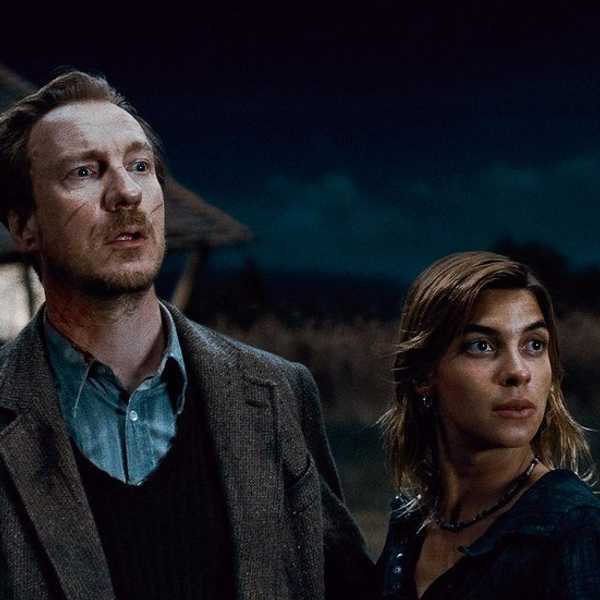
Remus Lupin is probably the defining factor of this rule as most Potter-fans can agree that his werewolf ass got pretty fucking shafted after Prisoner of Azkaban. Lupin was the closest example Harry ever had to a paternal figure as he showed more genuine care and affection for him than any other character besides Ginny’s booty calls. To have him practically demoted to background character status for the remainder of the series seemed kind of illogical to me and the waste of a good character given how delightful he was in Book Three.
Sirius Black essentially replaced him as Frodo Potter’s paternal figure from the end of Book Three onward and like Lupin he’s kind of wasted leading up to his very anti-climactic death. A broken man imprisoned for decades for a crime he did not commit, fucked over by someone who was supposed to be the beta of his frat yet again, Black always came across as unpredictable and sometimes frightening as though he could spiral into a mental breakdown at any second. I also liked how he came from a family of Fred Phelps level racists and how his general rebelliousness stemmed from the disgust of his own blood. However, as these elements are set-up, ready to be utilized as interesting dynamics to the plot, whoopsedoodle, Black dies. Sure he got a little more exposure than Lupin and after his death Harry became a little sadder. Yet the plot did not change for shit following his absence which made me question what was the point of killing off such a long-built up character without very much exposure, and then have nothing come of it? We’ve only just begun…
Alistair Moody is another example of the shafting of a good character as he is introduced as the unpredictable and bad-ass Dark Wizard Hunter turned defense against the Dark Arts teacher. He resorts almost immediately to showing his students the three unforgivable curses though he is not above having the pupils for tea to discuss their issues. All this development is ultimately dropped down the shitter when its revealed that this Moody was the disguise of David Tennent and that the real Moody has been stuck down a suitcase for the entirety of the school year. All that would have been forgivable if Moody had not done absolutely nothing for the rest of the series and then get unceremoniously killed at the beginning ofThe Deathly Hallows. What that basically amounted to was like introducing Han Solo in all his roguish glory in A New Hope and then for the rest of trilogy he just cooks fried chicken in the Millennial Falcon’s radiator.
Severus Snape and Draco Malfoy get some nuance infused in them but their particular developments happen so late in the game it hardly seems worth it. Like Malfoy’s just a prick throughout the first five books and then by book six he starts having doubts about his prickness when he realizes that in order to gain the entrance to the Society of Doucheschnauzers you have to kill people. He cries about it, gets defeated in an inferno set up by his meathead buddy, stops crying and then leaves. Seven books, 3,407 pages and that’s all the character development for what is supposed to be Harry’s main rival.
Snape suffers from a different problem in that all of his traits, desires, and nuances are smashed together in a massive exposition dump that feels so forced and contrived it’s almost juvenile. Like all he does throughout the books is be a fucker and occasionally cease his fuckery for 30 minutes to move the plot along. It was genuinely riveting to read him killing Dumbledore and “turn to the Dark Side” but as was expected he was a double-agent the whole time, reiterating practically the same plot-twist as in The Philosopher’s Stone. The moment when all of Snape’s ulterior motives are revealed via Harry just happening upon his death and then giving him the memories to hold in a bottle kind of felt cheap in how convenient and borderline ass-pullish it was. For what was supposed to be a “complex” character, having his entire arc laid-out in a neatly arranged format for the reader to suckle on kind of frustrated me in that instead of weaving these character nuances throughout the narrative as a whole, Rowling just sort of “hide’s them” with occasional flashbacks to Snape’s ass getting kicked by James and Sirius. Having a character be static for the majority of the plot before all of their nuances are revealed via an exposition fest and then killing them off so that no more development can incur becomes just another example of Rowling wasting a good character.
Some characters become straight up worthless after their initial appearance, notably Professor McGonagall who gets set up as some kind of stern alternative to Dumbledore’s LSD-based mentorship but just kind of looks at stuff for six subsequent books. Ginny Weasley has an interesting arc involving her dealing with her social anxiety in school by befriending an evil book, but then just becomes a star Student and Athlete off page, marries Harry and lets him name all their kids. Hagrid introduces Harry to the Wizarding World in Book One, cries about his monsters, fucks up as a teacher and then does nothing for the rest of the series. Peter Pettigrew initially served as an interesting parallel to Ron in that he felt his autonomy diminish when not grouped with his friends and decided to write his own destiny by betraying them. But after he brings back Voldemort, he just becomes a sniveling butler before he’s unceremoniously strangled to death by a robot hand. The truth is that The Epic of Pottermesh had too many characters for such a dry plot and almost all of them follow the same pattern of “introduce, shine bright like a diamond, cameo.” In my own opinion, too many characters in a condensed plot can actually be detrimental to the narrative since usually there is no possible way to develop all of them substantially. Unless an epic story spans 12 volumes and all 12 have more than 500 pages allotted to them, it is perhaps essential for the thematic structure of the plot to grant specific focus to a select number of characters, rather than introducing numerous arcs that never get any sort of attention. For me, such disproportion is incredibly frustrating as I do not like characters getting their potential arcs wasted for no other reason than the author could not find anything to do with them.
V. The Villains
Legendary film critic Roger Ebert once said: “Each film is only as good as its villain. Since the heroes and the gimmicks tend to repeat from film to film, only a great villain can transform a good try into a triumph.” While not every piece of fiction has to have a villain in it, for the one’s in which an antagonist does play a significant role in terms of the plot and even the development of other characters, you better be damned sure they’re more compelling than a McLobster. Especially if your narrative is 3,407 pages long. It says a lot about the quality of your fantasy epic when most of your villains are more generic than Dick Dastardly from Wacky Races, but Voldemort and the Death Eaters are so infuriatingly one-dimensional that their blandness borders on self-immolation whenever they take center-stage. Ultimately, it’s this central conflict with the dullest of dastardly doers that completely halts any sort of interesting thematic exploration the series’ early outings hinted at.
Voldemort is not a character, he’s a disembodied void the heroes must defeat akin to The Great Evil from The Fifth Element, a literal giant ball of evil. He displays no other traits besides malice, anger, and sadism throughout all seven books. All he does is threaten to kill Harry Potter, use Avada Kedavra, threaten to kill Harry Potter, occasionally smile, threaten to kill Harry Potter, use Avada Kedavra, threaten to kill Harry Potter, use Avada Kedavra…It’s not good character building when you can boil down your central antagonist to a set equation of elements like a test question on a High School Chemistry quiz. It also does not help that his role is that of an evil authority, a fantasy-villain trope more overdone than having Jennifer Garner star in your credit union commercial. Its no surprise that that role only accentuates his staleness as he just kills people and gives orders for others to kill people from Goblet of Fire onwards. I don’t even understand why people are loyal to this boring fuck, its like voting for Jeb Bush in the 2016 Republican Primary. It’s for this reason that Harry Potter’s central conflict becomes so trite by its end because all of the antagonistic forces involved in it are so terribly devoid of any kind of inspiration. A good villain needs to have some sort of groundwork in human desires beyond just “villainy," because even if their motivations are murky, we as the audience will be drawn to them because we connect to their displays of “humanness," subtle or otherwise.
Frank Booth from Blue Velvet may be a murderous psychopath but his bouts of spouting Oedipal tangents during rapes, crying while watching Night Club singers and the playful, almost fraternity-esque way in which he drinks Pabst Blue Ribbon with his henchman give him enough fleshed out dimensions for the audience to be invested in his arc, even if he ultimately was a despicable human being. Voldemort has nothing of that sort, what you see is what you get; a murderous snake man with nothing interesting to say. It is also laughable whenever other characters have to point out that “he’s afraid of death” or “he’s insecure” in order to fool the reader into thinking that there is anything to Voldemort beyond his one-noteness. It was somewhat interesting to see Voldemort’s backstory in Half-Blood Prince, especially his early displays of sadism mixed with magic growth, but not much else is revealed about his character beyond his already established sociopathy and desire for power. The whole affair just comes across as sort of redundant, Rowling using yet another bit of filler to avoid developing her main characters, and a wasted opportunity to give Voldemort some more adjectives.
This is how you create Death Eaters in the Potterverse: you take the adjective “evil” attach a noun to it, and well-done you’ve done your character work for the day. Bellatrix is an evil nut, Yaxley is an evil bureaucrat, Greyback is an evil bestiality, etc. The only villain to have more to them than just fulfilling the “evil” quota was Dolores Umbridge, and truth be told she is a compelling character and a far more interesting adversary than Voldemort and his Death Eaters could ever hope to be. The juxtaposition of her toad-like appearance with her high-pitched hyper-feminine tone of voice (at least according to the book’s descriptive), the kind of puritanical indoctrination via the suppression of any kind of passion or agency similar to Aunt Lydia from The Handmaid’s Tale, all mixed in beautifully with her penchant for sadism ala invisible hand carving and Crucio, makes the reader question whether she really is an Evangelical Kindergarten teacher or just a psychopath. Her presence in The Order of the Phoenix added some freshness to the otherwise dullness that had become the Hogwarts setting, marinating the book with political intrigue via the intersection of government and education hinting that Honey I shrunk the Potter could perhaps surmount its descent into redundancy. Alas, such was not to be, as Dolores gets canned before the end of the book and reappears only as part of a set piece at the beginning of Deathly Hallows, her role reduced to yet another piece of medical evidence for Rowling’s strange affliction of canning interesting characters in favor of cyclical exposure to the static main ones.
VI. The Department of Asspulls
The Potter of the Rings is a small and simple story that spreads itself thin over 3,407 pages. This is most evident with the formulaic structure of 5 of the 7 books of “set-up in Wizarding world” “frolicking at Hogwarts with occasional (but not often) inches towards plot development” “big climax that sometimes greatly shifts the plot and other times does not.” I don’t count Philosopher’s Stoneas contributing to the cadence since its world and characters were still finding their footing in terms of structure and tone, and Deathly Hallows since it finally broke the formula and started doing what the series should have done after book 1: give a more thorough exploration of the wizarding world. Considering how narrow the overall plot becomes, spending inordinate amounts of time at Hogwarts being immersed in mostly uninteresting protagonists (again, Ron does sometimes save the day) becomes infuriatingly grating by book 4. Book 5 occasionally added dynamism to the cadence whenever the conflict with Umbridge took center stage, but other than that it’s hard not to scream “we’ve seen this shit before, move the fuck on” every 10 or so pages. To reiterate a previous point, it ends up becoming even more frustrating when you realize that all this padding is in the service of a generic plot, so it’s hard not to feel cheated by the time you finish the series. I suppose this was all in favor of Rowling’s intent to immerse us in a Ulysses/Jeanne Dielman like experience of focusing on an as many details of mundaneness as possible in order to create a realistic world but all of that effort is lost if you fill your world with mostly static characters and your plot barely inches towards a conclusion more dried out than a chain smoker’s tongue.
Speaking of dried out, let’s talk about the Deus Ex-Machina’s. Rowling has a persistent habit of writing her characters into situations that they could not possibly get themselves out of without the help of outside interference. Now these sort of events are tolerable (repeat: tolerable) if they happen infrequently and are not too blatant. Yet Rowling uses them as resolutions for two-thirds of her climaxes. The two most egregious offenders being the endings to Goblet of Fire and Deathly Hallows wherein Voldemort, who should have easily been the victor in his duels with Harry, ends up losing because of the power of “fuck you.” Spectral visions coming out Voldemort’s wand from his most recent kills and giving Harry a chance to escape when this never happens to any other user of Avada Kedavra? Fuck you. Harry being quite concretely killed off by Voldy and then being allowed to leave the afterlife for the sake of fulfilling his destiny when this happens to no one else who might have deserved that privilege more? Fuck you. I won’t even mention the whole “love bond” extending to Harry melting people’s faces off, or that Fawkes the Phoenix just happened to know where the Chamber of Secrets was despite no one but Voldemort being able to track it before. I guess all of that can be explained by the power of “magic” or his role as “the chosen one” but all these asspulls really do is just deny Harry the opportunity for any sort of growth. Because Harry is always getting out of unwinnable situations thanks to the power of “fuck you”, he never gets the opportunity to learn substantial skills as a wizard or get to have the consequences of his decision’s impact his relationships and ideals. Order of the Phoenix diminishes the impact of the one moment of agency Harry does get to engage in by vomiting the whole “chosen one” prophecy almost immediately afterwards. Harry’s godfather died because of his impulsive plan of placing inexperienced prep students up against seasoned serial killers.
Instead of this fatal mistake weighing Harry down and affecting every subsequent choice he makes, he becomes more of a “noble hero” than ever. He spends almost the entirety of Book Six just nodding his head and widening his eyes to whatever Dumbledore spews despite the fact that this bearded fucker knew the shit that was about to go down when Harry decided to enter the Department of Ministries and not only did nothing to impede Harry from doing so, but could not have even been bothered to engage in the front lines to potentially save more lives. This dude is obviously fucking with you in some way Harry, so maybe not be so gullible to every request he doles out at you.
Finally we get to the ending of Nineteen Eighty Potter, or should I say the Asspull to Surpass All Other Asspulls. An Asspull so transcendently stupid it sucks every living thing inside its dank, moldy crevice of despair where you will find all of your hopes and dreams being digested away by the sulfuric acids that is Rowling’s ultimate moment of bullshit. Harry’s sacrifice could have saved, even for a brief moment, his series’ absolute descent into mediocrity. While the overall plot may have remained stale, the fact that the main character decides to end his life for the sake of giving the masses the chance to defeat the great evil themselves was actually quite invigorating and clever. It would have added the necessary emotional push that no amount of killing off inconsequential characters could have achieved. By letting Voldemort kill him, Harry becomes a martyr for the masses, a greater rallying cry than he ever was in life. You still could have had the same twist of the elder wand firing back at Voldemort if it was Ron or Hermione that disarmed Malfoy at his Manor so that Rowling’s penchant for clever set pieces remained intact. It would have cloaked the last few pages in a melancholic tone as while they were able to save the world as a result of Harry’s sacrifice, Ron and Hermione had lost an important friend and now have to learn about facing a future without him. Yes the overall plot would have remain saturated in Campbell-esque averageness, but at least the nuanced and sad ending would have redeemed it somewhat, and would have fit in with Rowling’s omnipresent theme of death being unavoidable no matter how hard we try to escape it.
Nope. Instead Harry comes back to life for literally no explainable reason, defeats Voldemort thanks to the Elder Wand saying “I’m with this nerdy dude snake man," gets a hug from his friends, cut to 19 years later, everyone’s old, happy and sexually active, and ends with a big cushy kiss from a watermelon filled with Molly. 3,407 pages leading to a cheap and undeserved overly happy ending that robs the reader of any sort of lasting feelings beyond the endorphin boost of finishing 3,407 pages of content. This sunshine daisy butter mellow ending clashes so ridiculously with the general misery-fest that had been Book Six and Book Seven that it comes across as inorganic and unbelievable. Yet considering all the cliché’s the plot had been building up to until that point, maybe its unjustified to be so upset with such a fluffy ending. However the fact that the final act could have ended up being so much more nuanced if it were not for Rowling’s last minute asspull stings like an entire box of salt being shoved down a pulsating gash with mushrooms growing on it.
VII. Closing Thoughts
I understand that Harry Potter means a lot to my generation as for many it was the first series of books and movies they let themselves be actively immersed in. Like one’s first moment of penetration in the bathroom of a Burger King, it’s hard to forget that initial foray into escapism. However, for those who have never experienced The Potter Strikes Back, expect to have your patience toiled as JK Rowling fails to match the increasing scope of her tome with maturity or nuance. Expect to be frustrated by how little the main protagonist develops as a character. Expect to be initially interested in certain characters only to have your hopes dashed away as they fade into the background and then get killed off. Finally expect to have all your effort in combing through pages and pages of padding involving undercooked teenaged angst in a growingly claustrophobic prep school and machinations from villains so obvious even Cobra Commander starts to cringe rewarded with a Deus Ex Machina laced final act so giddy at itself for how wonderfully everything turned out. I also believe that Rowling herself was dissatisfied by the way her magnum opus turned out because if she wasn’t, she wouldn’t devote such inordinate amount of time to further increasing the wizarding world’s detail on Pottermore and twitter pages.
One argument I always hear in terms of justifying Potter’s simple plot and characters is that it is meant for children and young adults who therefore need to be fed banana mash and two percent soy milk because they can’t digest solid food. If the popularity of Pixar Studios was any indication, it’s that not only can children handle complex characters and plots but they revel in it. This inherent maturity give the films a lasting power that makes them watchable decades after their release since the filmmakers refused to dumb themselves down for the kiddies. What’s both fascinating and frustrating about Harry Potter is that it presents itself as a book series you can grow up with despite the fact that all of its “maturity” comes across as superficial rather than genuine. Much of Potter’s emotional impact comes from characters getting killed off or being misunderstood, mainly because most said characters were not given much in the first place, forcing Rowling to increasingly rely on those aforementioned tropes in order to elicit pathos.
As a one-time fan of the series, I would be lying if I said Harry Potter had no impact on me whatsoever, as it was, along with Star Wars and Dragon Ball Z one of the progenitors for my love of film and literature. Yet the more I reflected on the series both while I was involved with it and as I grew older, I found its overall impact on my development shrinking and its irritations becoming more apparent. I suppose it was like a 1930s-90s Disney film in that it was a narrative relying entirely on emotions. It did not show what you logically or ethically wanted to see, it showed you what your emotions wanted to see. Now that may work in an 80 minute animated film with dancing Angela Lansbury voiced teapots and blue collar dwarfs who love showtunes, but not in a 3,407 epic with what appears to be a complex mythology. Harry Potter had the potential to grow from the standards set by Star Wars and The Lord of the Rings but by the end it just sort of revels in them. What should have been a layered and meaty bildungsroman lacing the path to adulthood and all its emotional hardships with a unique, organic and complex fantasy setting just ends up reiterating all the standards that came before instead paving its own direction. Nonetheless I will always have my Emma Watson Goblet of Fire promo screensaver to remind me of the simpler days before self-doubt and Tinder.