
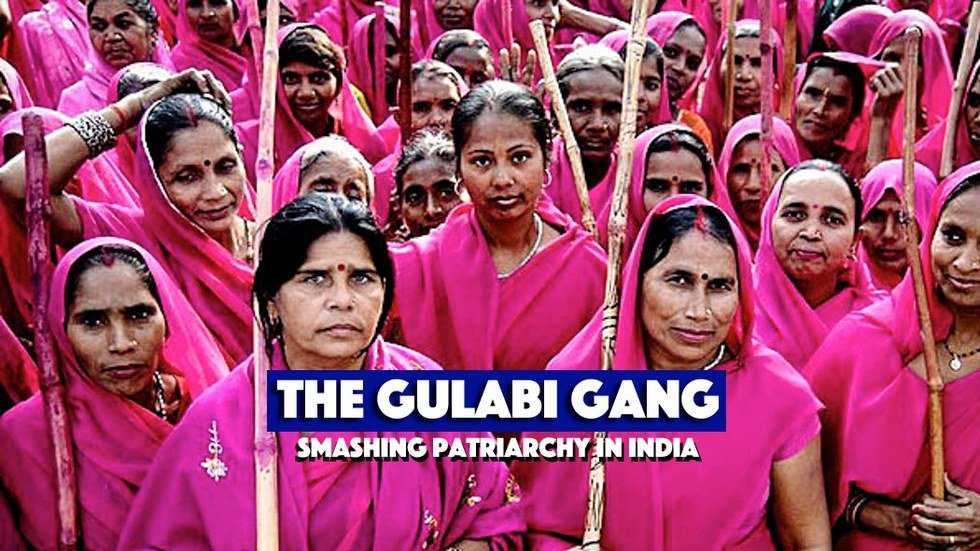
Gulabi Gang. They are the definition of hardcore. I am not sure if you have heard of them before, but I am pretty sure you want to. The Gulabi Gang, also known as the Pink Gang, is a group of female activists who originated from Uttar Pradesh, India, and� fight against social injustices. They are known as the Gulabi Gang because they dress in pink saris (a cultural Indian attire) and go around their society, trying to promote equality.
Now there is no reason to question why there is a need for women activists anywhere in the world. All around the world, including countries like India, women face injustices due to gender and sex discrimination. They may face hardships such as domestic violence, job and pay inequality, caste discrimination, female infanticide, and female illiteracy, among many others. Gulabi Gang aims to end this inequality by not only promoting peace and justice around India, but by also accosting male offenders who challenge the idea of fairness and equality for women. This, therefore, is not only a way to prevent further future inequalities, but it is also a way to stop the inequality that is already happening.
Sampat Pal Devi, who is the founder of this "gang," aims to promote woman empowerment by also working with women across India to help them come closer to equality and success. For example, there have been case studies showing that the Gulabi Gang helps woman in rural areas with their weddings by providing help and resources to those who need facilities such as tailoring, catering, flower arrangements, and henna application. In addition, a huge project of theirs has been collaborating with a woman named Prema Rambahori, who set up a leaf-plate business in the village of Badausa. These environmentally friendly plates provide jobs for approximately 500 women, which is a huge deal. These women are able to make money and stay busy by doing great things for themselves, their community, and the earth.�
The Gulabi Gang is a big milestone for both women in India and in the world. They represent the strength and determination necessary for positive change. The group has gained a lot of publicity and traction over the years. Books such as "Moi, Sampat Pal, chef de gang en sari rose" by Anne Berthod have been written and translated into French, Portugese, Spanish, and Italian. Movies on the group have also been made, including the film "Pink Saris," by Kim Longinotto.
Pride is not enough to describe how I feel about the Gulabi Gang. It takes a lot of courage to speak out against the status quo and I am so glad that they have gotten so much traction over the years.