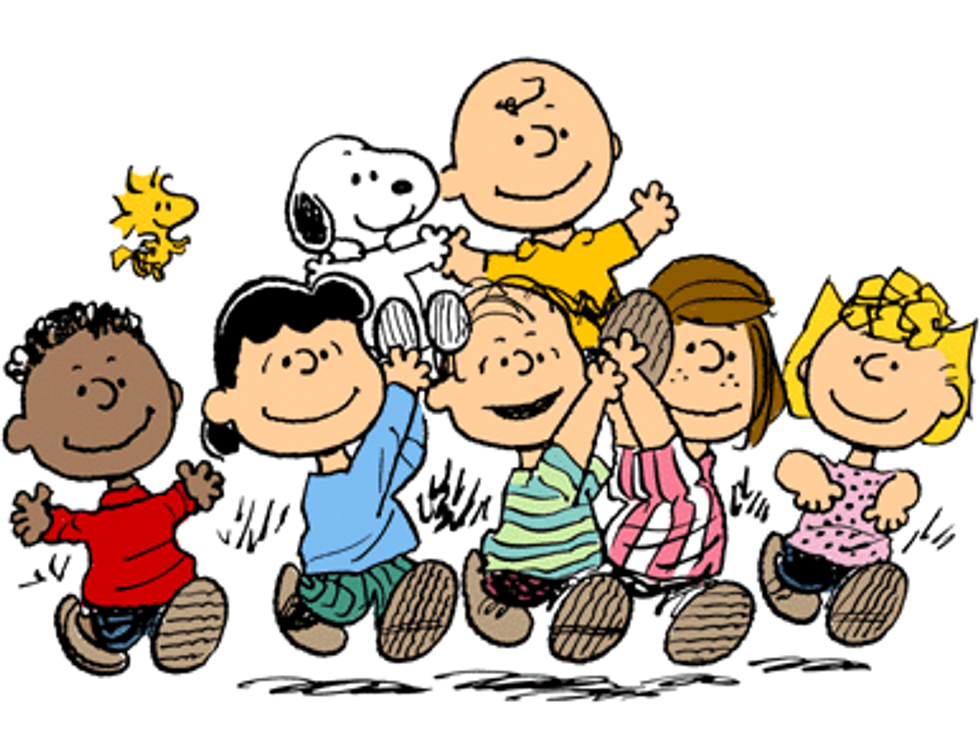
“Good ol’” Charlie Brown — star of the Peanuts strips and TV specials — is one of the most iconic cartoon characters of all time. His bald head and yellow sweater are symbolic of a simpler time, one in which flying kites was enough to hold the interest of children and we were allowed to mention Jesus on TV.
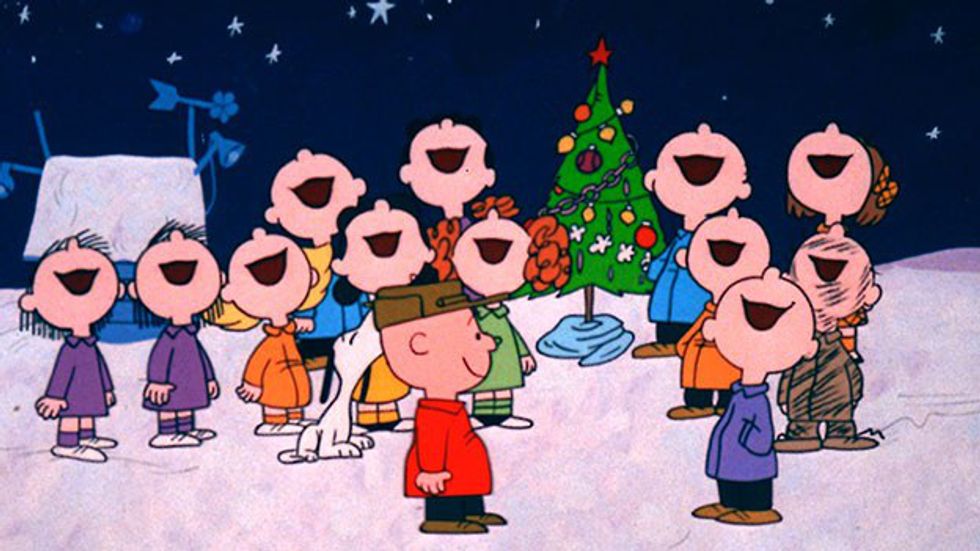
But what if the cast of Peanuts is not as innocent as the Christmas special has led us to believe? What if Charlie Brown is hiding a deep, dark secret of which not even Charles Schulz was aware?
At first glance, Peanuts is not actually all that lovable. The illustrations are cute, to be sure, but nearly every reader has come to the same conclusion at one point or another: the strip just isn’t funny. Charles Schulz’s downtrodden characters present realistic dialogue that closely matches the speech patterns of precocious children. Thus, readers are left with a final panel that would be more suited to the spot before, and a punchline that feels like the last point of buildup.
One could argue that the cause of this disappointing phenomenon was simply that Charles Schulz was not funny. Others, however, will recognize that, in addition to his indecipherable sense of humor, Schulz was also the victim of a crippling depression that made finding punch lines difficult. This misery was partially caused by a heartbreak forced on him by Donna Mae Johnson, an accountant with whom he had been deeply in love. Charles proposed to Donna in June of 1950, and she accepted. However, she quickly went back on the agreement, as she had also been approached by a childhood sweetheart who she preferred to Charles.
Donna Mae Johnson is now immortalized in the Little Red-Haired Girl, an unseen character in the Peanuts strip and TV specials. The LRHG is Charlie Brown’s main love interest, although his feelings are unrequited and based on Schulz’s own love for Donna Mae Johnson.
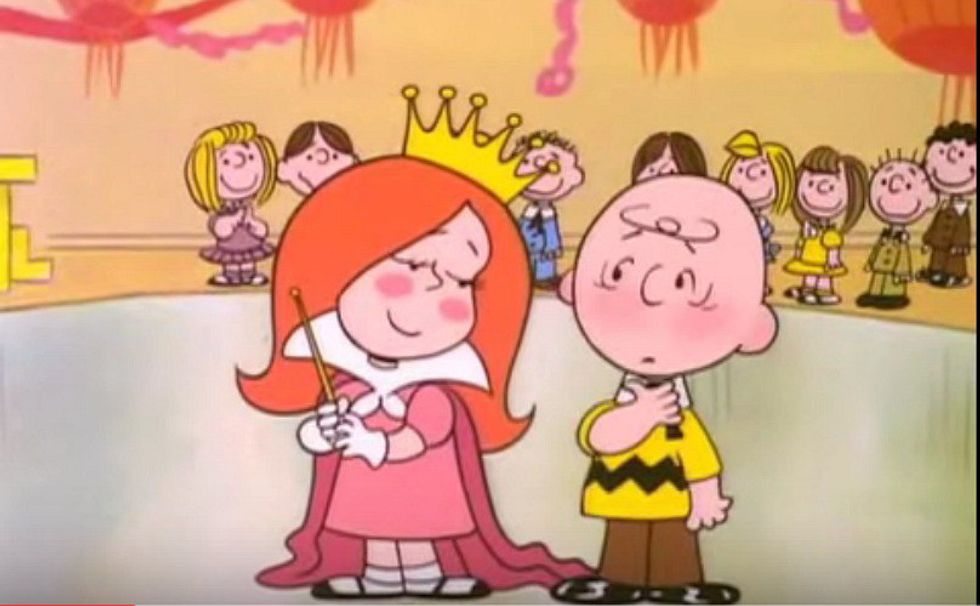
Charlie Brown’s fascination with the LRHG may seem perfectly natural at first: he’s a hopeless boy, she’s a pretty girl. Children will be children. However, his obsession becomes slightly off-kilter when one realizes that Charlie Brown was originally meant to be only four years old, aging approximately one year per decade until he was eight-and-a-half. Although students of modern public schools often begin their exploits into romance and sexuality earlier than has ever been seen in history, four years old is considerably younger than a realistic age. Charlie Brown worries about how to snag a kiss from the pretty girl in school, and yet he is not even at the average reading age.
The strangely sexual attraction between the two first-graders is hardly the most off-putting part about the Peanuts series. Charlie Brown’s constant victimization by the children he considers his friends goes above and beyond what one would expect in a first grade setting. The interactions between Schulz’s characters are more closely reminiscent of the token high school bullying depicted in uninformed films such as Mean Girls and Carrie.
Taking for the moment as read that Charlie Brown is a living, breathing human, and not a self-portrait of Charles Schulz’s own disappointing childhood, one must wonder exactly what could posses a four-through-eight-year-old middle-class white male to take such a negative view of the world.
What appears to be a far-out explanation is actually quite believable, considering all the evidence: Charlie Brown has schizophrenia.
“Yeah, yeah,” you may say. “We all know the fan theories. The Winnie the Pooh characters all have mental disorders and the Spongebob characters represent the Seven Deadly Sins.” But the idea of Charlie Brown being diagnosed with schizophrenia has less to do with hidden jokes the cartoonist felt he had the right to slip in, and more to do with a realistic diagnosis of this fictional character, based on the traits he exhibits.
Unsurprisingly, the first mental illness that comes to mind when discussing Charlie Brown is depression. His constant moaning and negative feelings are reminiscent of Schulz himself, and the way he is treated by the other children would, in real life, be likely cause for an extreme self-hatred and misery. And yes, Charlie Brown appears to have a textbook case of depression, as evidenced in the way he openly complains about “nobody liking him,” despite having a vast array of friends his age. However, the schizophrenia is more deeply-rooted in Charlie’s mind than the depression, as it takes a form nearly undetectable by society at the time.
It is important to mention, in this context, that schizophrenia was first discovered in the early part of the twentieth century, but was allowed to go untreated for four decades until a drug called chlorpromazine was released as a treatment in 1952. This was four years after Charlie Brown’s first appearance in a strip entitled Li’l Folks, and two years after the creation of Peanuts. In the latter’s primary years, Charlie Brown retained much of the carefree and mischievous attitude that he had displayed in Li’l Folks, which comes in sharp relief to his miserable temperament for which we know him today. This secondary personality first came into play after the second or third year of Peanuts — around the time that chlorpromazine was introduced.
However incriminating these numbers and coincidences may be, the table-turning evidence for Charlie Brown’s having contracted schizophrenia comes in the form of a little girl named Emily.
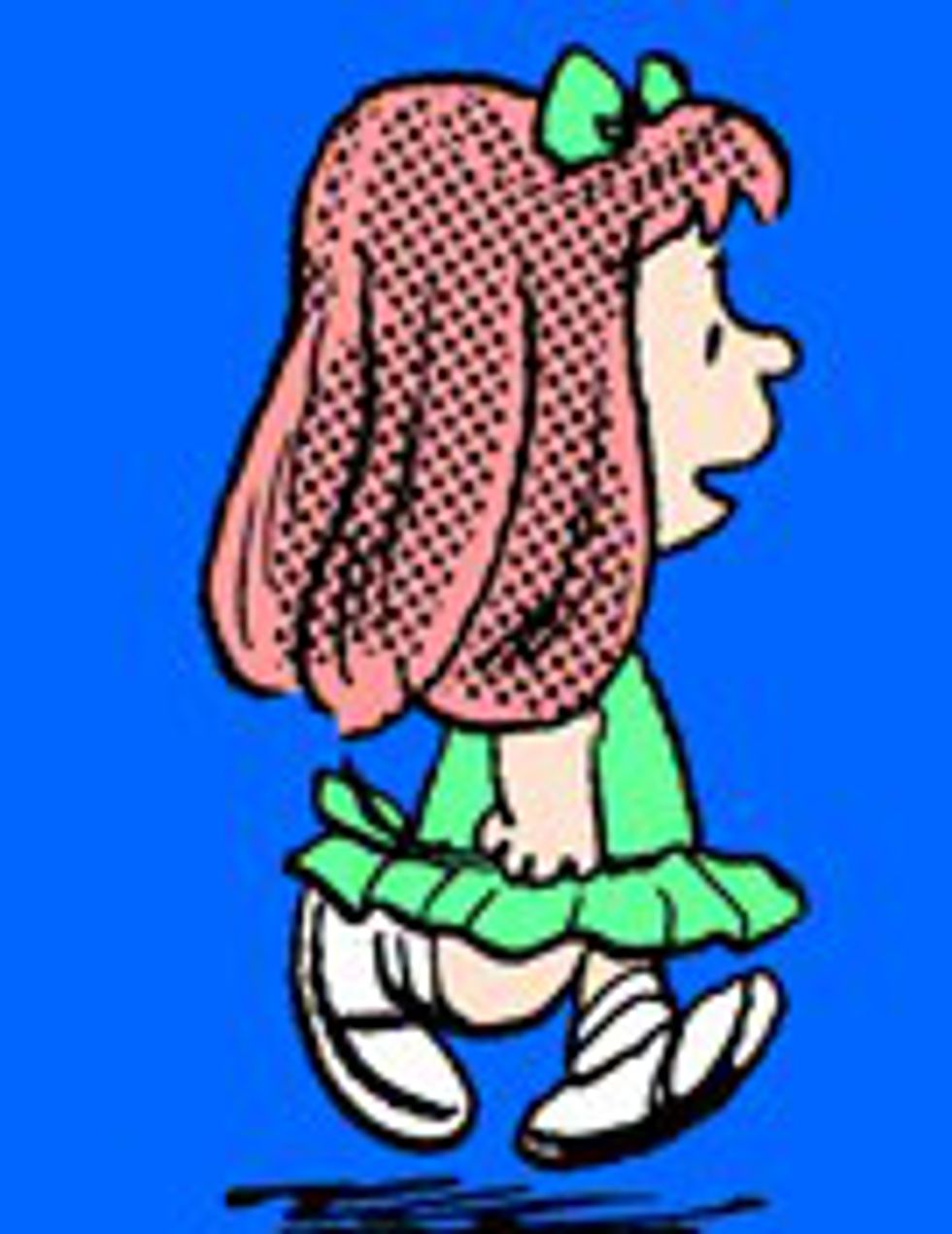
Emily first appeared in a Peanuts strip that was run on February 11, 1995. The comic was now forty-five years old, and Charlie Brown had reached his maximum age of eight-and-a-half years. The series revolving around Emily begins with one of the iconic strips in which Charlie Brown receives ill-advised psychiatric aid from Lucy Van Pelt, his most notorious tormentor. She suggests he try taking dance lessons, which she believes will help him overcome his social anxiety and introverted nature.
Charlie Brown immediately goes to the local dance school and signs up for lessons. The other students are just as cruel to him as his friends, and he regrets his decision; that is, until he is approached by an outgoing classmate named Emily who offers to be his dance partner. He is shy at first, but goes on to become smitten with the girl, whose warm personality perfectly offsets his depressive nature.
Later, Charlie Brown is seen laying in bed at night, smiling happily and fantasizing about Emily, the first of his peers to be kind to him.
The next day, however, when Charlie Brown returns to the dance school and asks after his partner, the teacher informs him that not only was Emily not present, she never had been present, and there had never been a student fitting her description at the school. Charlie Brown is then seen dancing happily by himself, before realizing exactly what he is doing and asking the teacher “Who am I dancing with? Who am I talking to?” He then realizes the truth of the situation and mutters his immortal catchphrase, “Good grief!”
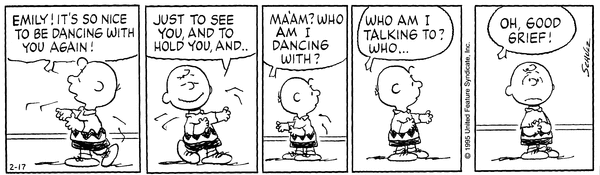
The series ends with Charlie Brown again at Lucy’s psychiatrist stand, explaining what had happened to her. Lucy tells him that he was “supposed to dance with real girls,” then refuses to continue the conversation on the grounds that he had already used up his prepaid time.
The fact that Charlie Brown was eventually able to recognize that Emily was part of his imagination suggests that he was not too far reserved into his own head. However, Emily would go on to appear twice in the following years: once in 1996 and once in 1999. In neither of these instances is the subject of her existence brought up, and Charlie Brown treats her exactly as he had before he discovered the truth. This could be taken to mean that Emily somehow did exist, but simply disappeared from their dance classes; or, more realistically, her latter appearances could mean that Charlie Brown had finally succumbed to his loneliness and created for himself a “real” human being with whom he could converse, unashamed of being himself.
Very few of the Peanuts characters are seen to age in any sort of fashion. This poses a problem in a strip that lasted between 1950 and 2000, as the children appear to remain children across half a century of time. However, as previously mentioned, Charlie Brown does age somewhat, at a pace of roughly one year per decade. Thus, some amount of time passes over the comic’s storyline, if not the same amount of time that passed in real life. One could surmise that the entire strip takes place between 1950 and 1955, which would place all three of Emily's appearances somewhere in 1954, when Charlie Brown was approximately seven years old. 1954 was the year both Godzilla and Lord of the Rings were introduced to the world — but also, more importantly, it was two years since the release of chlorpromazine.
Assuming the events depicted in Li’l Folks took place the same year as the first decade of Peanuts — 1950 — one can draw some startling insights into the nature of “Good o’ Charlie Brown.” For instance, for the first few years of his existence, Charlie Brown was depicted as a good-natured, happy-go-lucky child who had very little idea what his friends thought of him.

However, within the first few years of Peanuts — and following the release of chlorpromazine — Charlie Brown had adopted the depressive nature for which we now recognize him. Thus, assuming Charlie Brown was around five years old when the drug was given to the public, one could draw the conclusion that, for the four years of Li’l Folks and first few years of Peanuts, Charlie Brown was a young boy who had completely given over to his schizophrenic fantasies. After all, at his age, he would have very little frame of reference with which to understand his own condition. And although schizophrenia had been recognized as a legitimate concern for half a century, knowledge of this condition had not yet spread to such an extent that adults such as Charlie Brown’s parents — a barber and a housewife — would have any idea of what was wrong with their son.
That is until 1952, when the Browns realized that their son was living in his own fantasy world, playing what he thought were harmless tricks on real-life people and completely ignoring others’ opinions. Charlie Brown — now five or six years old — was given the brand-new chlorpromazine drug, which did manage to calm his schizophrenic nerves…only to replace them with something much worse.
After using chlorpromazine for a considerable period of time, Charlie was able to think and act like an ordinary child; unfortunately, the side effects of the brand-new drug created in him a deep depression which was only worsened as he came to see his friends’ opinions of him for the first time.
Other side effects of chlorpromazine include a slowing of the breath (which may explain Charlie Brown’s failures in the field of athletics), insomnia (many Peanuts strips depict Charlie Brown lying awake at night) and impotence. Obviously, this last diagnosis would have very little effect on a child who has not yet grown into his sexuality; however, there is a possibility of Charlie Brown being able to feel the dysfunction of his manhood on some subconscious level, which could very well explain his uncharacteristic physical desire for the Little Red-Haired Girl who, like him, is at an age far before that of sexual maturity.
Charlie Brown’s depression continued to increase over the next few years, until his underlying schizophrenia was able to break through and manifest itself in Multiple Personality Disorder, which led to the creation of Emily in Charlie Brown’s mind. When Emily first appeared, Charlie Brown was still enough under control of the drugs to recognize that she was nothing more than his imagination. However, when she appeared in 1996 and 1999 — both 1954 within the story — the part of Charlie Brown’s subconscious that created Emily was strong enough to overcome the chlorpromazine and make him believe that she really existed. Thanks to the drugs, he was no longer subject to the delusions that had made his earlier years an insane fantasy world, but he was still under the influence of his schizophrenia, and probably always would be.
Luckily for him, his tortured subconscious was now taking a much nicer form, giving him some hope for the future.