About 20 second graders looked up at my dad, the farmer, as he stood in the soybean field with his fingers locked in his belt loops, his chin up high. He proceeded to tell the little ears and unknowing eyes about GMOs—genetically modified organisms—and how these scientifically altered plants will feed the world.
Well, I guess it’s never too early to start an education on GMOs.
But, I also believe it’s never too late.
Fifty two percent of polled Americans believe GMOs are unsafe to eat, while 13 percent remain skeptical, according to a poll by ABC News.
Let us note that this is despite the fact that GMOs have been proven safe many times. In May, the National Academies of Science, Engineering and Medicine reported that they “found no substantiated evidence that foods from GE crops were less safe than foods from non-GE crops.”
Yes, that means GMOs are safe to eat, so labeling them on food products is completely unnecessary.
You have most likely been eating genetically modified fruits and vegetables for years, but now that labeling has become an option, many consumers will assume that GMOs are harmful. In fact, around 70 percent of the processed food in the U.S. contain genetically modified ingredients, according to “Scientific American.”
The U.S. Food and Drug Administration has also proven that GMOs are not allergenic or toxic. Nonetheless, many Americans choose to trust food labels over statements by expert organizations.
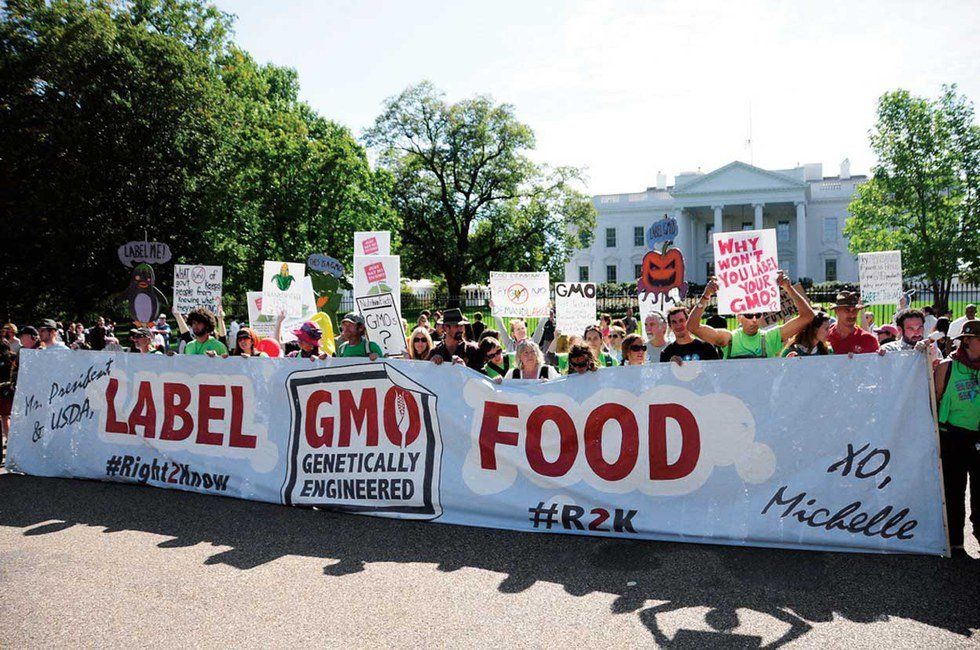
The unnecessary advertising will likely lead to wide-spread consumer fear of GM products when people view the label as a warning instead of a description.
Because of this stigma, there will be a higher demand for conventional, or non-GMO, foods -- especially if more states require labels, like Connecticut and Maine.
These conventional foods require more water, and more pesticides because they are not genetically resistant. Therefore, conventional foods will not only become more present, but also more expensive.
While pro-label groups argue that labeling will only cost the consumer $2.30 per year due to increased product prices, according to a study by an economic consulting firm ECONorthwest, they fail to calculate the cost of producing non-GMO foods.
Due to the higher production cost of conventional foods, consumers could be spending a significant amount more on foods that they assume to be safer, but this has never been proven true, according to CNN.
However, the bad stigma caused by GMO labeling can hurt more than your wallet.
Studies show that GM crops have doubled their yield per acre, a statistic that could help support developing countries with a shortage of food. If demand for GM crops declines due to labeling, the industry will begin to fail, hurting the areas of the world that need it the most.
For example, researchers have developed a strain of rice called Golden Rice that may reduce Vitamin A deficiencies, causing blindness and even death, in children of developing countries. However, hysteria has prompted an anti-GMO group called Greenpeace to block the production of the rice, according to “The Golden Rice Project.”
Not only have groups blocked the production of potentially life-saving foods, but a major decline in support for GMOs could prevent further research from being accomplished. Placing this research on hold could cost the lives of children all over the world.
The debate over whether to label GMOs on food or not is more than just knowing what is in your food. Labeling could prevent an agricultural industry from developing, thus hurting the areas of the world that depend on its nutritionally-enhanced or disease-resistant qualities.
The power of thought can control what people buy, and that economy dictates how the world functions, what foods are produced where. Without GMOs, the world—in respect to the shortage of food—won’t be able to function properly at all.
It’s a technology, just like the new update of the iPhone, but it doesn’t just make consumers’ daily lives easier and more efficient, it makes their lives healthier, and well…alive.