
At age 14, I pinned an old world map to the wall of my bedroom, my mind drinking in the exotic names of entire countries that I had never before known. I used pictures I found on the internet and Google search to find places that, to me, seemed to rest at the farthest reaches of the world.
I formulated a list of the wildest places I could find and named it "Carly's Travel Bucket List." There were about 50 places on the list, a mix of cities and countries that peaked my wanderlust-ing interests. The list lacked common places of interest such as Paris, Rome and London; instead, it spelled out places such as Kathmandu, Yogyakarta, Kampala and other destinations that caused both my friends and family to pause and question my travel desires. When I spoke of my firm desire to see a side of the world most go their entire lives without witnessing, I received mixed responses.
My other young and equally naive friends nodded and smiled along, probably simultaneously conspiring about their own aspirational dreams. On the other hand, my parents, whose desire to travel the world has never been at the top of their priority list, openly voiced their concerns and doubts that I would even enjoy traveling once I tried it. Still, though, every time I traveled, whether it was to Spokane, Washington or Washington, D.C., my veins flooded with life every time the plane left the ground.
When the wheels were finally up on the first leg of my journey from Boise to Entebbe, I experienced this feeling like never before.
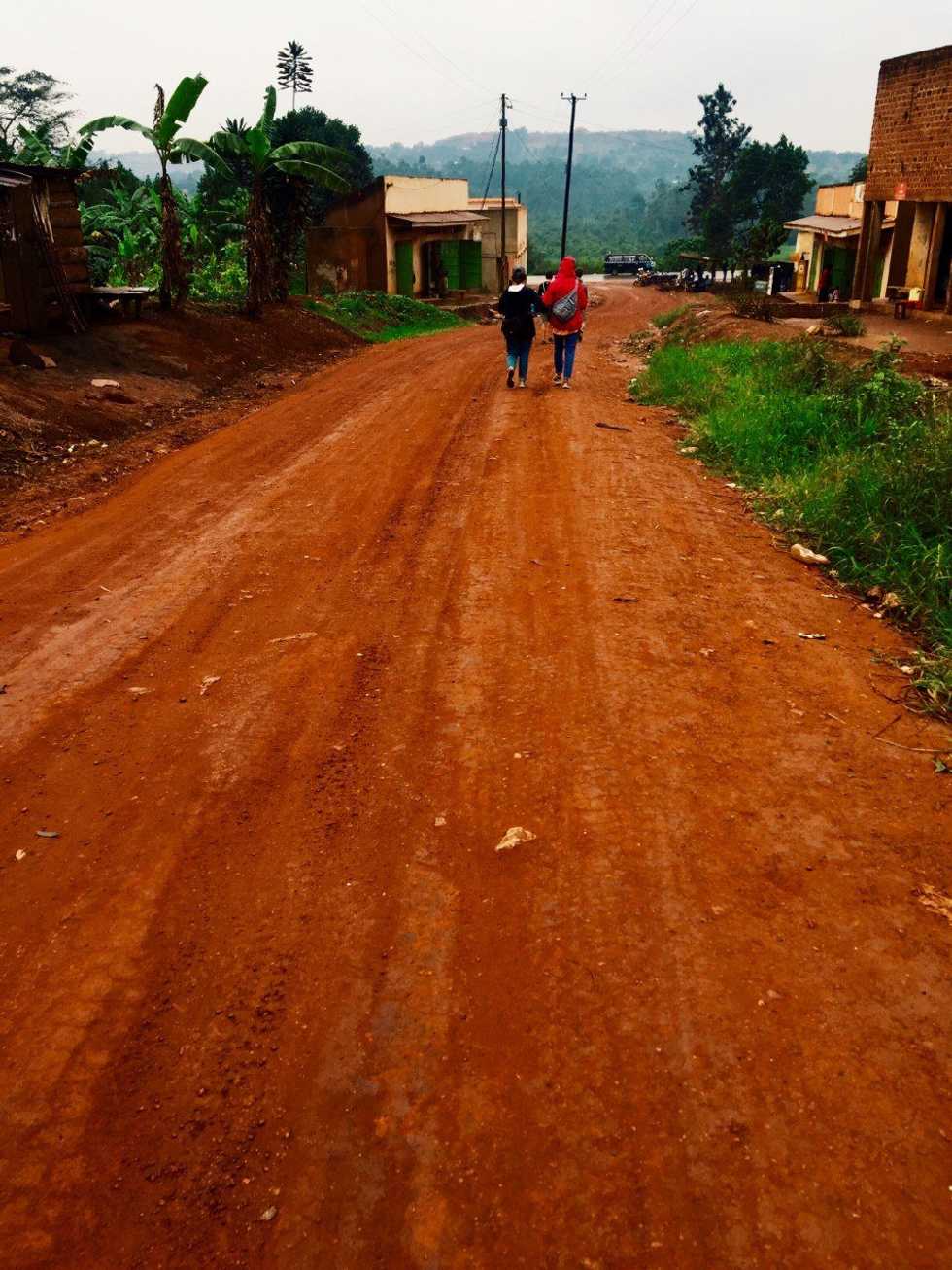
Over the last six months, I fielded mixed responses to my impending trip to Uganda: “You’re traveling by yourself?” “Isn’t it dangerous?” “What an adventure!” “Make sure you get your shots!” Needless to say, not everyone supported me going to a developing nation in Africa. When I told my brother I was flying through Brussels on the way, he told me that if he were in my shoes he would stay there instead of continuing on to Uganda. My parents and grandparents worried for my safety and health, I’m sure conjuring up pictures in their minds of a war-torn nation ravaged by deadly diseases. No one seemed to know what to expect for my time in Uganda. It wasn’t until I was on a bumpy van ride down a red dirt road that I realized I hadn’t at all known what I was truly in for.
I stared out the window of the van that was taking me from the airport in Entebbe to the compound in Wakiso we were staying in, watching a Uganda that was covered by the dark of the night, and studied what little I could see of my surroundings – people everywhere, dimly lit shops and stands littering the side of the road, erratic traffic, honking, honking, honking.
I was definitely not in my Western comfort bubble anymore. I experienced my fair share of what is commonly known as “culture shock,” however I think a much more apt name for it is “culture wonder.” Over my next few weeks in the country, I drank in all the Uganda that I could. I cannot do the country or its people justice in the these few words, but I want to do my best to paint a picture of the wonderful place that swept me off my feet. Nearly everything was different, yet nowhere has felt more acutely like home to me. Learning to take a crowded taxi, training myself to slow down and live in Uganda time, picking up on and using different figures of speech – I soon fell deeply in love with life in Uganda.
Uganda is a beautiful, dynamic and diverse country that is too often hidden beneath an aid-hungry mask. Not only do we as a Western culture fall too easily into the trap of grouping all African nations together as one, we often envision ourselves as the only thing keeping Africa from completely self destructing. When I arrived in Uganda, though, my eyes were opened greatly to the misconceptions I allowed myself to believe for so long. While I was there, I learned that Western aid has done more harm than good to the country over the last 30+ years, as is the case for much of the developing world.
I learned that Ugandans don’t need or want us “mzungus” to swoop in and fix all of their problems, especially when we will swoop out just a few short weeks, months or years later. I witnessed what it looks like to not just empower Ugandans to change and improve their country, but to partner with them in doing so. I met Ugandans who are passionate about sustainable change, including educating the future generations, teaching fellow countrymen how to farm in a way that is both effective and sustainable, and helping other women who have fallen on hard times to learn to save money so that they can pull themselves and their families back on their feet.
In Uganda I lived among people who prioritize each other over time and possessions. I saw what it is to live beyond a schedule, not overly concerning oneself with being prompt or keeping to a rigid time table. I met people who were openly dependent on a force bigger than themselves to keep them safe, healthy, clothed, fed, and alive. I spoke with people who were fiercely proud of their Ugandan heritage, people who recognized their own resilience and that of their nation. The life I experienced in Uganda was life to the fullest. Although I was busy every day, I got to take a deep breath for the first time in too long. The people taught me to love hard, feel deep, and smile big.
The lessons I learned in Uganda changed everything in the most humbling way. My eyes are open to a whole new world; I never want to go back to living the way I did before. Humanitarian Hugh Evans, in his April TED talk, defined global citizens as people who identify above all else as members of the human race. In traveling to Uganda, I became a global citizen. I stood hand in hand with my new Ugandan friends and experienced a blending of cultures, a merging of worlds, a true global partnership bound together by a mutual desire to strengthen the people and nation of Uganda.
Travel, when we let it, pushes our thinking, expands our world view, and shapes the desires of our hearts. When we board a plane, boat, or bus that takes us from our familiar Western culture to a whole different way of living and viewing the world, we have the opportunity to develop and bring home with us practices that we would have otherwise never known about. If we are willing to open our eyes to the culturally diverse and rich ways that other parts of the world live, we see our own culture through a new lens. When we allow ourselves to love others in a big way, our concept of “home” modifies and broadens. If we let ourselves, we leave parts of our hearts across borders in countries far away, vowing to return someday soon. And if we are wise, upon returning, we do our very best to merge our new reality with our old; we allow our passion to spill out of our hearts so that others can glimpse the life we experienced.
So, to my fellow citizens of the world, I beg you – travel. Push past your comfort zone, lean into a life that looks nothing like what is familiar. Learn from people whose experiences are wildly different from your own. Eat food that maybe makes you nervous. Have adventures, say yes to new things, be safe without being overly cautious. Allow yourself to be transformed by the world around you. Be okay with the fact that when you get home, everything will be the same but nothing will seem the same. Get an education that books simply can’t provide. Slow down, breathe and drink in the wonder. No matter how old you are or aren’t, no matter what career you currently have or someday desire, no matter what people tell you or how people view you, go. You have been given this go around on the earth – get out there and use it.