
Suffering: it's everywhere. All you have to do is turn on the news. It's often a reason why none of us do so. We see scenes such as people fleeing from the flooding produced by Hurricane Patricia and horrific images from the tapes put out by ISIS of senseless killings of Christian brothers and sisters and innocent civilians who will not submit to their regime. In our own lives, we might be experiencing the loss of a loved one to cancer, or going through the divorce of our parents, or struggling with addiction. Whatever it might be, suffering often forces us to ask the question, "Where is God in all of this?" Closer than we might think, it turns out. It is incredible how, even in the midst of suffering, trial, and tribulation, God's purposes in the world and for our own lives really are being furthered and fostered.
Earlier this week, I was inspired about this subject based from a talk that Timothy Ateek, Director of Vertical Ministries on the Baylor Campus, gave on Monday night. Suffering is a subject that permeates the life of each human that lives on this earth. Suffering is a part of the human condition. Because of the fallen world in which we live, we will always experience the reality of suffering. Painlessness cannot, at the present time, be an option for us.
But we, as Christians, have a hope for painlessness. As Revelation 21 tells us, there will be a day when Christ returns to "wipe every tear from our eye" and there will no longer be any mourning, crying, or pain. Until that day, however, we must live in this suffering world. Thankfully, there is a purpose in our suffering. One of the most poignant images of this truth comes from C.S. Lewis in his small volume "A Grief Observed." In this particular work, Lewis has passed through a portion of unimaginable suffering himself. "A Grief Observed" is the exact transcript of Lewis's journal following the death of his wife, Joy, to cancer. Here we find the great apologist wrestling with God. It is even safe to say that he shows anger toward God.
But, despite his anger, Lewis returns to the firm assertion that God works wonders even through dire tribulation. The image he uses is the image of a surgeon. When someone requires surgery, this means that a surgeon must cut them open to remove the illness from within them. But (and this is the key to the image), the surgeon will never leave the wound open. The wound will always be sewed up again, mended, and will eventually heal. When we place God in the role of the surgeon in Lewis's image, we see God's purpose for the allowance of suffering in our lives. God's purpose for suffering in our lives reveals his nature as the Great Physician, healing us of the sickness of sin that has invaded our own lives.
Truly, suffering serves as a sanctifying experience. There is scriptural witness to suggest this. As James chapter 1 states:
Consider it pure joy, my brothers and sisters,[a] whenever you face trials of many kinds,3 because you know that the testing of your faith produces perseverance. 4 Let perseverance finish its work so that you may be mature and complete, not lacking anything.
We are to consider it joy when we experience suffering in our lives because we can have confidence in the fact that through our troubles, there is the promise that we are being sanctified, being made holy, through our perseverance through the suffering.
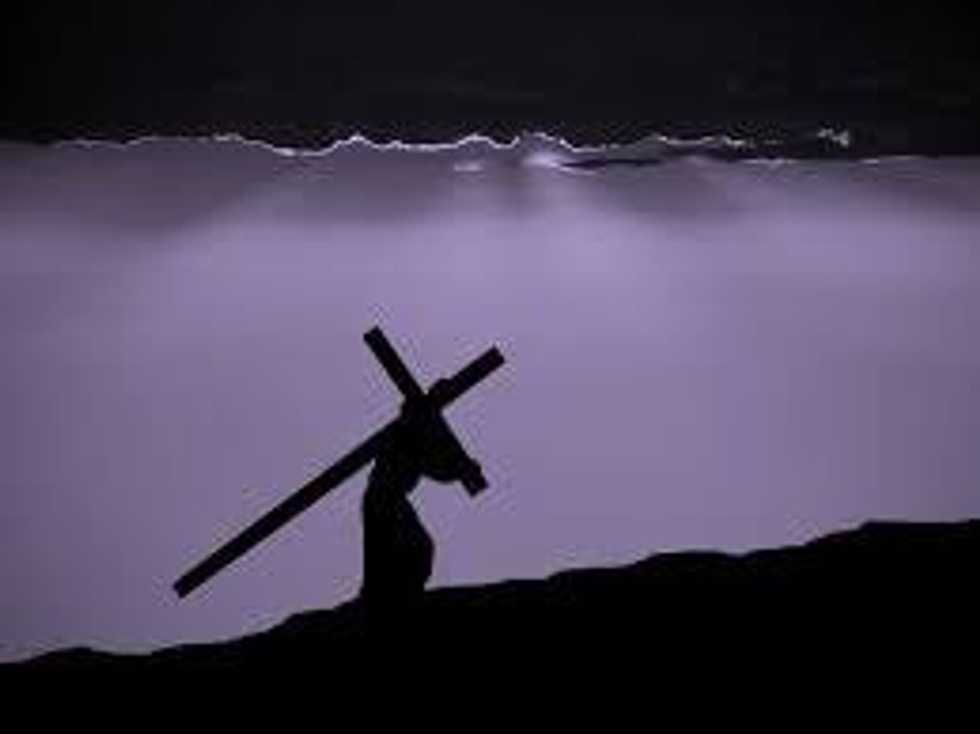
Furthermore and most importantly, we, as Christians, serve the Suffering Servant: Jesus Christ. After all, we can garner encouragement from the truth that it was Christ's great suffering that saved us from our sins. When we endure suffering, we are, as Paul says in his letter to the Ephesians, "imitators of God" in Christ (5:1). What an incredible challenge; we are to take on the same attitude that Christ took on in Gethsemane. Our humility towards our own suffering that comes our way demonstrates a Christlike attitude. In our desire to be imitators of Christ, who is our example, we must imitate the Suffering Servant, the Man of Sorrows, who is the King of kings that conquered death for us.
So, let us take encouragement in this: that although there will inevitably be suffering in our paths, we have received a "gift of grace" as the character Forese in Dante's "Purgatorio" says. Through our own suffering, we truly do become more like Christ who suffered for us. Such a concept is, indeed, a concept of true grace, that we could even hope to become like Christ, our hope of glory, who gave us this everlasting encouragement:
33 These things I have spoken to you, so that in Me you may have peace. In the world you have tribulation, but take courage; I have overcome the world (John 16:33).