
[Trigger warning: cases of sexual assault, physical abuse and emotional abuse will be discussed beyond this point.]
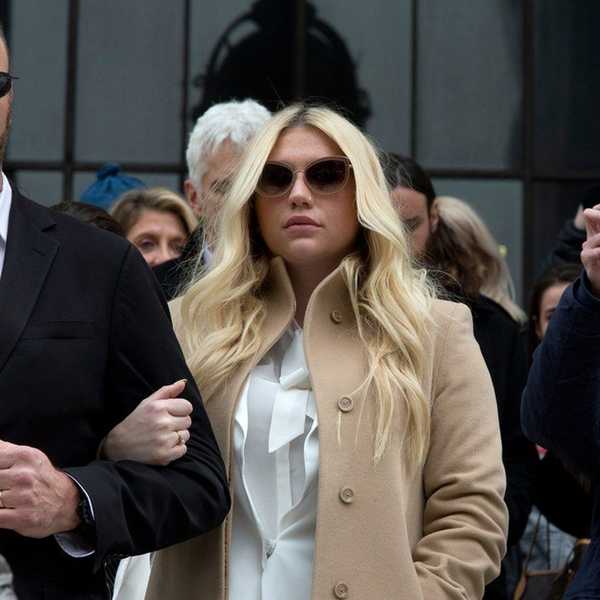
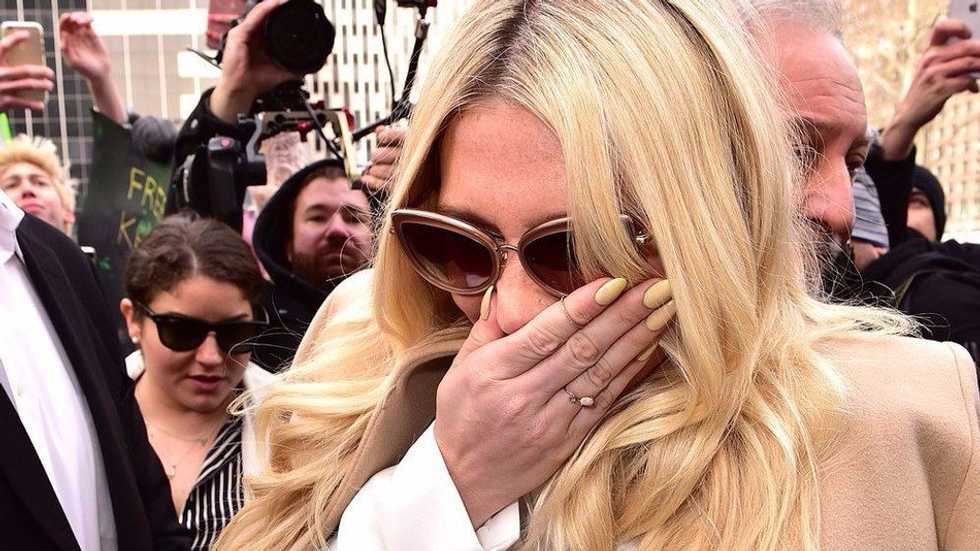
On Friday, Feb. 19, the world stood still for singer Kesha Rose Sebert, also known as Ke$ha, and her supporters in the Manhattan Supreme Court’s courtroom.
After over a year of very public lawsuits, smear campaigns and having her primary source of income and self-expression locked away by her own producer, Kesha lost “a preliminary injunction motion today that would have allowed her to record music without her longtime producer Dr. Luke (aka Lukasz Gottwald),” according to The Hollywood Reporter.
It was a letdown, to say the least.
The case started in 2014 when Kesha sued Dr. Luke for sexual assault and battery; the alleged abuse started in 2006 when Kesha claims that Dr. Luke gave her date-rape drugs and sexually assaulted her shortly after she turned 18. The abuse did not stop there. According to Rolling Stone, Kesha reports that Dr. Luke "sexually, physically, verbally and emotionally abused" her throughout their 10 years of working together, which lead to an eating disorder that Kesha later checked into a rehabilitation center for.
Dr. Luke continues to deny the accusations and counter-sued Kesha for extortion. This crossfire of lawsuits put Kesha’s career on lockdown, and her label at Sony sided with Dr. Luke, complicating the situation further.
In fall of 2015, Kesha and her lawyers requested an injunction, or a judicial order, to release her from her contract with Sony, on the grounds that Kesha was unable to continue to make music and therefore acquire income while the lawsuits were going on.
New York Supreme Court Justice Shirley Kornreich made the decision on Friday to deny the injunction. "You're asking the court to decimate a contract that was heavily negotiated and typical for the industry," the judge said to Kesha’s lawyer, Mark Geragos.
This decision potentially requires Kesha to stay in her contract with Sony and produce six more albums with Dr. Luke before she is free to go.
The news, frankly, is heartbreaking.
Our culture, for some reason, is always anxious to deny the validity of a victim of abuse’s claims. One of the biggest arguments that anti-rape activists often face is that people are willing to lie in a court of law about being sexually abused. However, I’m going to revisit a statement I made in the last article I wrote about Kesha’s case in response to that argument: “Would someone really be willing to stand up in front of a courtroom and relay, in extreme and gruesome detail, the worst physical, emotional and sexual encounters of their life if they didn’t really need to?”
According to data collected by RAINN.org, only three out of every 100 rapists are reported, tried, convicted and sent to jail for their crimes. Victims, both men and women, aren’t reporting the crimes committed against them, because the justice system is not on their side.
When you zoom out and look at Kesha’s case as one big picture, it becomes very clear that a woman is now suffering from someone who still desires to control her in the same way that he controlled her as a teenager back in 2006. Her contract, which was “typical for the industry,” according to Justice Kornreich, was drawn up when she was naive and desperate to start her career.
Zayn Malik, who was famously let out of his own Sony contract with One Direction in 2015, was able to break his contract due to creative differences and general dissatisfaction. Why does Kesha have to fight so hard to do the same after being a victim of several crimes?
The good news is that Kesha's fight is not over. She still has future trials. However, the judge's decision makes the future look bleak. For now, one can only hope that cases like Kesha’s can pave better paths for future victims of sexual, physical and emotional abuse.