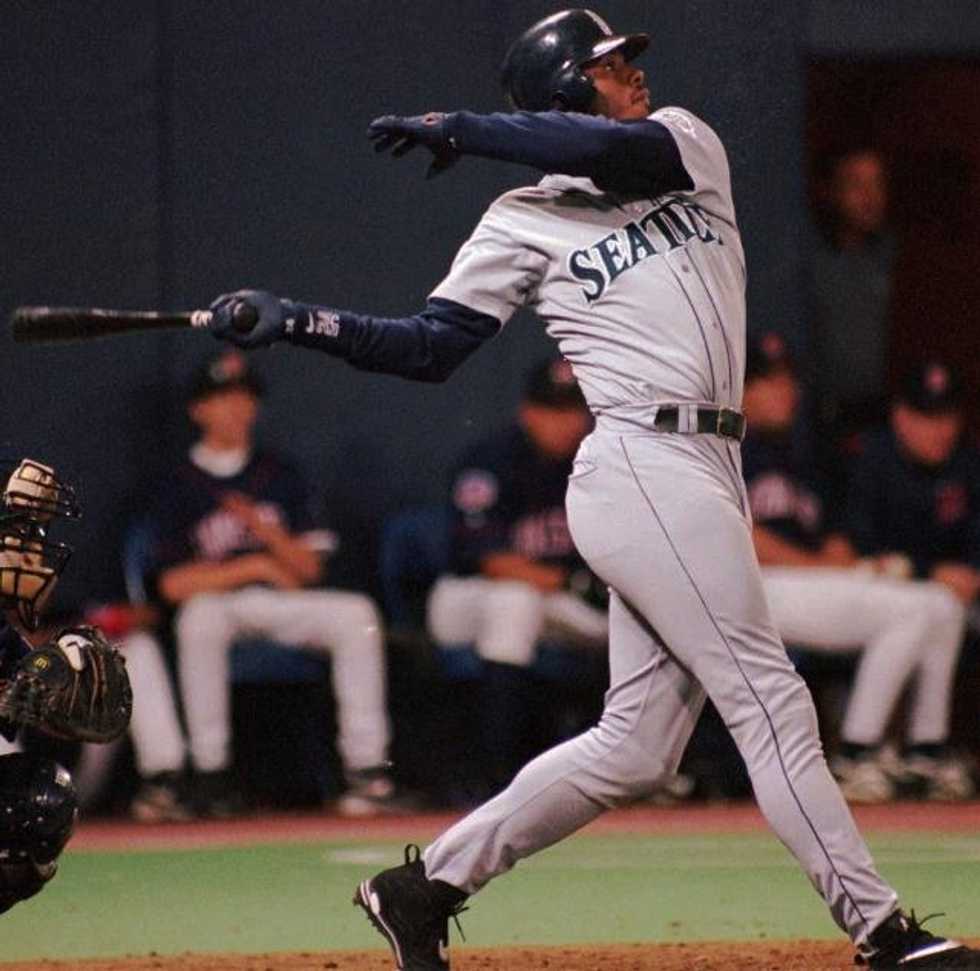
The Baseball Hall of Fame is now two spots larger with the recent inductions of Ken Griffey Jr., one of the best five-tool players in recent history, and Mike Piazza, perhaps the best hitting catcher ever. In addition to the honor of being elected in his first year of eligibility, Griffey Jr. also set the record for the highest percentage of votes casted for him. His 99.3 percent of votes surpasses the former leader, Tom Seaver, by almost half a percent. While this record should be celebrated, all talk has turned to the votes he did not receive. Of the 440 voters, all members of the Baseball Writers' Association of America, three voters chose to not write down Griffey Jr.’s name down among those who they believe deserve to be immortalized in the Hall of Fame. To figure out why he was not a unanimous selection, first we need to examine his illustrious accolades.
Over the course of his career, “The Kid” batted .284 with 1,836 runs batted in and 630 home runs, which puts him sixth all-time on the list of most home runs hit. In his 22-year career, he was named an all-star 13 times, a Gold Glover 10 times, and a Silver Slugger seven times. Along with this, Griffey Jr. was named the American League Most Valuable Player in 1997 and won the annual Home Run Derby three times. From a statistical standpoint, there is no reason why Griffey Jr. was not a unanimous vote into the Hall of Fame. He also was never connected to steroids, which is the main reason many good players are omitted from voters’ ballots. So why was this not good enough for the three voters who did not vote for “Junior?"
Voters, whose votes remain anonymous, sometimes use their ballots to make personal statements. Voters hide behind a wall of anonymity, only to be revealed if they desire, and cast votes in a way to not elect those who truly deserve it. Over the past several years, historical great players have fallen short of a unanimous vote because it is rumored that a select few voters will not vote for anyone who is on the ballot for the first time. These voters believe that no one, no matter how great a player, deserves to be elected to the Hall of Fame in their first year of eligibility.
Another reason why voters omit deserving candidates can be seen in the 2014 elections where Ken Gurnick, the Los Angeles Dodgers beat writer, chose to not vote for anyone from the past two decades. While the player he voted for, Jack Morris, was an excellent player, he was hardly the best eligible candidate. Why was this the only vote cast? Gurnick explained his decision by simply saying, “As for those who played during the period of PED (performance enhancing drug) use, I won't vote for any of them." Despite many players clearly not using steroids, Gurnick’s rash sweeping decision to vote for no one essentially eliminates the possibility of someone receiving a unanimous vote. While it is not clear if this was the motive for those who did not vote for Griffey Jr., it is certainly a strong possibility as his statistics merit a unanimous vote.
So how can deserving players earn the hallowed distinction of being voted into the Hall of Fame unanimously when a select few voters cast ballots to make a personal statement? The fix is surprisingly simple. To eliminate these self-serving voters, make all voters’ ballots publicly available after the results are announced. The anonymity of the votes allows people to vote on their own agenda without any public reprimand. Making the ballots public ensures voters are voting for deserving candidates or face the consequences from not only the general public but also the Major League Baseball front office, who want the votes to be cast properly. With this easy a solution, the MLB needs to immediately remove the wall of anonymity in the Hall of Fame voting process and honor all-time great players with the chance to be elected unanimously.