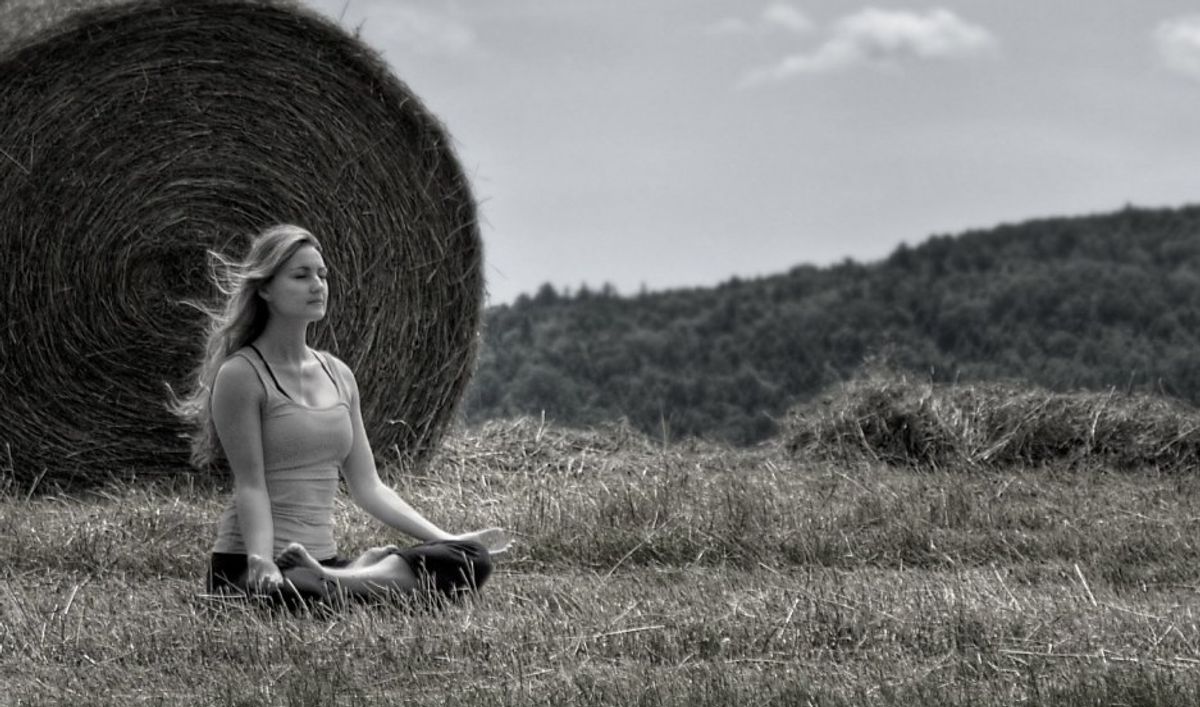
Alone time is a peculiar thing. Some people love it, some people hate it and some, like me, have a very complicated relationship with it.
In the course of the past year, I have experienced many different forms of being alone, from being in a relationship where I saw my significant other every day (but slept in my own bed most nights), to over the summer being long distance, and then single, and very alone. Over the fall, I spent nearly all my time alone but did not feel lonely at all. (I can't even count the number of weekends that passed without me interacting with a single person. Too many.) Then going from that to back in a relationship where I have started referring to my significant other's house as "home," if only from the amount of time I've been spending there in the last month. It's a bit of a weird back and forth, absolutely, and it has given me the full range of sentiments when it comes to being alone. Here are some things I've learned:
1. Find the type of alone that works for you.
Does alone mean in your room by yourself, door closed, the world locked out? Is the music blasting or is it quiet and calm? Is it in a coffee shop, headphones plugged in while the world bustles around you? Figure out what feels best by yourself. There may be more than one place -- more power to you.
2. Figure out just how much time you need (and how often).
Just like I have discovered recently, I don't need a ton of alone time -- maybe once a week, and it only needs to be very short bursts of time, such as grocery shopping, or doing a load of laundry. More than a couple days and being alone doesn't hold the same productive value to it.
3. Alone doesn't necessarily mean isolation.
This kind of ties back into number one, but essentially alone time doesn't mean you have to be by yourself. I've found that I can have that dedicated "alone time" in the company of my significant other. It means not having to engage with one another or anything of that sort -- just doing our own thing while in each other's presence counts as alone time for me. I don't need to be completely alone to enjoy the benefits of alone time.
4. Alone time makes together time one hundred times better.
If you spend all your time together then you don't have any new stories to tell one another. Alone time means that you can develop individually. But also, it makes you miss your significant other and your friends and makes you much happier to see them.
5. There is "active" and "inactive" alone time.
'Active' alone time counts as time spent for self-reflection, deep thought, meditation and reorganization of your life (including deep cleaning, moving furniture, etc). 'Inactive' constitutes curling up in bed with Netflix, relaxing, goofing off or masturbating, whatever should suit you! Active is almost a reset-type time, and inactive is simply being and enjoying.
6. Schedule solitude.
This may be most important of all of the things I've learned--don't just wait for time to be alone to appear. You may not think that you need it, but you'll end up tiring yourself out. Plus scheduling it will mean that it will become a regular, integrated part of your routine!