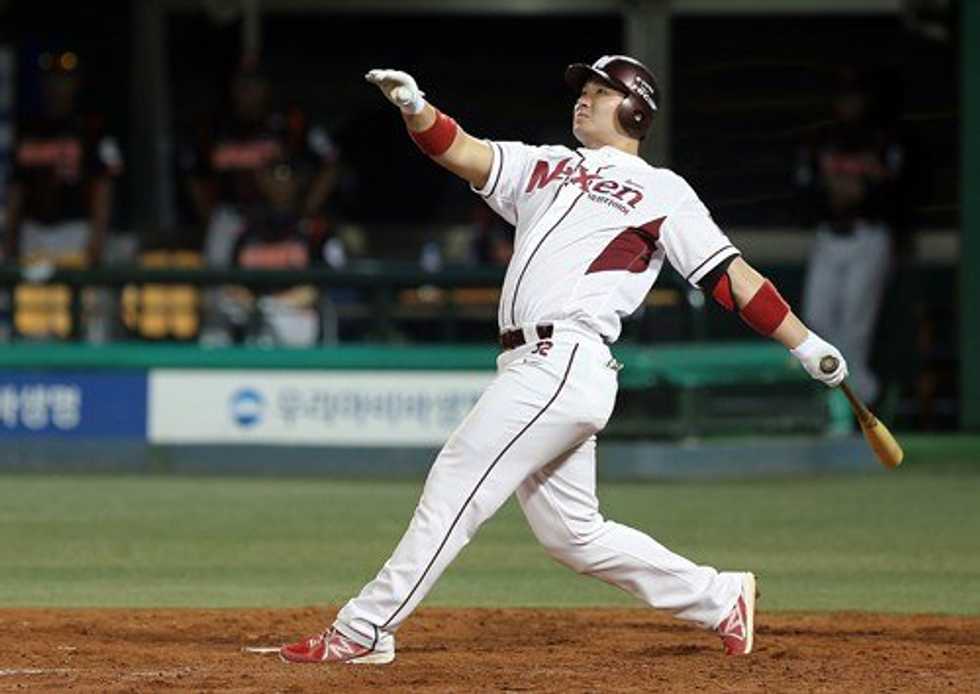
The offseason has already begun in the MLB. A couple trades have already been underway amongst teams like the Tampa Bay Rays, the Atlanta Braves, and the Detroit Tigers. However, not one free agent has signed with a team yet. This isn’t highly irregular. Most free agents like to wait until the December Meetings happen. This is when GMs from every baseball organization get to together and talk shop. The meetings set the benchmarks for future trades and potential free agent signings. However, international free agents, like Mr. Byong-ho Park, are different stories. It’s a lengthy process, but here’s the best summary I can muster:
First, all 30 MLB teams are given the opportunity to present a posting fee to the Korean baseball team that currently employs the player hoping to play in the United States. The highest bid is accepted by the Korean team, f it’s a sizable amount of money, and then the MLB team who posted the highest bid has the sole rights for contract negotiation during the next 30 days. If no agreement between the player and the MLB team is struck, then the posting fee is not paid and the Korean player cannot sign in the United States for another year.
In the case of Byong-ho Park, the Minnesota Twins posted the highest bid for the Korean slugger coming in at $12.85 million. The Twins will now have 30 days to come to an agreement with Park. In this piece, I’d like to look at his potential in the MLB after playing a consider amount of time in a weaker Korean league.
To begin, we first need to understand the type of player Park is. Immediately, we can recognize his outstanding power. In the past two seasons, he has popped a ridiculous 105 homeruns. In his most recent season, his slugging percentage came in at an otherworldly .714. To put that in perspective, Bryce Harper, who just won the NL MVP, had a league leading slugging percentage of .649. And the best part about slugging percentage, is it’s a pretty static statistic. Even if Park doesn’t ultimately end up hitting for average, he can still have a ridiculously high slugging percentage when he does make contact with the ball.
And that takes us to Park’s Achilles heel: making contact. In 528 at bats during the 2015 season, Park struck out 161 times. To all of the mathematically impaired, that comes out to 30.49 percent of the time. That’s a pretty steep rate, especially in a Korean league against inferior pitchers when compared to major leagues players.
The real question is how he’ll probably do in the Majors though. His Korean league numbers are helpful but will only get us so far. Check out this GIF:

It’s a pretty simple GIF of Kang swinging at a 90mph fastball that he hit through the hole between shortstop and third base for a clean single. What’s interesting comes later.

This clip shows his swing on the same pitch just at a different angle. Watch his hands. There’s a lot of movement! He clearly has a loading mechanism, which isn’t inherently bad, but extra movement in the hands can lead to real strikeout problems. However, by watching other clips, it doesn’t seem like this is a consistent problem. It may be that this is an isolated incident where he was fooled and had to adjust. But it makes me hesitant to think he can get his strikeouts under control against the better pitcher he’ll be facing in the MLB. Little things like extra movement in the hands can really add up, especially against flame throwers like Wade Davis or slider masters like Chris Archer.
Ultimately, I think he’s going to have a hard time adjusting to major league pitching. When I think of Park, I immediately associate him with Chris Davis on the Baltimore Orioles. He’s had great seasons like 2015, but he’s also had awful seasons like 2014. Massive power with massive strikeouts can do that. With another Korean player, Ah-Seop Son, being posted as well, I think there are better buys than Byong-ho Park.