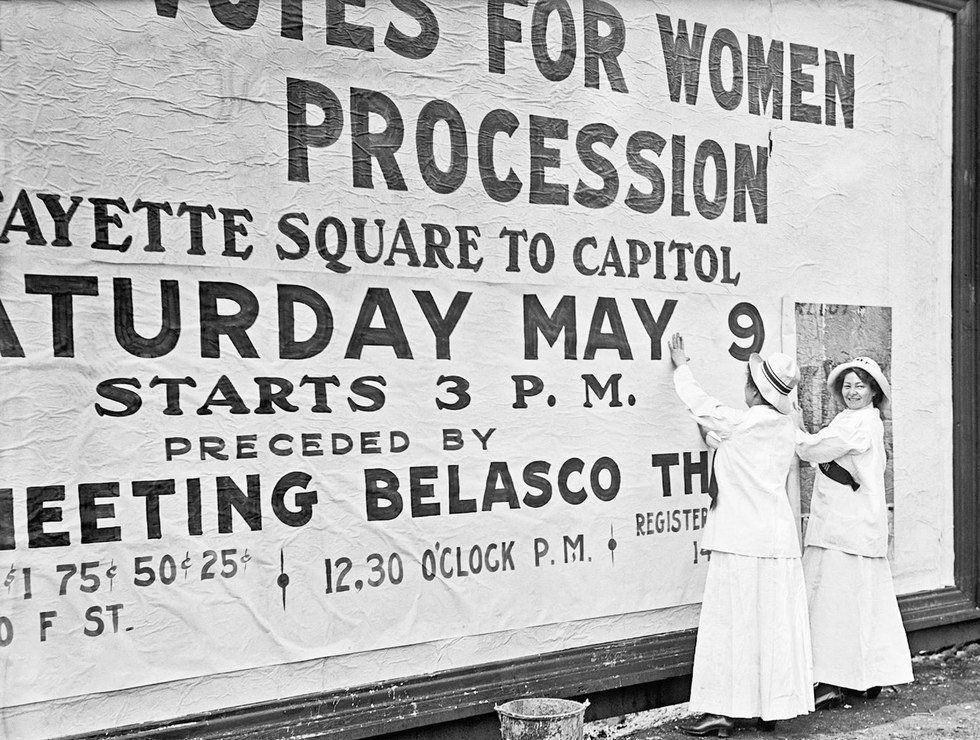
These days, when we consider the topic of female suffrage, a number of names spring immediately to mind. Synonymous with the victorious suffrage moment are women such as Emmeline Pankhurst and Emily Wilding Davison. It goes without saying that these women achieved extraordinary means, often committing great personal sacrifice in the process.
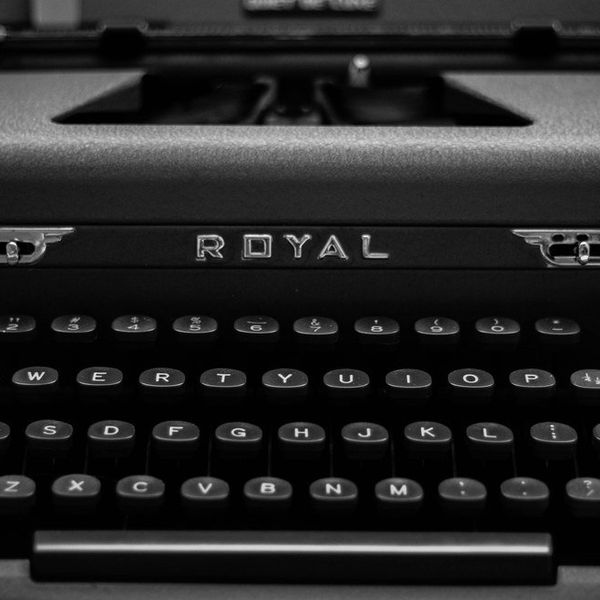
However, as a big literature nerd, I’ve always been drawn more to the women who utilised the power of the written word to voice their opinions on the subject. Though much propaganda surrounding the suffrage movement was distributed via leaflets or political tracts, some chose to tackle the issues faced by women in the form of theatre. Although such women may not be as well-known as the aforementioned Pankhurst and Davison, their contributions to the success of female suffrage.
In the past months, the world has witnessed a huge political shake-up. I’m not an American, but I have felt the aftershocks of Donald Trump’s victory in the race for the White House. I’ve seen the disillusionment, the shock, and outright fear citizens of the USA have experienced in the wake of this Republican victory. Although as a non-American I’ve not experienced this first-hand, my own country has been embroiled in political turmoil over the past year. I’m English, and I live in England, more specifically in a county named Gloucestershire. (Please endeavour to imagine something other than tea, stiff-upper lips and rain when imagining England’s fair shores.) This year, the Great British public voted to leave the European Union, a decision which, in spite of being cast in traditionally democratic ballot form, has proved to be just as unpopular as the Trump victory.
Now, you may think that I’m not using very good examples of the democratic voting process. It’s true that the presidential election and the EU referendum did not end in the way I would have hoped in either instance, but an important thing to remember is that the public had the chance to choose. And they cast their vote. Whether the outcomes were particularly desirable or not, we can take some comfort in the fact that those of voting age, regardless of gender, had the opportunity to have their say. Some one hundred years ago, of course, this was not the case, and this was the contentious topic playwright Elizabeth Robins chose to tackle in her play, Votes for Women!
It is clear that Robins’ chosen topic is something she felt incredibly passionate about. As a woman who could seemingly turn her hand to anything, it is interesting that she chose to utilise her talent to write agitprop theatre, saying that Votes For Women! was ‘the first thing I shall have written under the pressure of a strong moral conviction.’ She had previously been an actress, having ‘found fame and feminism playing the first British Hedda Gabler in 1891, and had been vilified for having glorified an unwomanly woman.’ The fact that Robins turned away from the stage in favour of writing shows the passion she had for the subject, which is perhaps one of the reasons why the play was so powerful and successful. Before Robins wrote the play, the attitude towards Suffrage was largely negative; with even Queen Victoria (whose reign ended six years before Votes for Women was published) describing the efforts of campaigners as ‘mad, wicked folly.’
Categorized as part of the 'New Woman' literature movement, Robins was described as among those who ''Are not content … They pull on brown boots and bicycling skirts! They put man’s yoke of hard linen round their ivory throats, and they scramble off their jewelled thrones to mount the rostrum and the omnibus!’' Although clearly hyperbolic, this statement perfectly encapsulates the popular mindset of the time, and demonstrates just how frustrated women were becoming with their social role. The shock and awe they caused as they picked up the slack and filled the roles left behind by the men who had departed to fight in WWI was plain to see, and served to draw attention to the suffrage movement.
However, what differentiates Robins from other New Woman writers, in my mind at least, is her desire to achieve equality only. She does not wish to tip the scales the other way and put women on top, in the dominant role, but only to bring men and women onto equal footing. This is demonstrated most strongly by the unexpected Mr Pilcher. A male supporter of suffrage, Pilcher takes the stand within this play to promote the female agenda, stating that women ''won't stand the nonsense men do. Only they ‘aven’t got a fair chawnce to even agitate fur their rights.'
(Mr Pilcher? FOUR for you, Mr Pilcher! You go, Mr Pilcher.)
Robins makes an intriguing break from standard feminist theatre here, allowing the male viewpoint to be conveyed in the same way she would the female perspective. This particular choice is surprisingly advanced, and part of what makes this play so damn memorable. This, coupled with the inclusion of still contentious issues such as abortion and marriage (I'm surprised she didn't give anyone a heart attack, daring to bring these things up way back in 1907) makes this play a vivid and scathing attack on the social system which viewed women as second-class citizens. Though not as drastic as say, jumping in front of the King's racehorse, or, going on a hunger strike, Robins' powerful play dealt a heavy blow to the female oppression, and certainly served to forward the suffrage movement.
So, even though it's fair to say the elections we've seen over the past months have gone entirely to crap and left a shocked and confused population in it's wake, at least we can say that we each had our chance to have our say. A popular slogan for the suffrage movement read 'For the work of a day, for the taxes we pay, for the laws we obey, we want something to say.' And this right to have something to say was once not as forthcoming as we find it today. And that is something at least we can be grateful for, no matter how dire the situation may seem.