
It's been half a year since I gave up my sport and looking back on my years as a volleyball player, some hard truths have become clearer. So, I've decided to shed some light on the things athletes experience every day in hopes that by the end of this post, your views on athletes and athletics may be different.
Just like nerds, musicians and every other category out there, athletes have specific struggles and advantages over other groups. Despite all the fame athletes get, behind the scenes can lie a much darker reality. Today, I will be focusing on the hardships athletes face because our struggles need to be shown just as much as our successes. This one is for the athletes by an athlete. But if you are not an athlete, I encourage you to read this post anyways to better understand the people behind the game.
While I may not play a sport anymore, the athlete in me wants people to understand these eight truths about athletes:
1. Games are only the tip of the iceberg.
When most people think of "athletes," their minds automatically jump to games with fancy jerseys, cheering people, exhilarating replays and announced play-by-plays. This is only the tip of the iceberg. What people don't see is everything leading up to that point. Team meetings, scouting reports, two to three hour long practices every day, consulting with athletic trainers about overuse injuries because not playing isn't an option, ice baths and more ibuprofen than probably healthy all for game day. Where crowds of unsuspecting fans cram into a hot gym to cheer and holler for a few hours then quickly head home, leaving the athletes to once again take down the court, although not before getting at least one bag of ice for achy muscles. And for those of us that stand the sidelines, there goes one more game we feel we didn't earn which brings me to my next point.
2. Your self-esteem is tied to whether or not you play. And people bring it up way too often.
The number of athletes total versus the number of athletes that get to step on the court is shockingly low. Easily half of all student-athletes see little to no play time. I was one of those athletes. And no matter how many times people tell you you're good enough, it's hard to believe them. Working so hard every day in practice to stand the sideline every game is not only frustrating but seriously mentally draining. All your work seems for nothing and there isn't a lower feeling in the world. When unsuspecting strangers ask "Do you play?" you politely respond with a smile on your face "I'm not a starter," and walk away. Because smiling when asked that question is the mark of a true athlete, although it does little to help your dwindling self-esteem.
3. You never feel good enough.
For me personally, this one hits home. Bigger, faster, stronger. A true competitor never settles. At least that's what I've been told. But after years of hearing, "You're almost there," I began to believe I would never get "there," wherever "there" was. Coaches are too critical, trainers push too hard and at the end of the day, all that's left is a girl who feels she'll never measure up.
4. We are no strangers to depression and anxiety.
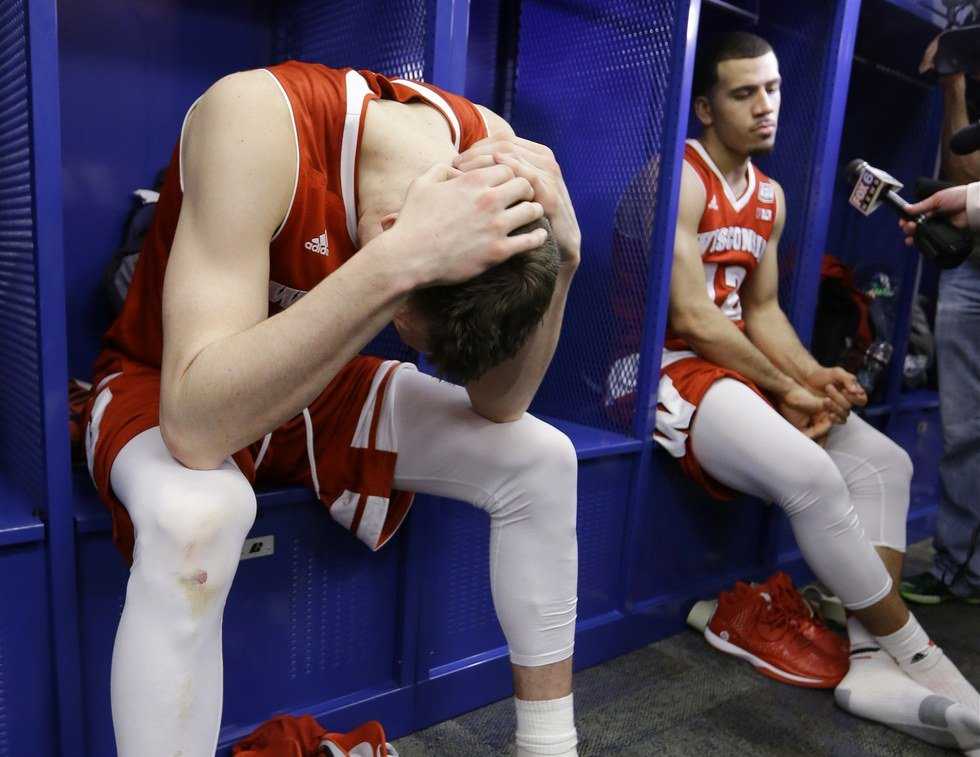
When your self-esteem is in the crapper, it's not hard to fall into the pit that is depression and anxiety. A person can only be "almost good enough" for so long. The pressures to perform are crushing. We're titled "student athletes," although ask any athlete and they'll tell you it's the complete opposite. Grades are second, but we are still expected to maintain a 3.25 GPA or better. And because three-hour practices don't take up enough time, we a required to study in the library another two to three hours afterward, sweat and all. A social life is out of the question because you're either too busy or too tired from being too busy. Your teammates are your only friends for at least a semester, although half way through, all you seem to do is argue with each other. You feel hopeless, paralyzed. You stress over due dates but have no desire to actually do the work— an endless cycle. It's only natural to retreat within yourself to try and preserve. It's a sad reality for too many athletes, including myself. Even the extraordinarily strong among us can't avoid it.
5. If you don't feel on the verge of crying or screaming or dying, you're doing something wrong.
Now, for the nonathletes that have stuck it out this long, this one may seem a bit odd. But trust me when I say, this one rings as true as any. Whether you're running five under 25's, stairs or just struggling through a hard practice, you will be experiencing one of the three feelings mentioned above, if not all three. Stress is a natural response for the body, but an excess can cause other reactions. Our bodies aren't meant to handle sustained stress for such prolonged periods of time. The pressure you, your teammates and/or your coaches put on yourself has to release and it usually results in crying, screaming and/or literally feeling like you are dying. Athletes brains are wired to respond to stress differently than most, a habit that doesn't die willingly.
6. When people ask you, "Just tell your coach ( a specific statement with 99 percent chance of getting you in serious trouble)."
Consider an athletic coach like the president. You wouldn't just walk up to the president and demand something. Well, neither do athletes to their coach. Coaches have the power to make or break you, so you treat them with the utmost respect, even if it means biting our tongues. Sometimes we don't like or don't want to hear what they have to say, but at the end of the day, they have that power over us and we accept this.
7. Your sport is your identity. Period.
Athletes dedicate as much time to their sport as one does to their spouse. They live it all day and then go to bed dreaming about it. It's all consuming. And we love it that way. But only because it has been so ingrained into our brains, we don't have any other choice. You're either all in or all out. It is literally the air we breathe. A dependence. We are one, until the day we die. Our sport will stay with us forever, a blessing and a curse.
8. Athletes cannot watch their sport.
Now, I don't know about every athlete, but for me, I cannot watch volleyball without feeling like I am in the game. I feel the pressure to perform. I feel the eyes of the crowd watchinme every move. And most of all, I feel every mistake I've ever made piling on top of me as I watch a coach yell at a player. The nostalgia is almost too much. And as much as I hate to admit this last part, I feel envy. That they still get to play while I am condemned to watch the sport I was once so good at. I feel a sinking feeling that I never made it to that level, that I could have pushed myself harder which only leads to problems already discussed earlier in this post. It's an endless cycle of highs and lows that we, as athletes, struggle to escape.
This isn't everything athletes experience by far, but it is a solid overview into the everyday struggles as one. Not everything is butterflies and rainbows. It is hard work. And it will break you if you show any weakness. But you eventually reach a point where the joy overpowers the pain until it suddenly doesn't. And that's the day to walk away. Sports start with pain and they end with pain. I will never stop loving volleyball. I miss it every single day. It holds a part of me that I know I won't get back and that's okay. I'm stronger because of it. Like every good athlete, I dedicated myself to my sport until the very end. And I hope for those of you reading this, you look at athletes with a different kind of respect. Not one of envy or jealousy, but of admiration. We do more than meets the eye. And if you see a struggling athlete, please tell them it will get better because I guarantee you they think it won't. There are highs and there are lows, but at the end of the day, an athlete is an athlete, current or former. So for my fellow athletes, I tell you this: Colossians 3:23 states, "Whatever you do, work at it with all your heart, as working for the Lord, not for human masters." Continue until you cannot continue, then let go. It will be okay, take it from me. Trust God with your abilities and He will prosper you until you have learned what you needed from that chapter in life. And when the time comes, do not be afraid to let go. You have a blessed future.