
I remember my 7-year-old self, declaring to her mother that one day I would be a fashion designer. Three years later at the ripe age of ten, I told her that I felt being a writer would be more my style.
Then as I reached my angsty teenage years, something changed in my perception of my own ability to be a creator. I started to believe that creation was to be left to men. That is, men are more capable of creating, of being creative, active and "building" things.
I stopped writing and I scoffed at the idea that I could ever ever be someone that "creates" something.
Then during one of my late night reading sessions in my sophomore year of college, I picked up "Le Deuxieme Sexe" (The Second Sex) by French feminist author Simone de Beauvoir. This particular night drew me to Mme Beauvoir after glimpsing over a passage that caught my eye.
She wrote about how, as women, our connection to our bodies is so innately tied to our freedom. Firstly, we are victim to men's bodies and their will. Secondly, we are tied to our menstruating bodies. It is not until after menopause that, according to the feminist author, we are free to be our true selves, no longer bogged down by our biological imperative that is procreation. I was up all night that night. Did I agree with this person? Am I a slave to my body? Does birth control really give me control or subject me to be controlled? Late night feminist thoughts...
Following my Beauvoirian inspired feminist revelations, I still thought that my capability as a creator was subpar at best. I wrote essays because I had to. I admired my friends' artistic talents as they showed me their paintings, their stories and their lab research projects.
"I could never build/draw/write like that."
It wasn't until my semester abroad in Paris that I began to flirt with the idea of being a creator. I read Violette Leduc's "La Batarde" (The Bastard). She, too, like many other feminist writers and creators felt trapped. Her writings had always been a product for men's eyes. She was never a fan of her own writing and constantly fought an uphill battle to be recognized as a true author. Leduc did what many other female creators often have to do to create. She turned her suffering into a platform for sharing and creating—alas, the curse and blessing of female creation.
In "La Batarde," Leduc writes about her grandmother. She writes about herself, too. And in doing so, not only does she write her grandmother into existence (a right that was not granted to women during her time) but also herself. She (pro)created with no masculine intervention.
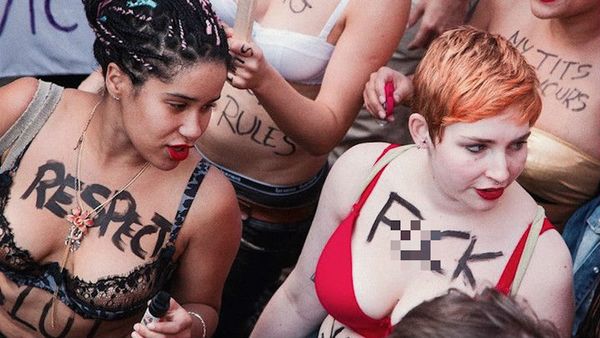
I guess what I'm getting at is a couple of things. Female creation, the words that I now have the right and privilege of typing onto this screen, often stems from resistance and suffering even in our modern day world. Yet, it is so necessary and so powerful. Our bodies are powerful; they can create life and recreate life. Our words are important. Female pro(creation) is possible and, in my opinion, irresistibly unstoppable.
I'm not forcing you to be creative, I'm just saying you were born with that gift and you have the power to use it as you may.
I'll leave you with Helene Cixous' words: "Écris-toi: il faut que ton corps se fasse entendre." Write yourself (into history), your body must be known.