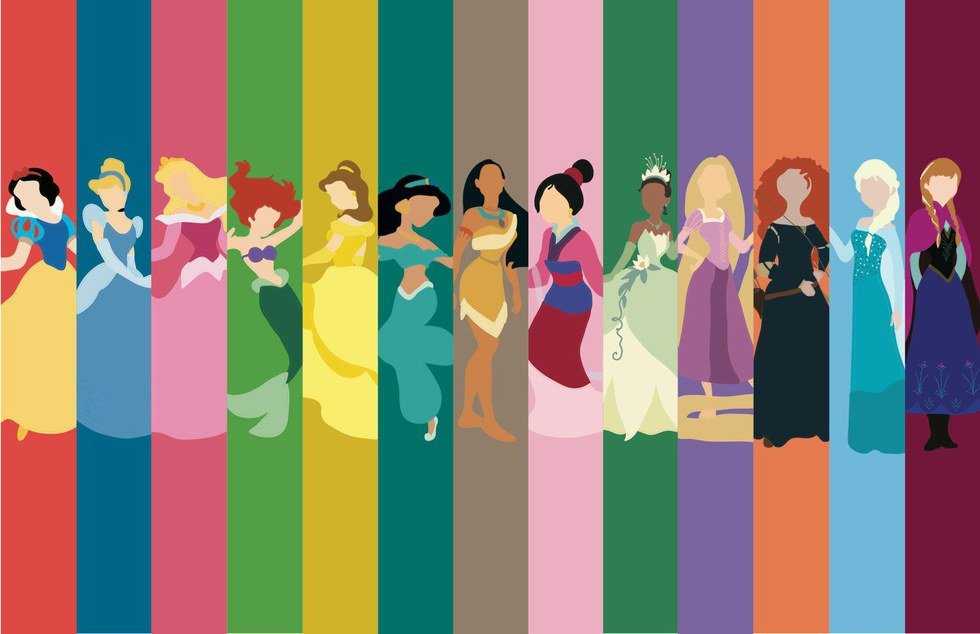
For the past 80 years, Disney has been known for their princess movies, but also known for the disproportionate bodies of those princesses. Tiny waist, tiny necks, huge eyes, tiny feet, and the list goes on and on with everything that is "wrong" with their bodies. But while the proportions of the princesses' haven't changed, the goals of the princess have changed with each new era of Disney princesses and most people are ignoring that fact.
Disney has said that there are three eras of princesses; The Classic Era Princess, The Post-Classic Princess, and The Modern Era Princess. The classic era has Snow White from Snow White and The Seven Drawfs, Cinderella from Cinderella, and Aurora from Sleeping Beauty. These princesses were defined, by society, as lacking feminist quality because they either dreamed of finding a man or waiting for a man to save them instead of saving themselves. Now sure, waiting for your prince is not exactly an ideal that woman today would do but these princesses were the first of their kind.
There is more to the Big Three than some people lead on. Take Snow White for example. She stayed at home and did chores but she taught girls in the 30's and 40's to be kind, sweet, respectful, and always find the best in someone. Cinderella is the same way but in fact was the first persistent princess. Even though she was told not to go to the ball, she chose to go for herself, something she never got to do in her own house. Aurora, on the other hand, taught young girls to wonder. She spent a whole song wondering and dreaming about her perfect man. Being kind, persistent, and constantly wondering were the first real lessons that the Big Three taught. But the lessons get more meaningful and change with the times as the years go on.
The next era is Post-Modern Era. The way to distinguish the line between Classic to Post-Modern is the use of computer generate images. The Little Mermaid was one of the first Disney movies to use CGI. The princesses in this era are Ariel from The Little Mermaid, Belle from Beauty and the Beast , Jasmine from Aladdin, Pocahontas from Pocahontas , and Mulan from Mulan. This group of princesses are the beginning of the new ideas that are portrayed by these princesses. They start to show mild independence and choosing what to do with their own lives. But they also begin to show that they would do anything for those who they love.
Ariel taught that exploring can lead to new adventures and lead you to find something new about yourself. She also was willing to trade her old life and voice for a man she loved. With The Little Mermaid being the next Disney princess movie to be produced, Disney had to make a new message that was positive for the young girls in the 80's and 90's. Both Belle and Jasmine wanted something more than the small town and confined palace life that they both had. During their journey to find something more, they found love. They were the first princesses that were not avidly looking for true love. But they also taught not to judge a book by its cover and to see the good in others. Pocahontas and Mulan were the first princesses to be based on real life women so their message had to be respectful to the history of their actual story. Pocahontas showed young girls that respecting the earth is extremely important and that even if people don't agree with your ideas, it doesn't mean that your idea is wrong. Mulan saved a whole country and yet people talk about how the only way she did it was hiding the fact that she was a woman. That goes against the whole point. She did something amazing that most people thought women couldn't do. She chose to take her ill father's place in the army to protect him even though her life was on the line. She taught that being a risk-taker and being determined can help you finish what you started. The next Princess movie would not be released until 2009, so again Disney had to find a way to change lessons to match what society thought were good life lessons for young girls.
These final five are seen to be the most feminist out of all thirteen princesses. So it seemed appropriate to title this era the Modern Era. The five princesses (and queen) are Tiana from The Princess and the Frog, Rapunzel from Tangled, Merida from Brave, and Anna and Elsa from Frozen. These princesses are a part of the "fourth wave" feminism in the Disney princess franchise. So Disney began to steer away from the "One Day My Prince Will Come" to "When Will My Life Begin" mindset allowing these princesses to focus on more than just love.
Tiana being the first African American princess was already making headway in her own way but also showed girls that you don't need to have a man to make your dreams come true. Hard work, determination, and self-reliance are great traits that both Tiana and young girls today can benefit from. Rapunzel taught girls to leave "their towers" and jump into a new unknown adventure to find themselves just like Ariel did but in a new modern explanation of exploration. Merida was the first Disney Princess to not sing at all in her movie. She was also the first to not to marry anyone at the end of her film. With Merida breaking all of these princess troupes, it seemed fitting that she showed girls how to be brave and stand up for yourself. Finally, Anna and Elsa taught that sisterly love is stronger than any other love out there #SistersBeforeMisters.
Overall, Disney has been teaching young girls that being themselves is the best quality anyone can have. Teaching young girls how to be brave, determined, kind, and how to dream and see the best in everyone are traits that not only are important in the 1930s but are just as important in 2016. But everyone just talks about how tiny the princesses hips are, how Disney is constantly teaching young girls about bad body images and dependencies on men. However, Disney has been teaching so much more over the past 80 years and society needs to realize that there is more to a princess than her looks.