

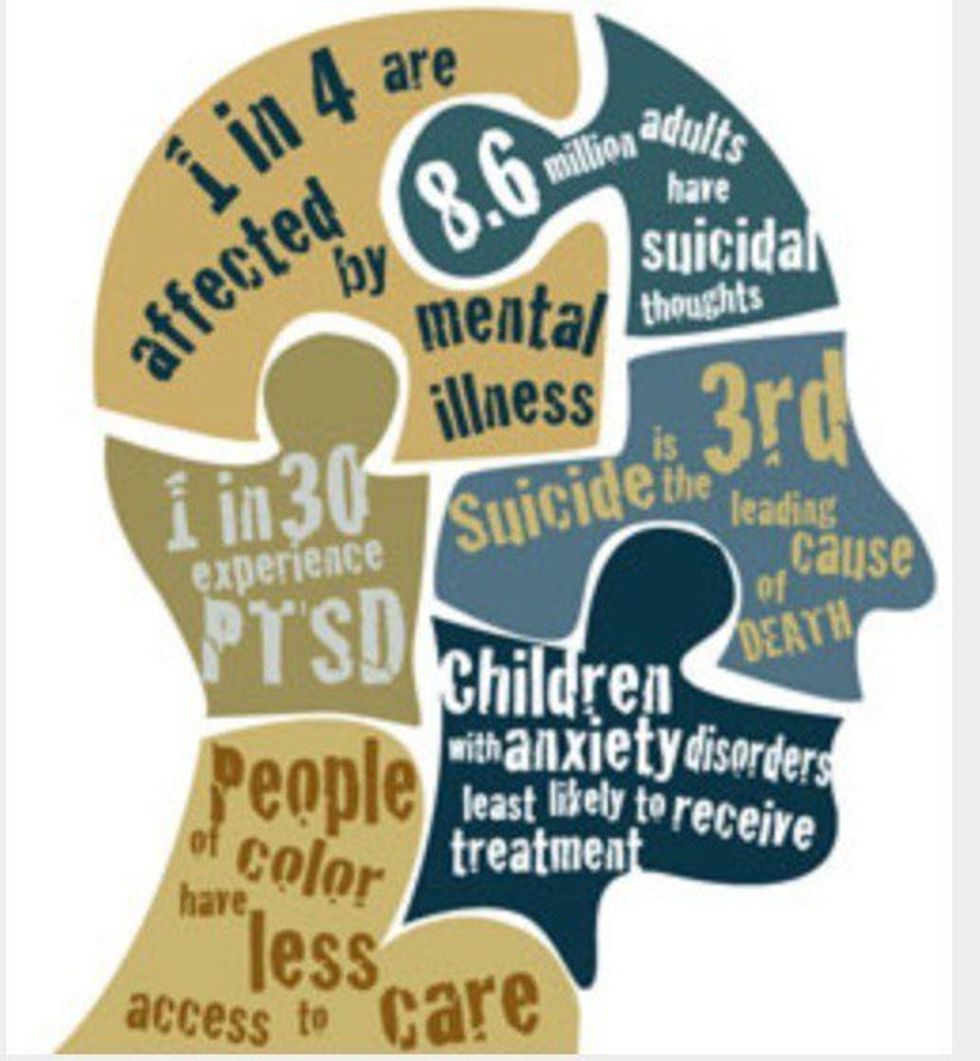
Open discourse about mental health issues is quickly finding a place amongst other taboo topics of discussion. As a college student, I find society's willingness to remain reticent on such an important topic extremely crippling. Being in an atmosphere were the slightest of differences makes you vulnerable for criticism, college students suffering from mental health illness face an uphill battle. While numerous articles have been published, rightfully so, giving advice on how to cope with these illnesses, few articles have discussed the reasons why this stigma continues to exist. In attempts to ameliorate this prejudice, I want to address the skeptics. I want to discuss why you or someone you else you know still harbors uneasy feelings about mental health.
1. Education
One reason for this continuous stigma lies in our education. In school, we are taught about the various types of healthcare. We visit a doctor when our stomach isn't feeling well. We visit a dentist to get our teeth clean. We eventually learn about more specialized doctors such as optometrists, gynecologists, etc. However, we learn about psychiatrists and counselors much later on in our education. When we are finally introduced to these practitioners, they are discussed in much less detail, and with much less importance, than other medical professionals. Therefore, when someone has to see a psychiatrist or counselor, this can be a bit scary, and even seem completely foreign.
2. Undermining Individual's Condition:
We are also commonly taught that individuals suffering from depression have prolonged "sadness," and individuals suffering from anxiety have prolonged feelings of "worry." While these symptoms are without a doubt true, they are emphasized more than the root cause. Mental conditions are very much a chemical imbalance. This means that people suffering from depression and anxiety can't just switch on and off their mood without the assistance of medication. Also, one's background and how they were raised greatly impacts their mental health. Even the people with the brightest of smiles might come from rocky pasts.
3. Seeking Attention
This cause is perhaps the most tricky to confront. It is hard to tell whether someone is being genuine. As a general rule of thumb, if anyone expresses thoughts of suicide or thoughts of self-harm, never take this lightly. Seek help immediately for them, no matter how many times you might have heard them expressing these thoughts. Chances are, they really are suffering from something much deeper. It is common for individuals suffering from severe mental health illness to "cry out for help;" this is the body's natural way of seeking help.
With all of that being said, there is absolutely no reason to feel ashamed of your condition if you are suffering from any sort of mental illness. While there are many reasons why I might not be considered "normal" (I prefer the foggy gray weather over the sunlight), being treated for anxiety does not make me abnormal in anyway. It may be difficult to wrap your head around why someone finds it difficult to get out of bed, but it's also difficult to wrap your head around how gravity works. Don't be too quick to dismiss something that you don't understand.