
Disney has been a part of our lives since birth, as well as our parents' lives. Since the release of "Snow White and the Seven Dwarfs" in 1938, the Disney company has created more than 50 films. In addition, Disney bought Pixar almost ten years ago. The combination of such companies allowed a profusion of family-friendly movies to be made.
What most people do not notice, however, is that the production studio incorporated many hidden secrets into these stories. Characters were reused. Scenes were recycled. Moreover, many of the movies include guest appearances from other characters that are so subtle, it is difficult to notice first hand. There are also a lot of interesting facts that went into creating the Disney stories. Next time you turn on a Disney movie, look for these hidden treasures and see for yourself.
Reused Characters
Some may say that the studio was just trying to save money and time by actually reworking the appearance of characters from one single idea. And others might just claim it is a mere resemblance that Disney had no intention of creating.
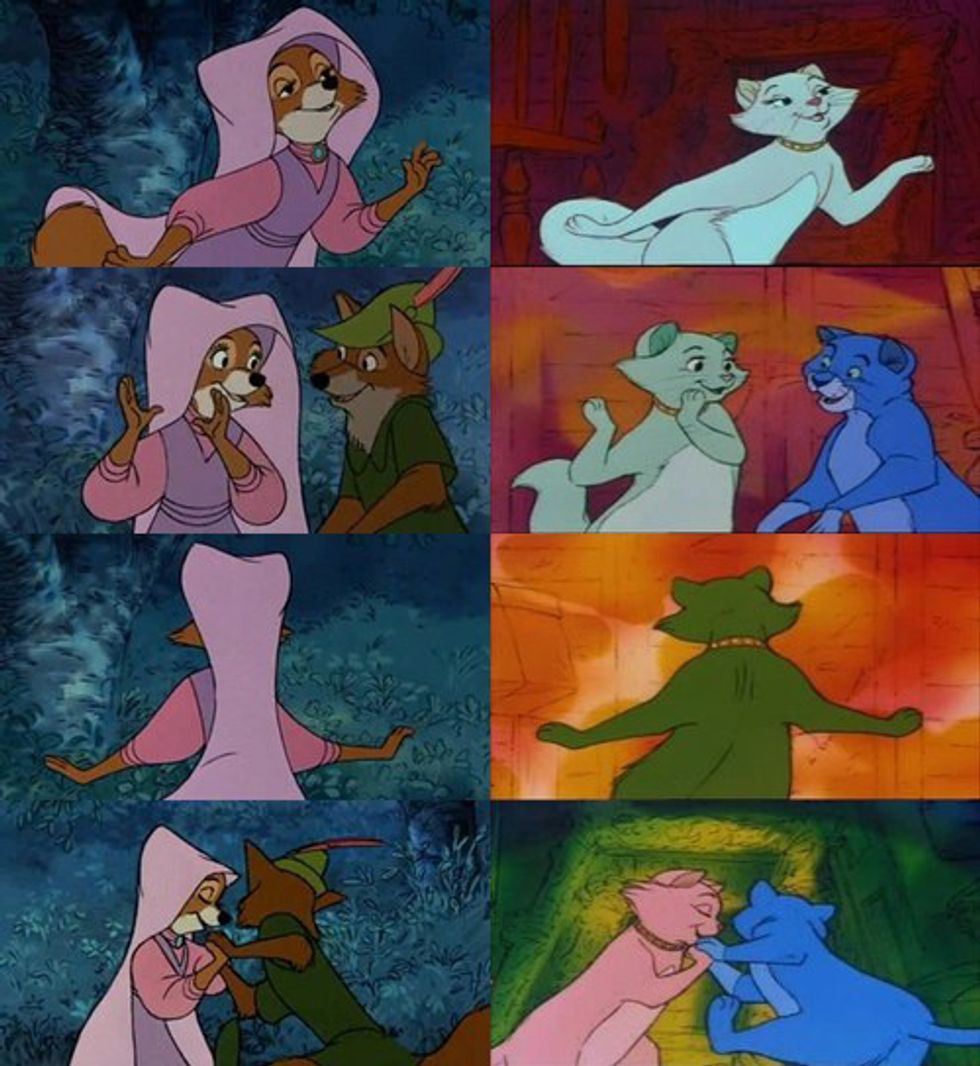
When it comes to "Robin Hood," the case was saving time and money. It is true that the movie had the lowest budget out of any other of the creations. This is what caused many of its characters (and scenes) to be recycled. Firstly, Maid Marian took her form from Duchess in "The Aristocats." Both female animals take on the same face and body, but obviously, one is a fox and the other a cat. "The Aristocats" was made in 1970, three years prior to "Robin Hood."
Secondly, the film borrowed the character, Baloo, from "The Jungle Book." Baloo was incorporated into the character of Little John. The two movies are six years apart.
Another example of the reuse of characters is in the more recent film, "Frozen." Although the makeup of the picture is different, borrowing from "Tarzan" was still fairly simple. The characters, Archimedes Q. Porter and The Duke of Weselton, are adequately similar. Both men take on an elder look with a bushy mustache. Their noses are shaped and sized exactly the same. Although the Duke wears glasses and Archimedes does not, nor do they have the same body makeup, you can tell their faces are made from the same basic model.
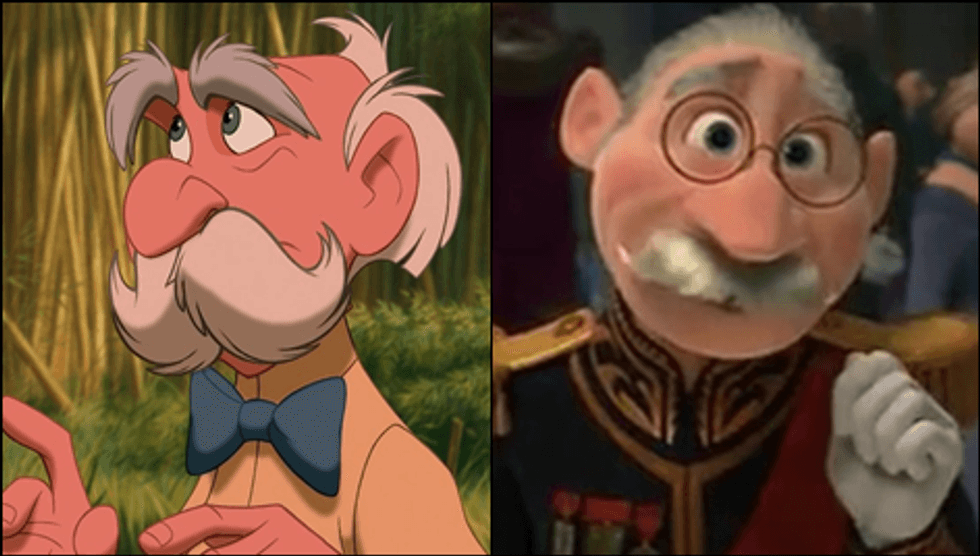
This technique used by the animators is called rotoscoping. It is the process of tracing over old frames to create new ones. This same approach is used for designing entire scenes, not just characters. "The Jungle Book" and "Robin Hood" heavily borrowed from other preceding movies.
Recycled Animation
"Th Jungle Book" took scenes from several movies, such as "The Sword in the Stone," "Bambi," "101 Dalmatians," "Snow White and the Seven Dwarfs," and "Winnie the Pooh." In Snow White, the scene when Grumpy hits his head under a bridge is recreated when Bagheera hits his head under a log. Both of their faces get (cartoon-styled) squished when they make contact with the object, as both are sitting in water too.
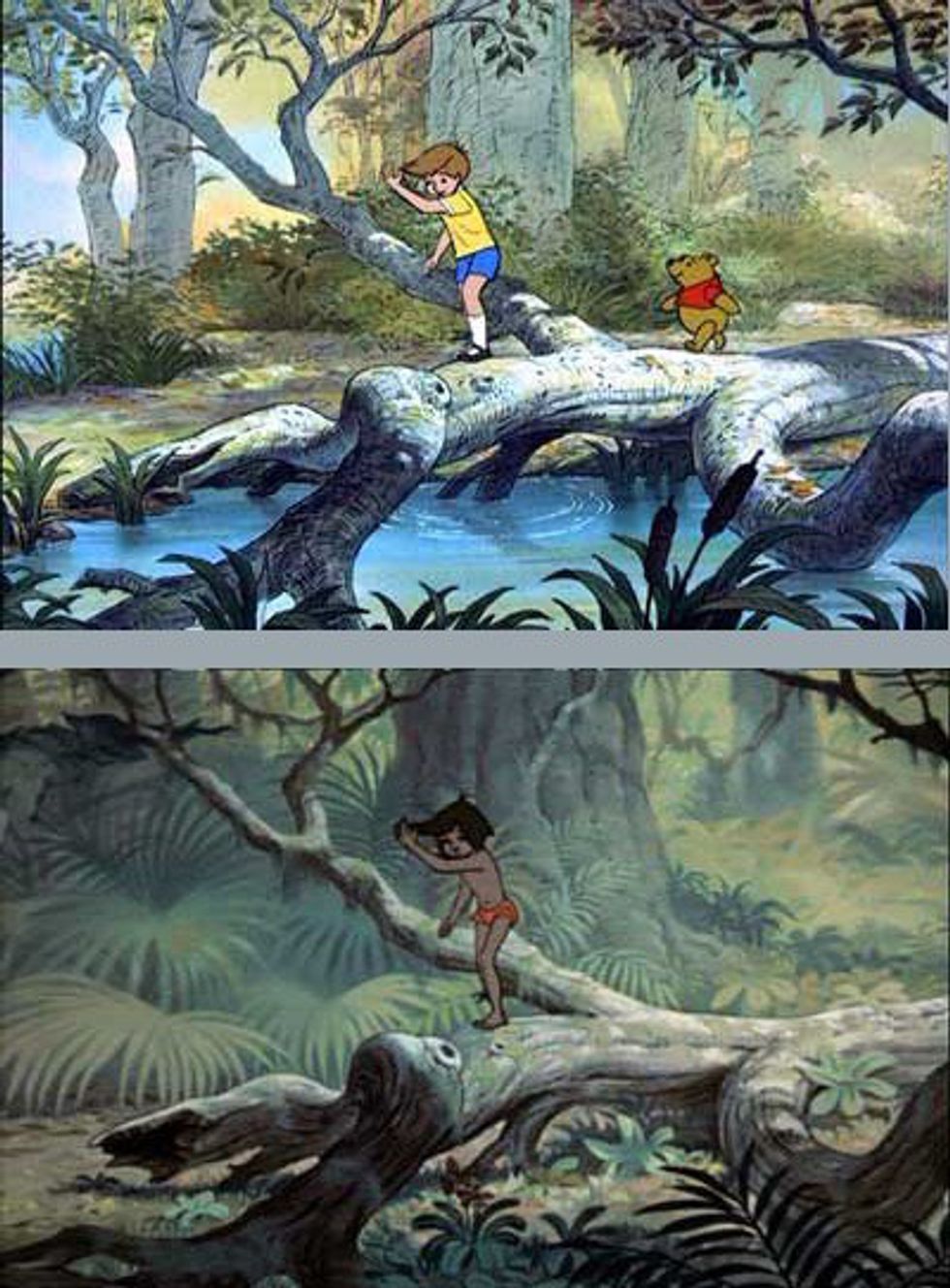
Surprisingly, Mowgli takes on the form of both Christopher from "Winnie the Pooh" and Arthur from "The Sword in the Stone." All three boys have similar body shapes which made rotoscoping easy for animators. The scene in which Arthur is greeted by two dogs and licked in the face is remodeled into Mowgli greeted by wolves instead.
Also, Mowgli's scene on a tree trunk is taken from Christopher walking along a tree branch with Pooh over a stream.
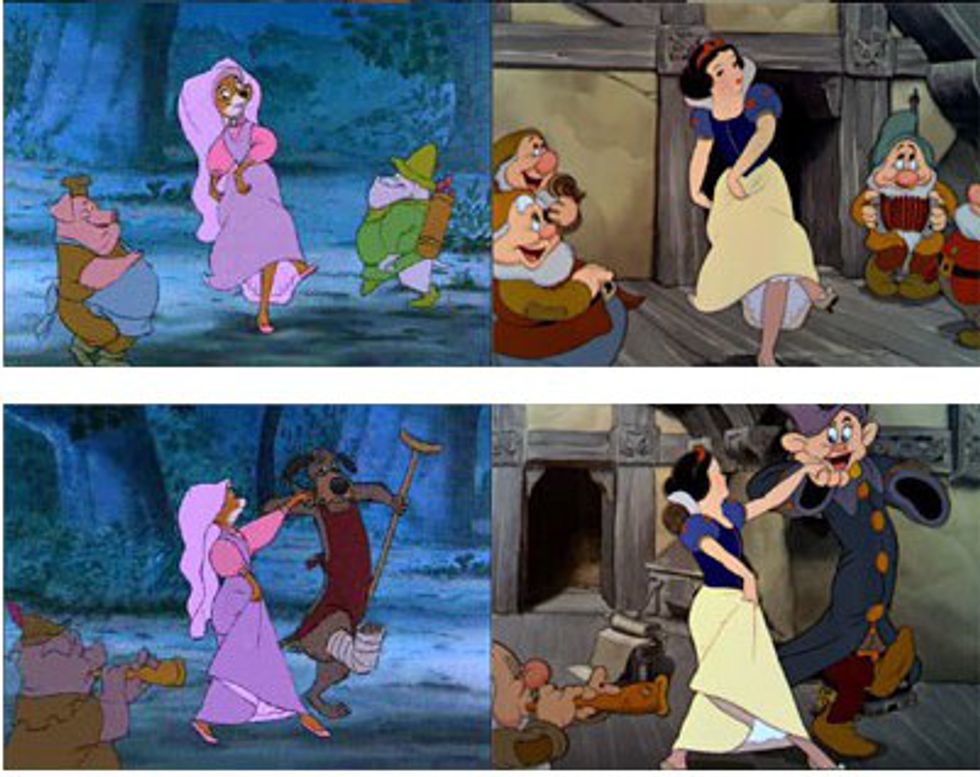
"Robin Hood" took scenes from "Snow White and the Seven Dwarfs," "The Aristocats," "Cinderella," and even "The Jungle Book." Maid Marian copies a lot of movements of Snow White's. The most notable is the sharing of dancing scenes in both films. Snow White is led by Dopey and Maid Marian is led by her dog-friend.
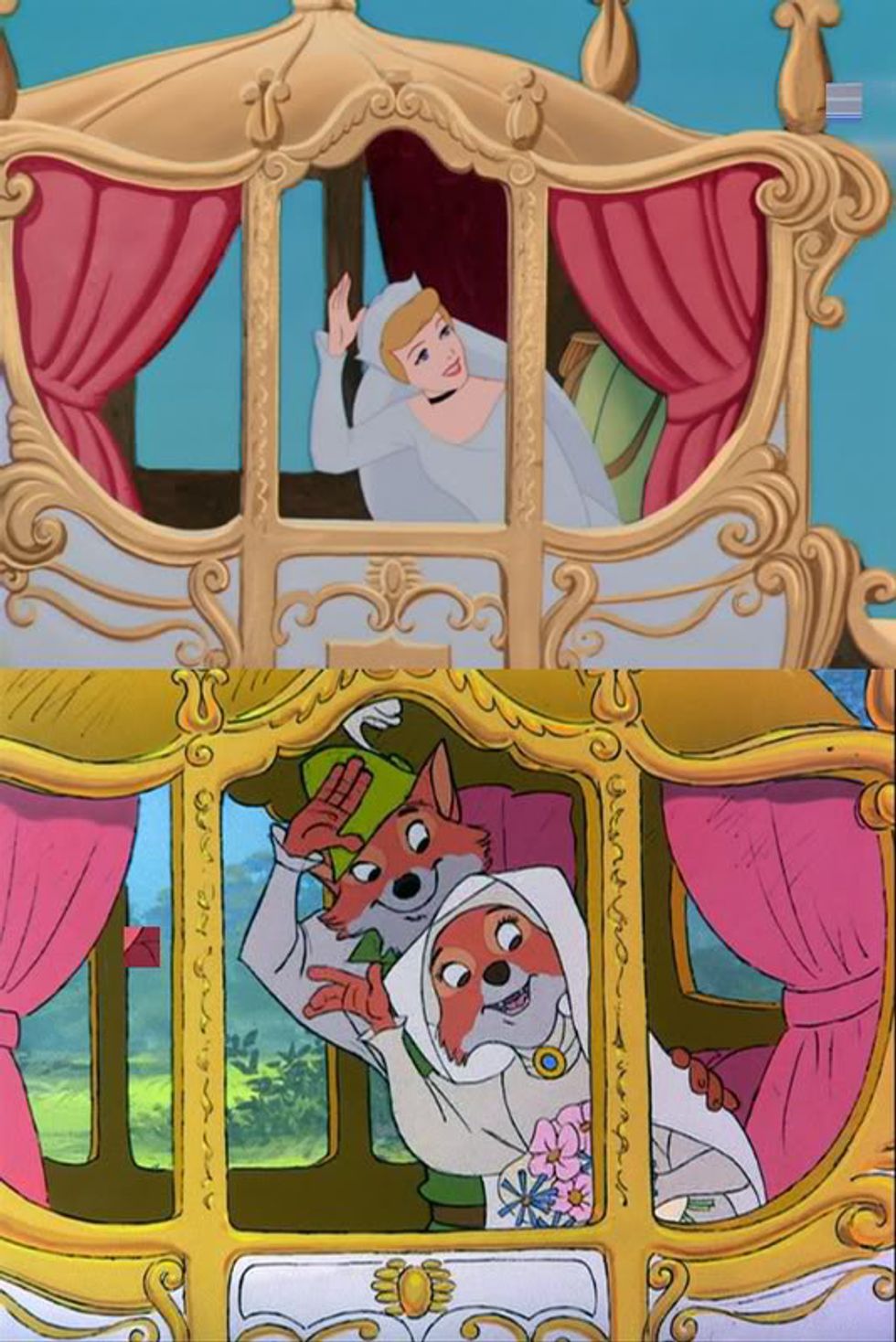
The ending scenes in both "Cinderella" and "Robin Hood" end in marriages and a ride away in a carriage. The carriages in both films have the same placement of curtains and design. These two films are 23 years apart.
Appearances
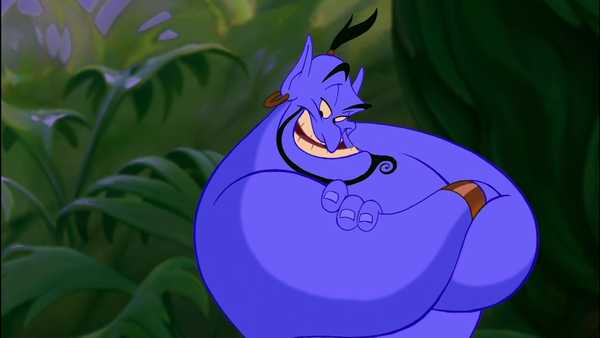
Not only did Disney sneak in some repeated characters and scenes, the animators also made sure to camouflage some guests in later movies. Films such as "Aladdin" had several canoes throughout the movie. You can find Pinocchio as one of the Genie's transformations, Beast on top of a pile of the Sultan's toys, and even Sebastian from "The Little Mermaid." Another example is in "Lilo & Stitch," where in Nani's room there is a Mulan poster.
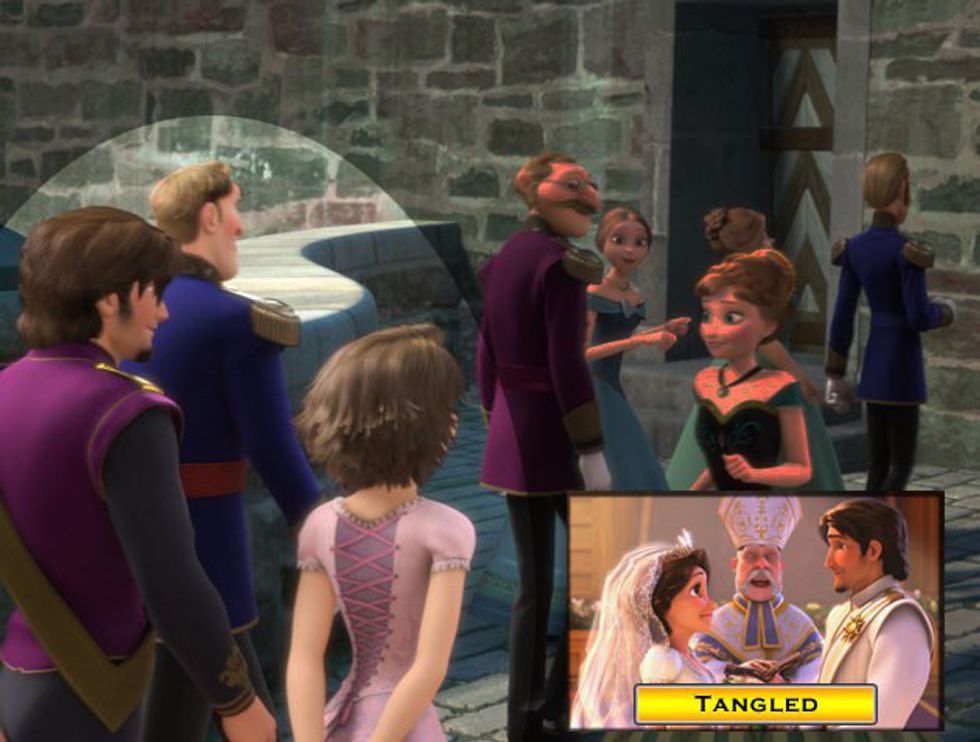
The princess movies even intermingled a bit. The King and Grand Duke from "Cinderella" make an appearance on the ship deck during the wedding scene in "The Little Mermaid." Rapunzel and Flynn even show up for Elsa's coronation in Arendelle.
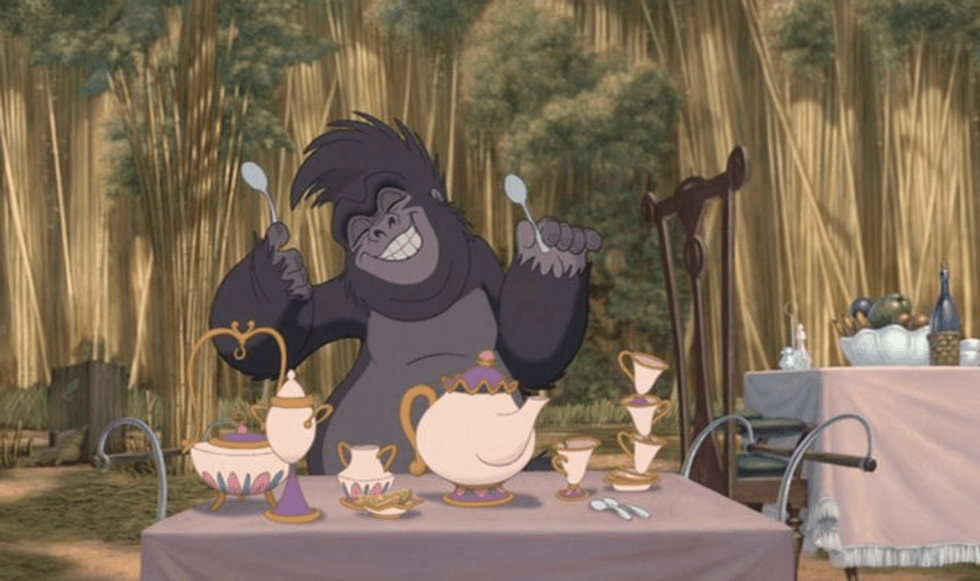
In "Tarzan," the Porter's camp holds the tea set from "Beauty in the Beast," specifically Mrs. Potts and Chip. Teri plays on them in the musical number, "Trashin' the Camp." The two films are eight years apart.
Interesting Facts
Beyond the reused animation and cameos, there are still hidden secrets within the films. To specify, real rogue cosmetics were applied to Snow White's animated cells to give her skin tone a natural look. Also, some other dwarf names considered for the movie were Jumpy, Dizzy, Wheezy, Baldy, Sniffy, Swift, Lazy, Tubby, Shorty, and Burpy.
The Beatles were supposed to join the cast of "The Jungle Book" as the singing vultures, however, there was a scheduling conflict. Watch the movie again and compare the resemblance of the vultures to the band.
In addition, the voice of Boo in "Monsters Inc." was in fact a toddler. In order to receive dialogue from the tike, the production team just followed her around the studio and recorded her dialogue while she was playing.
You may have never noticed this, but the code "A113" appears in almost every Disney and Pixar movie. Two examples of this can be found in "Lilo & Stitch" and "The Princess and the Frog." The code can also be found in a plethora of Pixar films.
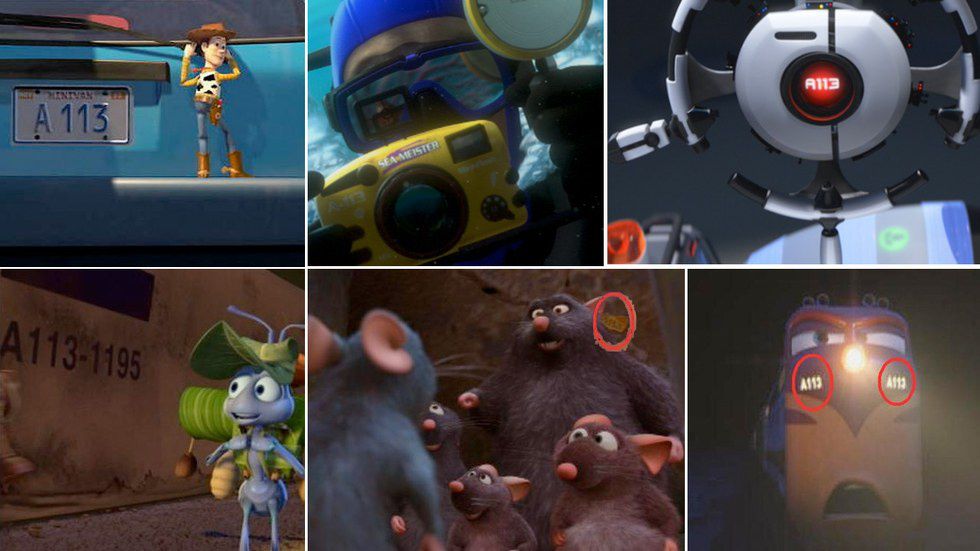
What is this number? It is a real room at the California Institute of Arts, where several Disney and Pixar animators learned their craft.
As a shocking surprise, the roars in "The Lion King, weren't even from lions. Tiger sounds were used instead because lions were not loud enough. Another alarming, and revealing, surprise can be found in "The Rescuers." Believe it or not, a photo of a topless woman was cloaked in two frames. Upon the discovery, Disney recalled 3.4 million copies of the newly released video.
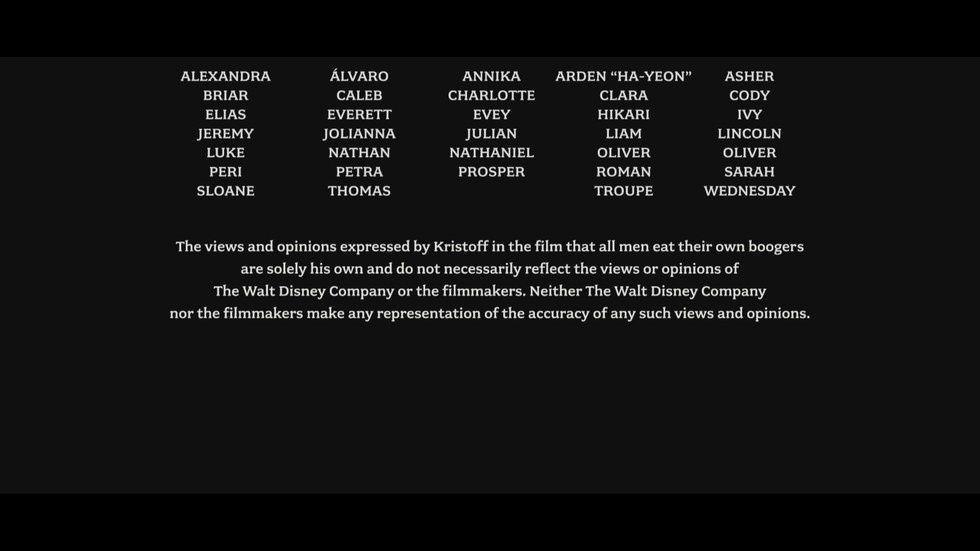
Even today, the Disney production team still likes to add in some quirky, hidden fun into their films. Have you ever watched the entire credit sequence at the end of "Frozen?" At the end, you will find a disclaimer about Kristoff's assumption that all men eat their own boogers.