
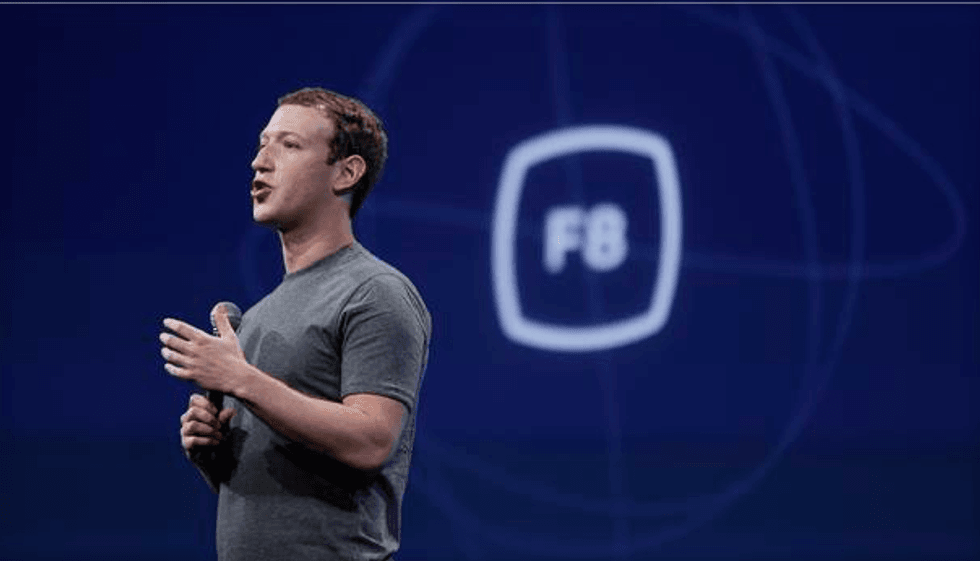
Earlier this month, CEO of Facebook Mark Zuckerberg said the company was working on a “dislike” button in order to give people the ability to express not just their admiration for posts with the “like” button but also their distaste for posts as well. The public has been asking for a dislike button since Facebook first started, but what are the implications of having such a button? If it’s so easy to like a post, shouldn't it be just as simple to dislike a post?
When people post videos showing social justice issues, such as police brutality, on social media, I can understand why a Facebook “dislike” button could come in handy. There are some posts on Facebook that I question whether or not I should like because although they might be interesting posts, their content is not necessarily “likeable," nothing I would applaud, and could even be horrible.
In that case, I usually comment “this would be a time when a ‘dislike’ button would come in handy,” or “insert dislike button here.” However, those times are rare and although I comment that, it does not necessarily mean I would support a “dislike” button. I actually don’t support the “dislike” button.
When I heard that Zuckerberg and team are creating the “dislike” button, I instantly thought back to the seventh grade when I was cyberbullied to the point at which I was scared to go to school. That was in 2007. Times have changed. Twitter has become popular, Tumblr has increased in popularity and Facebook is even bigger. I was bullied through Facebook messages, but who’s to say that this new “dislike” button won’t add to the mass amount of cyberbullying that happens daily? Also, who’s to say that once Facebook adds a “dislike” button, Twitter, Tumblr and other forms social media won’t continue this trend?
According to NoBullying.com, over half of young adults admit to having been cyberbullied. If someone posts a selfie or posts about a relationship status change or a semi-boastful, but still congratulatory post, the uploader is not going to want to worry about how many people will “dislike” it.
I hate to admit it because it’s pretty shallow, but it is also a part of today’s culture. There’s a sad reality that many young adults go to social media for personal validation. If someone posts a new profile picture and it gets more than 20 “likes,” they think they chose a good photo. If they get less than 10, they may think that they should upload a new one instead until they get the number of likes that will suffice for them. People also look at other peoples’ amount of likes. For example, if someone has over 100 likes on almost every photo, they’ll wonder what that person is doing that they aren’t doing and what they should change about themselves so they will get more likes. In the case of profile photos, should people be allowed to “dislike” it? I don’t think so. Who are they to negatively judge the photo?
This doesn’t just go for photos, though. Who should be able to negatively judge anything on social media and have that be posted to anyone on their account? Granted, maybe the public also seeing the number of dislikes and who disliked it will strike up support from other Facebook “friends,” but should that support be necessary?
Wired, a news source that centers around technology, gave five alternatives to the dislike button. One of them seemed much more empathetic than the “dislike” button: the “I hear you” button. This would let the person that posted the status/photo know that they weren’t alone in their ways of thinking or their hard day. “I hear you” seems much more positive than the “dislike” button that could be hitting your Facebook soon.
The “like” button brings in happiness and appreciation. The “dislike” button is concerning.