
Recently, John Oliver compared Donald Trump to a cancerous mass during one of his late night talks, saying “At this point, Donald Drumpf is America’s back mole. It may have seemed harmless a year ago, but now that it’s gotten frighteningly bigger, it is no longer wise to ignore it.” The segment, which featured the host slaughtering the possible Republican candidate’s entire campaign platform, went viral with over 18 million views after only a week on YouTube. The "Last Week Tonight" star is just one of the multiple television show hosts who are filtering the news through a satirical scope using different media sources for the masses to absorb.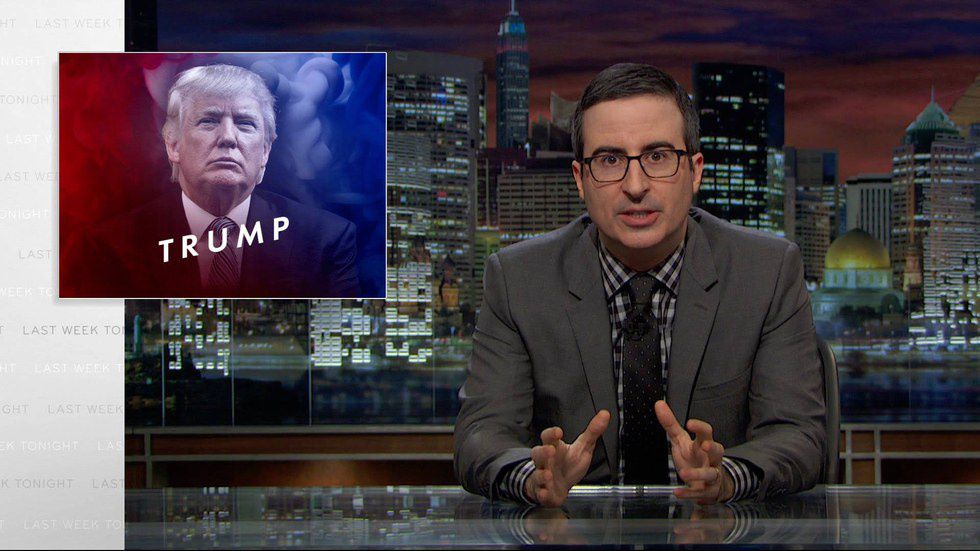
According to the Los Angeles Times, a 2012 Pew Research Center survey found that more Americans tuned in to “Saturday Night Live,” “The Daily Show” and “The Tonight Show” than to national newspapers for campaign news. In a survey done by the American Press Institute, it was found that 86 percent of millennials get their news through what’s floating around their social media accounts, with an overwhelming 88 percent of those Millennials receiving their news from Facebook regularly.
In an age where the ability to book a hotel can occur in just a few clicks, the same convenience has been bestowed upon the public pertaining to how they gather news. A 2014 study in an article published by TIME magazine found that on computers, the viewing of online videos has increased from about four hours per month to 10 hours and 42 minutes, and that people spend about 14 and a half hours watching clips on their phones and other multimedia devices. Social media accounts and the way talk show hosts manipulate them can greatly affect the scale of how many viewers watch their 20-minute long segments when they don’t have to tune in at a certain hour. Now at the click of a button, people can peruse the internet for news whenever they feel like procrastinating. Sophomore political science major Dillon McNamara, who has worked on Congresswoman Bonnie Watson-Coleman’s campaign, admits that he gains a lot of his news from scrolling through his Facebook account. He says that, “I’ve curated my Facebook to Politico, The New York Times or news sources like Vox so that while scrolling if I see an article that interests me I can just click on it and read it.” In this way the user is able to stay informed on the world of politics while also staying up to date on what his best friend did last Thursday.
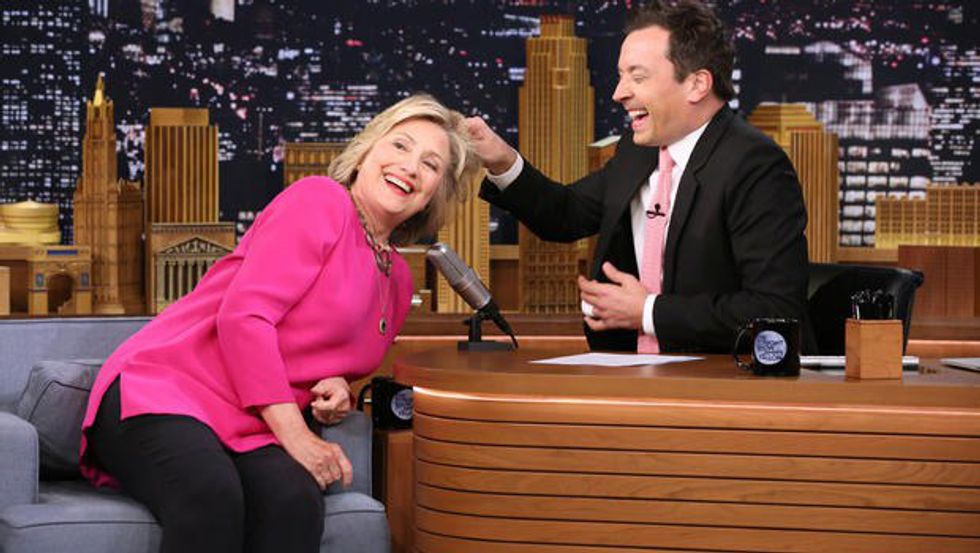
Because of this heightened reliability on online sources and social media accounts to gather news, it's no surprise that presidential candidates have begun to use them as ways to connect with the public. Jeb Bush sat down with Stephen Colbert on the “Late Show," Donald Drumpf appeared on “The Tonight Show” with Jimmy Fallon and an "SNL" skit and even Hillary Clinton has gotten in on the action by allowing Fallon to mock job interview her. Robert Licther, a professor at George Mason University who studies the intersection of politics and late night humor, told NBC News that, “These shows give candidates the chance to show off their humanity, and it’s a way of introducing themselves to people who don’t watch the news.” From the point of view of a young millennial coming of age in the digital age of politics, McNamara explains that “People, especially in the realm of politics, when faced with discussion of policy can get bored very quickly.” He believes that late night hosts do a good job in mixing comedy and actual policy analysis, allowing people to feel like they’re informed about their country while also being able to watch something that is digestible for the general viewer.