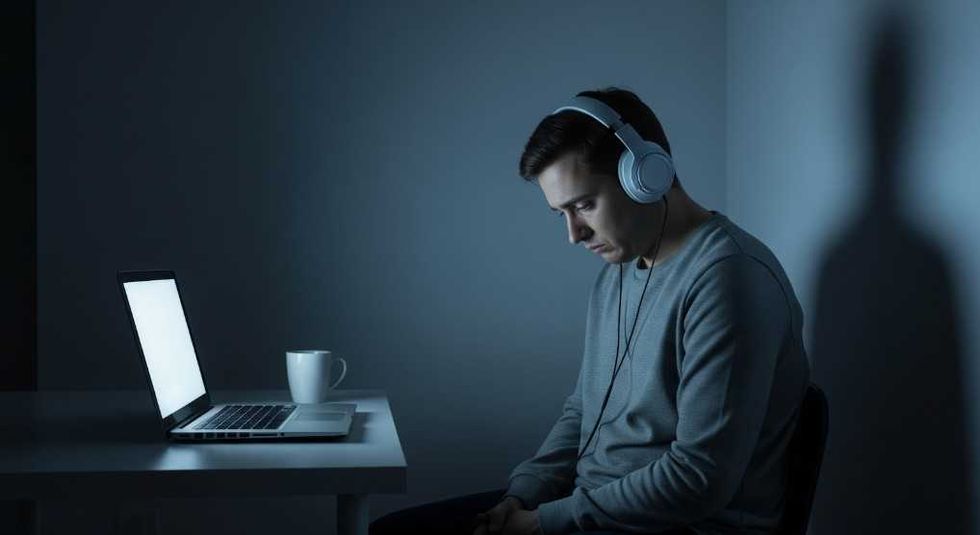

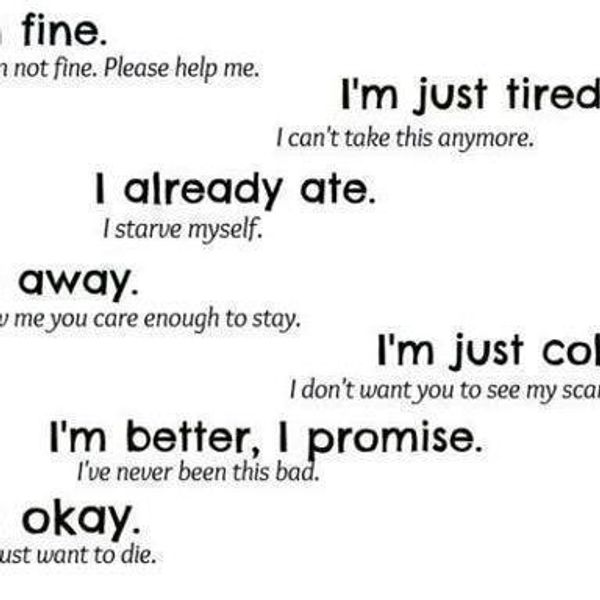

If depression was real, maybe it would be like other sicknesses. Maybe you could tell people, “Something’s wrong with my brain,” just like you’d say about your foot, or your elbow, or your back. Your friends would follow up, ask you how it’s doing, ask how they can help, instead of being too uncomfortable to mention it.
If depression was real, teachers and professors would take it seriously. When you email your instructor that you’ll be missing class because you can’t get out of bed, drive your car, or be around people, they’ll understand. Like when you can’t go to class because you can’t stop throwing up, or you’re running a very high fever. Your instructor would work with you, if depression was real.
If depression was real, you wouldn’t have to apologize for crying. Or having to leave an event suddenly, or canceling on a party or dinner. You wouldn’t feel like you had to say sorry when you keep your mom, dad, best friend, or boyfriend up all night because you can’t breathe or think or sleep. If it were real, you wouldn’t have to say sorry for depression anymore than you would for limping around with a broken toe.
If depression was real, we would talk about it. You wouldn’t be scared to “admit” it, and you’d know no one thought you were crazy if you told them. We would talk about how we’re doing candidly, and we could talk about suicidal thoughts without being scared of getting sent to the psych ward. People could talk about the times they thought that it would be better if they ended it, and someone would be there to say, “No. The world is better with you.”
If depression was real, we would afford the care we need. My school wouldn’t offer us 10 free counseling sessions per year -- as if that’s supposed to help anything. Someone would realize that for a depressed person, it takes at least 10 sessions to build the trust needed to speak honestly. We would get to see a psychiatrist for some kind of co-pay, and they would be a good, qualified psychiatrist. Doctors wouldn’t just give us a card for some psychiatrist who doesn’t accept insurance but is really good.
If depression was real, and you told someone you had it, you wouldn’t have to hear the following.
- Why?
- I thought you were so happy yesterday!
- You just need to get out of that relationship/that school/that job/that house.
- Oh, I had that last year.
- A blank stare like you’re about to commit suicide or burst into tears.
- Oh, my gosh -- yeah. I failed a test yesterday, and I’m just so depressed. I seriously want to kill myself.
If depression was real, we wouldn’t just care about suicide prevention, we’d care about “slow-death” prevention. The slow-death where every day it’s like living in quick sand. It hurts to get up, talk, smile, laugh, go to work, try in school, find meaning in life, believe in God. And day after day it gets increasingly difficult, until you can’t go on.
If depression was real, I wouldn’t have to write this article in pronouns that aren’t specific to me, so people wouldn’t think that I had it. I wouldn’t have to be scared that people were going to think I was crazy, or make snap judgments about me, or talk about me behind my back. I wouldn’t have to defend my sanity, mental health, decision-making, or rationality to anyone.
But depression isn’t real. I don’t have it, and neither do you.
In 2011, the National Institute of Mental Health reported that 30 percent of college students reported being “so depressed it was difficult to function,” yet only 10 percent report being treated or diagnosed for depression. In addition, suicide is the second leading cause of death among college students, claiming the lives of 1100 students per year, far outpacing alcohol. And most importantly, 50 percent of students who stopped attending college because of mental health reasons did not access mental health services and supports.
Concern of stigma is reported as the number one reasons students do not seek help, according to the National Alliance on Mental Health. It’s okay to be unhappy, it’s okay to be sad for no reason, and it’s okay to think about suicide. But it’s not okay to not reach out to a friend, family member, or professional. If you are fighting constant feelings of depression, it’s not normal to feel that way. And if you are not dealing with depression, consider whether or not you encourage those around you to speak honestly about it. If we don’t talk about it, it will never get better.
“No matter what people tell you, words and ideas can change the world.” Robin Williams.