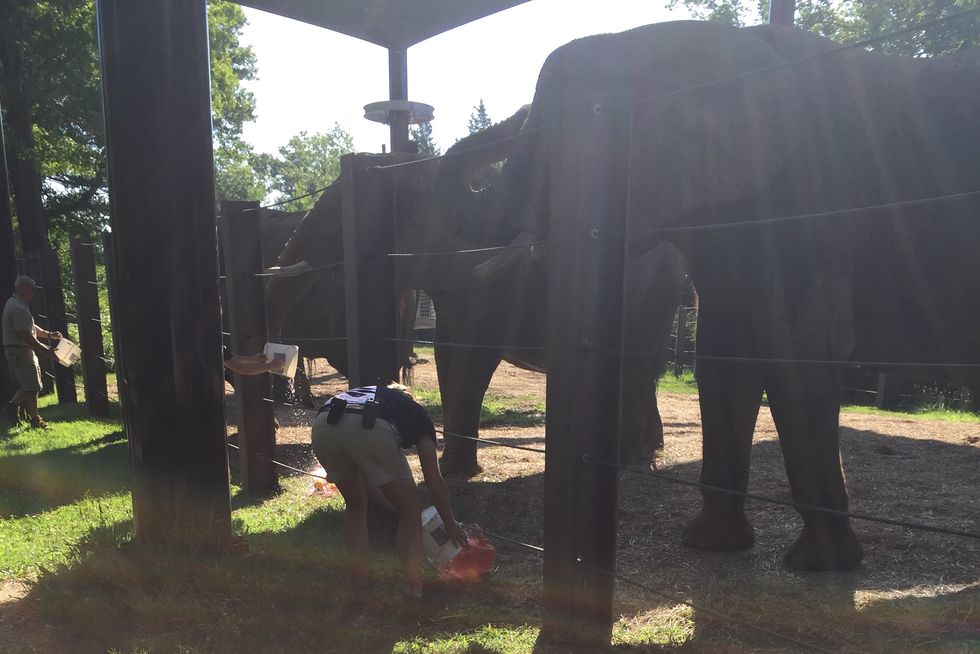
Mornings always start early. Zookeepers have to be at the zoo before it opens. That way the animals can be ready and on exhibit for visitors when they start arriving at the zoo.
Zookeepers are responsible for checking on all of the animals in their area to make sure everybody is accounted for and has no signs of injuries or illness. Keepers generally start with a look through of the area and count each animal. During this time they look for signs of anything wrong with the animal or their exhibits.
All the animals need to eat and they each have their own specific diet. Even within the same species the diets can vary. Keepers often have to prep and weigh out the food they provide the animals. Some zoos have commissaries that do this for them. It is important for the zookeepers to keep track of how much they are feeding the animals and to monitor their weights. While keepers feed their animals, this is also typically when they provide any needed daily medications.
Morning routines can also include bathing and any other health related routines. Animals also get at the minimum annual physicals to make sure they are healthy.
While the keepers are working with the animals in the morning, this is a time to do any exercising or other routines. Positive reinforcement can also be used to do any types of training. There is usually a schedule with assigned tasks for each day.
With all of this going on, the keepers still have to clean up the exhibits. Typically this involves removing any fecal from over night. Keepers work hard to maintain nice and clean homes for the animals. Now the animals are ready to go on exhibit.
The middle of the day is the time to do anything and everything that can be done before having to get ready for night time preparations. Weekends and summer time usually have daily keeper chats which can include interactions with the animals. Nonpublic areas have to be cleaned. For areas that have yards, they have to be maintained through raking, weed waking, and filling in any holes.
Some animals require mid day feedings or at the least checked on. Enrichment also has to be planned and prepped each day. This is also the time that any other special projects are done. Special projects can be anything from cleaning drains and cob webbing to building new enrichment items and finding new ways to spread conservation messages.
As the day starts to come to an end, keepers have to prep the night time diets and set up the areas where the animals will be over night. Once the zoo closes, the animals are fed. Their public areas are cleaned if needed. The weather forecast for the night is checked to ensure any precautions are taken if there could be bad weather. After everything is done, the keepers take one last moment to check the animals. Lastly, the keepers have to make sure the area is properly closed and that no lights are left on overnight.
This is an overview of what I have observed as a typical day as a zookeeper. Zookeepers are dedicated to their animals and work hard to provide them the best possible lives they can.