


During the summer between my sophomore and junior year of high school, my school issued a campus-wide summer reading book titled lol...OMG!. Yes, someone actually thought this would be a good title for a book, and yes, my high school actually thought students would take this book seriously. The book essentially details the author’s experience with creating a college gossip website back in 2007, a website that allowed students on over 500 campuses nationwide to post and comment about their classmates - anonymously. The website, titled JuicyCampus, immediately attracted and retained the attention of students, but ultimately folded in 2009 due to financial problems, as well as intense controversy. School administrations, student groups, and even state governments took action in rallying to shut down JuicyCampus.
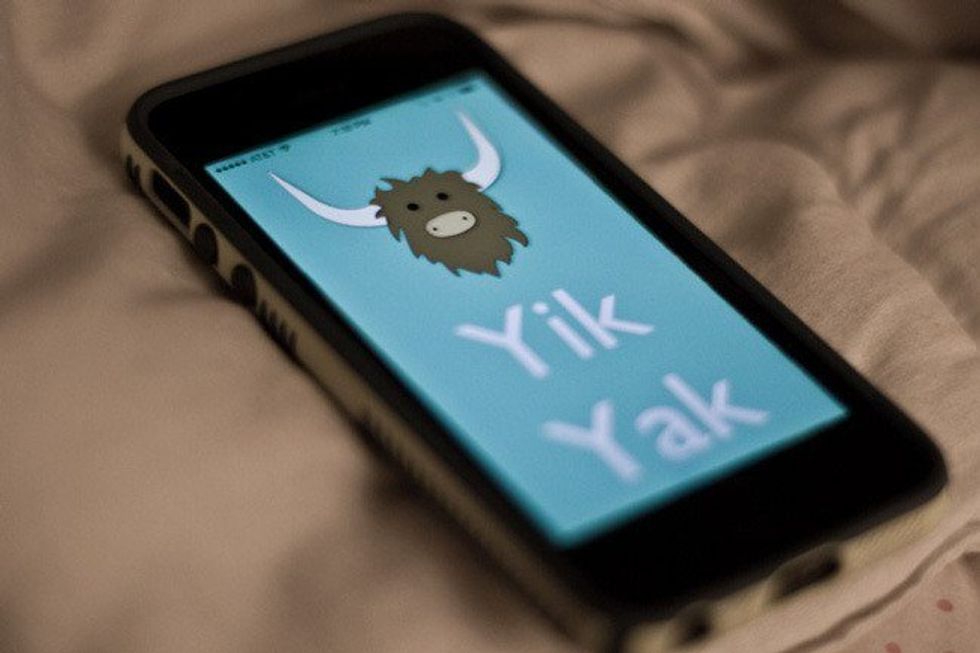
While JuicyCampus ceased operation years ago, it seems we as a society haven’t learned any lessons about just how hurtful these anonymous forums can be. In fact, anonymous websites and apps have grown immensely, especially on college campuses. Within the past two years, two of the most popular anonymous Smartphone apps have launched on campuses across the nation: YikYak and Whatsgoodly.
Before I’d even attended a college class, eaten in a dining hall, or gone to a fraternity party, I’d already downloaded and mastered the workings of YikYak. Between posting anonymously, upvoting or downvoting posts, and reading top comments, YikYak kept me in the loop about almost everything happening on campus. While I didn’t use it that frequently, I definitely opened the app a couple of times throughout the day when I found myself bored or just wanting a laugh. And that’s what the majority of the posts on YikYak do -provide entertainment. If there’s just been a tough macroeconomics midterm or the football team has just lost a game, it’s almost guaranteed that there will be multiple posts on YikYak complaining or making jokes. Posts about eating gross dining hall food, wanting a significant other, or enduring the horrible winter weather frequently pop up on the YikYak feed. YikYak can even feel reassuring at times - it’s a reminder that other people are also struggling with certain classes or miss their families, too.
While YikYak usually remains lightheartedly entertaining, some people do exercise the anonymous element of the app in a negative way. It’s not unusual to see sexist posts, racist posts, posts negatively stereotyping certain sororities or fraternities, and even posts attacking certain individuals. Sometimes these posts will get downvoted to the point of disappearing from YikYak, and sometimes they won’t. These negative posts often launch a string of comments that either try to rectify the post or further fuel the negativity. The weirdest part about these posts and comments? No one knows who anyone else is. A harsh comment about a certain sorority could have been written by your best friend, and a misogynistic post might have originated from your boyfriend. There’s no way of knowing.
Five months ago, a Smartphone app much, much more detrimental than YikYak launched on numerous campuses: Whatsgoodly. Developed by Stanford University students, Whatsgoodly allows users to create, vote, and comment on polls about anything - anonymously. Sometimes the polls are harmless, asking questions such as “How long does it take you to fall asleep at night?” or “Who should the be next president of the USA?” But these types of questions are in the minority on WhatsGoodly. More often than not, users will see questions such as, “Would you have sex with a girl on her period?,” “Hottest fraternity on campus?,” or “Which sorority has the sluttiest girls?” It’s also not unusual to see polls or comments criticizing specific individuals on their looks or personality, as well as polls comparing named individuals. Unlike YikYak, Whatsgoodly doesn’t seem to have any filtering or moderating (or if it does, it doesn’t work) so anything that anyone posts shows up on the feed.
Between YikYak and Whatsgoodly, many college students constantly have the latest campus gossip right at their fingertips - they can read, vote, and comment whenever, wherever. Maybe it’s fun and entertaining most of the time, but what about when one of your friends gets called a “fat bitch” on a Whatsgoodly poll? Or when a post mocking your fraternity gets fifty upvotes on YikYak? When seemingly everyone on campus is using these anonymous forum apps, it’s easy to get sucked into the hype.
Yet every time we use these types of apps, whether we’re proactively posting and commenting, or just passively skimming the top posts, we’re feeding into a culture of constant judgment and verbal attacks, guarded by the anonymity of a mobile phone. If we don’t actively remove ourselves from these gossip networks, we’ll only continue to cycle through anonymous forum after anonymous forum.

















