
I have been fortunate enough to have the opportunity as an education student at Alma College to be placed in local classrooms throughout my studies. It is in these classrooms that I have met amazing teachers, received real word feedback and been given tips for my future teaching, and grown to love spending my time with the students I meet. In fact, it is really the students that make the experience so fulfilling. Making connections with them, regardless of age, race, gender, sexual orientation, interests, etc., is my favorite part about visiting classrooms and is what I look forward to most in my teaching career.
This semester, I have been placed, for the first time, at the middle school level. As a secondary education major, my grade level for certification spans from sixth grade to twelfth grade, though my preference is to teach high school rather than middle school. Yet, as part of the teaching certification from Alma, I am required to have at least one placement in the grade-levels I’m not planning to teach in order to get the hands-on experience of what it’s like to run a middle school classroom and to see if I really am resigned to it (or if I’ve changed my mind).
Currently, I am in a sixth-grade classroom at a local school only about 10-15 minutes away from small-town Alma. The school is small and is located in a tiny, tiny community that suffers from some serious economic problems. Still, the families that live there make do, and though there is a fiscal impact on the schools, the district has such amazing teachers that superhumanly combat all the outside pressures of the real world. Despite the odds, they make learning happen.
So far, I have been into the school, and the classroom of my amazing placement teacher, two mornings, each for about three and a half hours, though I fell in love with her students only ten minutes into my first day there. As sixth grade students, they are excited to see a new face walk into the classroom, and their social inhibitions seem to be nearly nonexistent. I realized that at the sixth-grade level, students will tell you anything and everything. They have nearly no filter. They’ll tell you that their locker never seems to open, that they swear a lot, or that they didn’t get to eat that morning. Most students don’t yet feel a sense of shame when discussing really personal issues that are rather disheartening, like the prior example of not having food to eat before coming to school. Sometimes you’ll be told stories that will truly break your heart.
One such story is that of a student whose name I will exclude from my piece for the sake of privacy and confidentiality, but he called into question just how amazing of a childhood I had in comparison to his.
My placement teacher brought up the topic of going back and forth between her parents’ homes when she was a little girl because her parents divorced. “Just like many of you,” she said to the class. Many kids began to chat, nod, or raise their hands as they agreed and labeled themselves as a child of divorced parents. In fact, a good seventy-five percent of the classroom made some sort of signal that they too had parents who did not live together. After my teacher told the story of her glory days in college, she asked the students if they had any questions they wanted to ask. (She had been an amazing track athlete in college and even showed the kids a picture of her from “back in the day,” so naturally they were very excited and curious to know more.)
Student questions included things like “How tall were you?” and “Could you make your hair look like that again?” and “Where did you go to school?” My teacher answered all of these questions as they came up, and mixed in were comments by students that they had family who lived in Ohio or that their parents were also divorced. I was walking around the classroom as I typically do when my cooperating teacher is giving instruction to help monitor students and observe the classroom better. It also gives me the ability to be more of service to students when they need help when I’m maneuvering around the room.
Stopping to pause and smile as my teacher answered students’ questions with humor and grace, and addressed students’ comments in a way that validated their perceived want or need to share them, the student closest to me looked up at me. A smiling boy of Mexican heritage, this student had been very receptive to my presence in the classroom and he and I had already made a few connections together between individual and group work, praise in the form of a high-five or a fist bump for the class warm-up, and a comment here and there about paying attention to instruction.
This boy had mentioned to me previously that all of his family lived in Mexico on a day when the sixth-grade students were introduced to their fundraiser for the year. The boys and girls were encouraged to ask their aunts, uncles, grandmas, and grandpas to place orders for cookies or magazines, and this boy asked me if the fundraiser’s postcard invitations meant to be sent to family far away would make it to Mexico. I told him I didn’t see why not, and that I was sure his family would be happy to receive something from him in the mail.
But on this new day, when the students were talking about divorced parents, the boy looked up at me and said, “My dad ran away from me when I was two.”
He didn’t look upset or emotional in any way. He said it so nonchalantly that I was taken aback by the calmness of his person as he told me something very, very personal that still affects him greatly today. What could I say? Trying to keep myself from tearing up for this boy, I responded with, “Really?” and he shook his head “yes.”
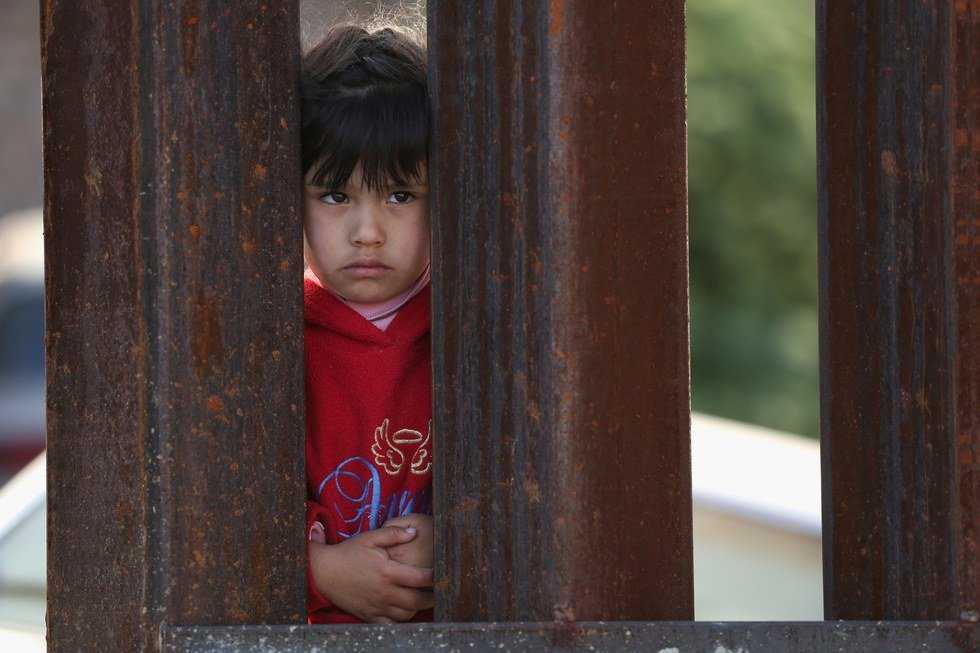
Not only is this amazing kid separated from most of his family by an insane border keeping our country and the country of his family separate, but his father ran away from him when he was two. Chances are that he doesn’t even remember his father. Putting aside what the studies have shown us about boys who live in fatherless homes, I can’t begin to imagine the struggle he must face every single day knowing that his dad left him.
My friend challenged my privilege that day. I grew up in a two-parent household with a mother and father who never gave up and have been married for twenty-one years and have been together (dating) for twenty-five. Until I was nine, I lived in the same community my parents grew up in, and so I was surrounded by and had easy access to every single member of my extended family. When my family and I moved to Michigan, twelve hours away from my family, I saw my family less and less, aside from two groups of frequent visitors and some stops here and there from other members of my family tree. Still, this is nothing compared to my student’s separation by extensive border control and countless hours and miles of travel.
I also don’t have any idea what it is like to live in a one-parent household not by divorce, but by a parent’s choice to leave the family behind. And for it to be the parent whom the child shares a sex with, that can be devastating. It eliminates the role-model for a young boy to look up to as a child. He will still have his mother, but there’s no denying the science behind how important it is to have someone to look up to, especially a parent, who is just like you and who you see yourself growing into.
This all hit me even harder when the final debates between our 2016 presidential candidates happened. I am reminded of Donald Trump’s insane dream to build a wall between the U.S. and Mexico and I wonder, “Will my student ever get to see his family again?” “Does he know what Donald Trump wants to do? Does he know what Donald Trump calls people of his race? Does he know that regardless of what some low-intelligence millionaire says that he is still valued as a person? That he is not defined by the terms and stereotypes some white man wants to slap on him?”
My eyes have cried for this boy, for his past, and for his future. Heaven forbid Donald Trump becomes President of the United States. Heaven forbid that my student should never again be able to see his family, or that he be sent back to Mexico. Who knows? I cannot change what has happened to him in the past, but with my absentee ballot vote, I have tried with all the rights I have to keep his future free of Donald Trump.
Coming back from the political side of the story (though I can’t stress how relevant it is), my sixth-grade students in my placement classroom have taught me and reminded me that I have had a pretty privileged background. I’ve led a decently cushy life and I’ve never known the struggle of divorced parents or of taking care of younger siblings or of not having food to eat or of runaway parents. I’ve never come to school wearing the same clothes as the day before or not been able to play outside of my house. I’ve never realized that I need to do more regular checks of my own privilege. I never realized that sometimes, it’s okay to be brutally honest about your past, because it doesn’t define who you are at that moment.
You know who that boy was at that moment? A young student sharing a personal connection with an adult he trusted. He was a kid who felt no shame about his story. He was confident. He was honest. But mostly, he was inspiring, and I’ll never forget that interaction as long as I live.