Can you write cursive? I can. But does it matter anymore?
For years the written word has been overtaken by technology. Gone are the days of writing letters or submitting handwritten reports. After all, it takes a lot less type to type and print is way easier to read than handwriting. In fact, many classmates could never read my handwriting because I wrote in cursive. When fellow college students still couldn't read my fancy script, I forced myself to print when I write. I only use cursive when I have to use signatures on paperwork.
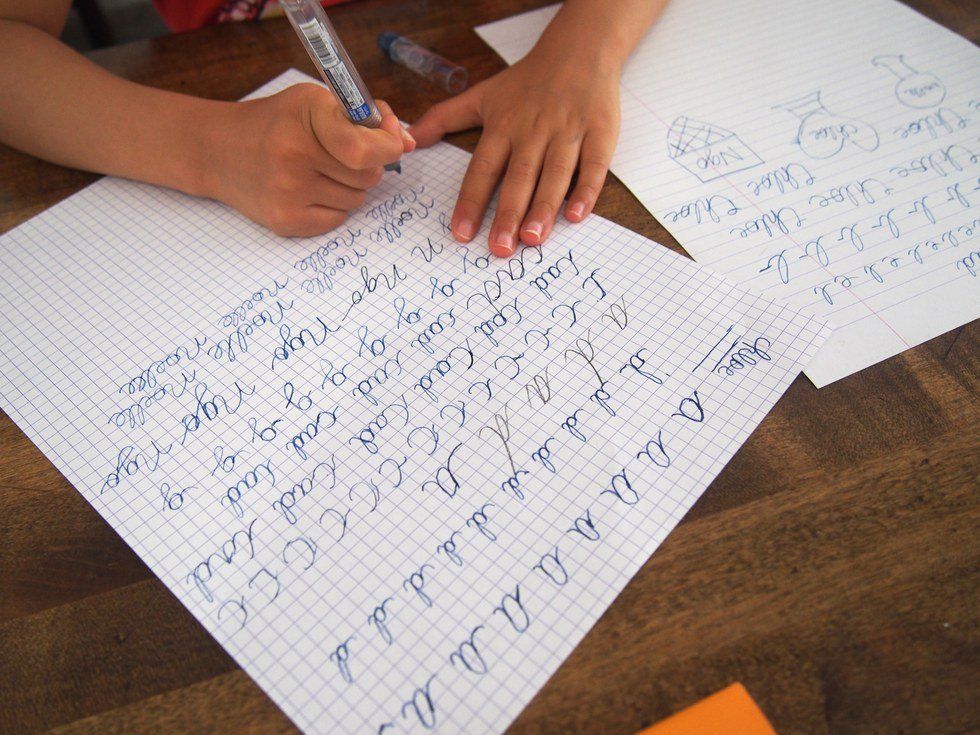
But will signatures vanish someday as well with the way things are? Many teachers and parents fear that cursive writing will go extinct and they have pretty good reasons. A lot of schools do not require students to learn cursive. Instead students are expected to master using keyboards, leaving out cursive entirely.
The change occurred after the release of the Core Stands in 2010, an initiative in the U.S. that details what students K-12 should know in language arts and math at the end of each grade. This initiative made handwriting secondary to typing. This angered many lawmakers, parents, and teachers. 9 states and numerous districts have lobbied to reintroduce cursive into public schools and were successful. A lot of other districts and schools are still petitioning.
Why do these people care so much? Well, there are a variety of reasons, other than familiarity and nostalgia. Cursive writing has existed since the beginning of writing. The Egyptians invented one of the first types of cursive writing, used by the scribes of Pharaohs. Perhaps we should not give up something so ancient.
Experts argue that handwriting has neurological benefits for children. A professor from the University of Washington, Virginia Berninger, suggests that handwriting engages the mind and helps children pay attention to language. A 2012 study of 15 children found that forming letters through handwriting may facilitate reading. Other studies indicate that handwriting helps children improve fine motor dexterity, reading, and memory. However, one could argue that it is writing itself, not handwriting, that does all this.
There is also history itself to consider. Without at least some knowledge of cursive, future generations might not be able to read old documents written in cursive. For example, a future historian who does not know cursive might not be able to read a document from 16th century England.
There is also a practical reason to keep using cursive. Sure, you could write your signature in print but that makes the signature a hundred times easier to forge.
I use cursive for my signature. I use print in regular writing now but sometimes I miss using fancy script.
What do you think? Should schools still teach cursive writing? If you have younger siblings or know a child, ask him/her if their school teaches cursive. Contemplate how much handwriting means in today's society.