

We live in a modern world that is rich with information; so rich, in fact, that for millennials such as myself, the de facto means for answering our unsolved questions is boiled down to something as simple as a Google search. Likewise, my generation and the generations that will follow are by and large considered the first to be "digital natives" - those who are brought up during the age of digital technology and therefore familiar with computers, smartphones, the internet and the like from a very early age - thus, further demonstrating the power of the information age in which we live in.
With this proliferation of technology and information, one would think that the world would become a better, more informed place. But just as Uncle Ben once said to Peter Parker, "with great power comes great responsibility," we too must take care in making the distinction between things such as fact, reason, and logic and their inherently counterproductive alternatives of fiction, fallacy, and unsubstantiated appeals to emotion.
One only need to scroll their Facebook timeline for a matter of minutes or even seconds before coming across blatant misinformation which is so readily accepted and consumed by the masses. Articles with headlines like "A Little Known Loophole That Could Still Make Bernie Sanders President," or "How Donald Trump's New Economic Plan Closely Resembles That of Nazi Germany" are re-tweeted, re-posted, and otherwise re-dispersed among our friends and family without ever first taking the time to read them, let alone challenge them through the lens of critical thinking.
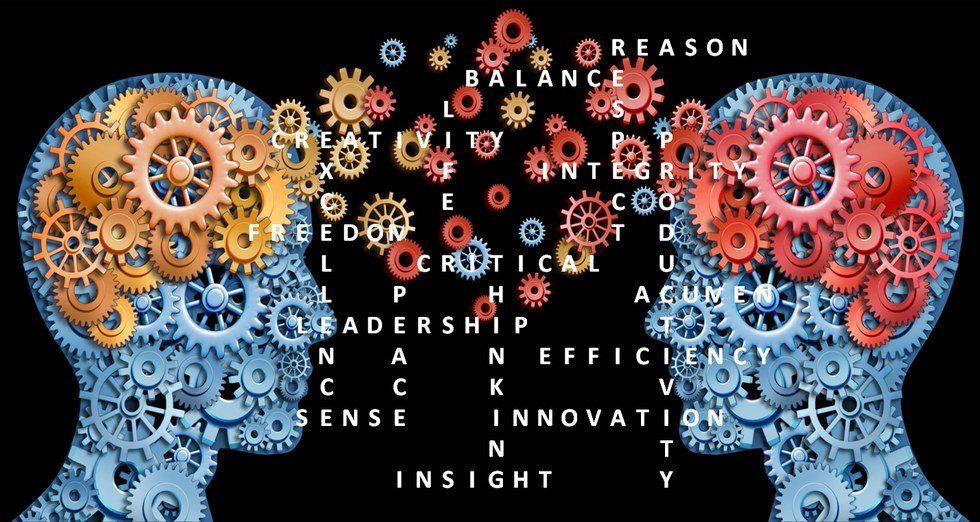
What we need as a society, now more than ever, is a shift from this fallacy-based approach towards the consumption and acceptance of information towards a method that utilizes critical thinking, level-headed debate, and an acknowledgement - despite our inherently human desire to be right - that our views are sometimes wrong.
This is not meant to be an indictment of emotion or passion, but rather a plea to put these often illogical forces to the side when considering even the most emotionally charged issues. Do you feel strongly about the election of Donald Trump to the position of president? Great, fight for your opinions to be heard! Do you think that college debt and rising tuition costs are pressing issues? Great, fight for your opinions to be heard!
But I ask, even beg, that you refrain from resorting to ad hominem attacks such as, "Donald Trump is a bigot, racist, etc." - a statement based on opinion, not fact - or simply stating that "the 1% are greedy bastards who should pay for everyone's college" - something that while it sounds great, wouldn't work even if the 1% were taxed at 100% - and instead ask that you express your views in ways that rely on factually-based arguments built on sound logic and reasoning.
I challenge you to always take what you read/post/discuss on the internet, in the media, in the classroom, or a amongst a group of friends with a grain of salt. Before coming to conclusions, ask yourself important questions like:
- Who's writing this?
- What are their intentions?
- What are the underlying premises of their argument?
- Is there a factual basis to what this person is saying?
- Does the conclusion presented logically follow the premises that aim to support it?
- What empirical data exists to support this person's argument and where does it come from?
- What alternatives exist that the author or myself may not have considered?
In asking yourself these types of questions, you will begin to form a body of evidence to support or deny any given argument. And while the answers to these kinds of questions may not change your original position on what has been presented, they will at least give you the confidence to know that you are more that just a sheep following the guidance of a wolf pretending to be a shepard.
My name is Mathew East, I am white male, a conservative, an MBA candidate at the Kelley School of Business, and I wholeheartedly ask that you consider and challenge what you've read here today.