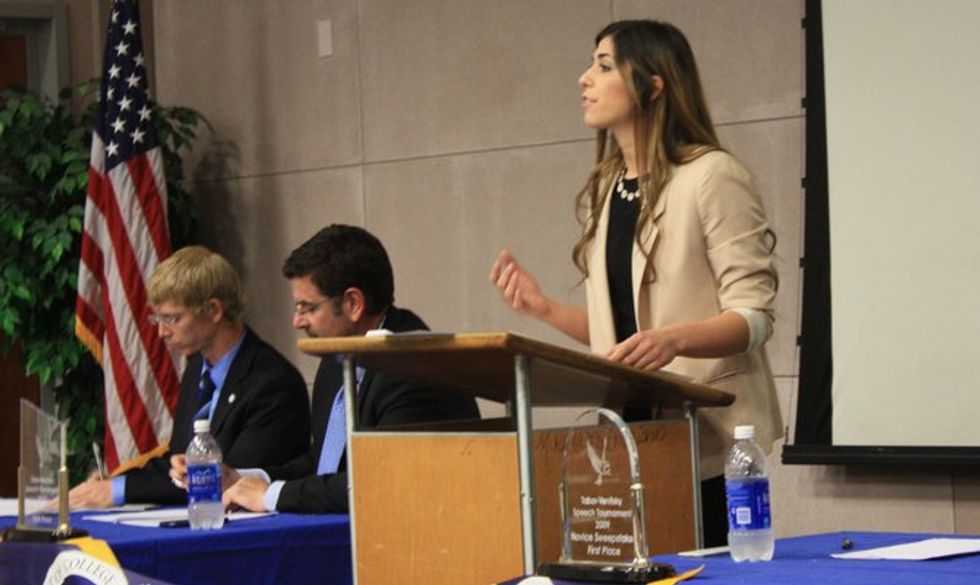
The
1. Critical Thinking
This is the skill your parents and college administration hopes you get out of speech and debate. It is the backbone of every argument you make. In debate, you are often confronted with an argument you may agree with, or a persuasive argument you think you can't beat. Being able to think in a way that challenges and questions what you hear helps you to be a more effective debater. During the first week I joined
2. Staying Well-Read and Updated on Current Events
One of my favorite parts about my classes is when a professor mentions something that I've previously read about during my time in debate. From EMP's, to drone warfare, to climate change--in order to win your rounds, you had to be well read and prepared to talk about a number of topics. My memory has resisted retaining a lot of what I learned during my debate years, but the broad scope of political issues I learned about has given me a better understanding of topics covered in my classes.
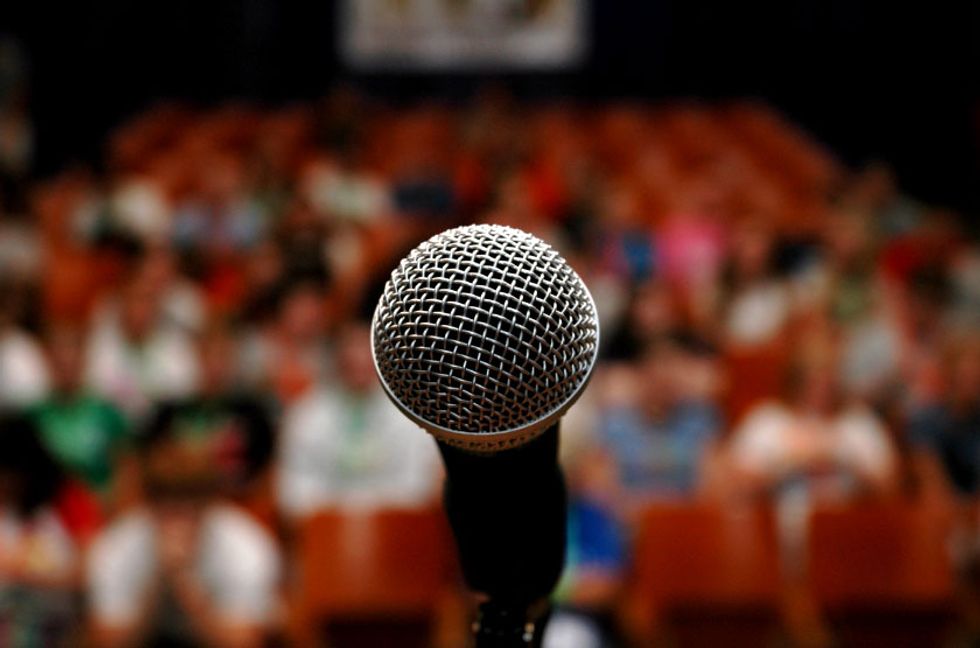
3. Confidence Speaking to a Crowd
According to the Washington Post, a fear of public speaking is the number one fear in America. I've learned that speaking in public doesn't have to be scary, and when I started getting the hang of it, I realized I had the potential in me to be an effective speaker. Being able to handle oneself in conversation with a few, and especially being able to convey one's argument is a vital skill that speech and debate teach.
4. Put in Hard Work
Taking the time to read articles, practice debates, and go to debate tournaments takes a lot of time and patience. I learned this in part by working hard, but mostly by not working hard and learning that without doing debate rounds or reading up on the news, I was going to lose very hard come competition. While there is an element of hard work in order to get into the higher echelons of debate, I also learned sometimes you don't need to work that hard to be good, because there is more than just reading that goes into debating.
5. Persuasion is as Much Bullshit as it is Knowledge
I'll never forget when my first debate partner chided me for not being able to "bullshit" properly. The key to debating successfully is by having good warrants to back up your claims. Sometimes, however, an unwarranted argument or a BS response can be useful. It's not wise, but you learn that persuasion isn't about knowledge: it's about getting another person (the judge) to agree with you. Unfortunately, this means you won't always win on paper.
6. Be Quick on Your Feet
Remember when I said debate taught me to think critically? A part of that is learning how to think quickly. I went in for an interview once and was asked the peculiar question of, "What kind of kitchen appliance would you be?" Rather than be stumped, I responded with "blender." Needless to say, I got the job. You have to be fast on your
7. It's Not About Intelligence
One of the hardest lessons I've had to learn in life and one that occurs in
8. Empathy in Academia
I became a feminist through my time in the debate community, and it's not that the community in itself is inherently feminist; rather it helps foster discussions on issues such as gender and more. I wasn't greatly aware or paid much attention to a lot of issues that people face, but by learning about these things, I grew greater empathy toward people of different backgrounds and experiences.
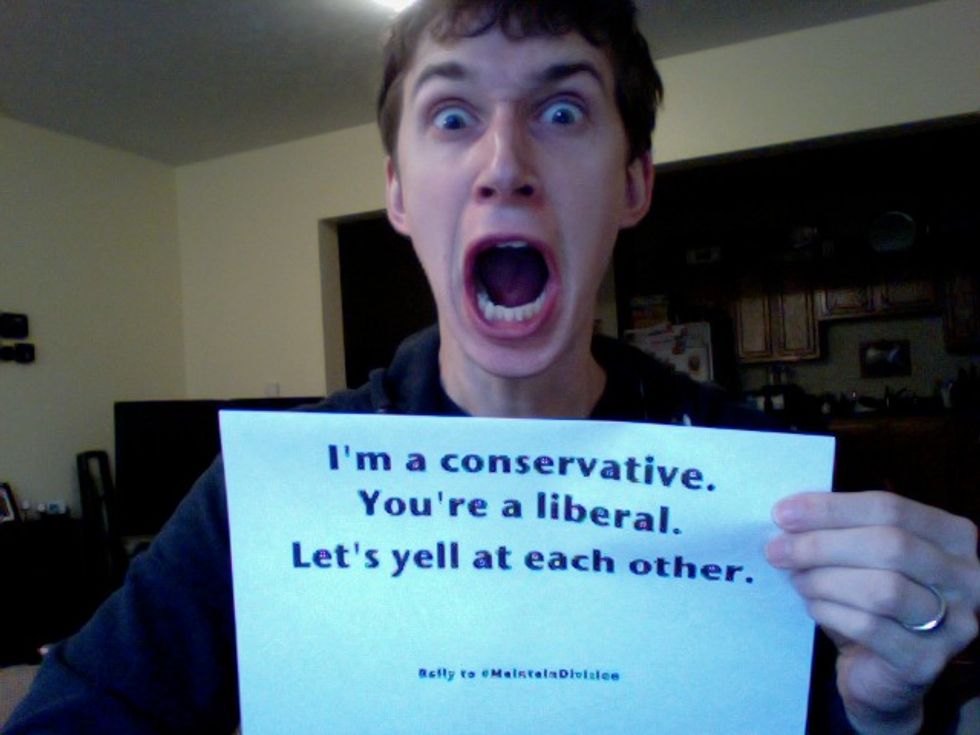
9. There Are Never Just "Two Sides" to a Story
Democrats and Republicans. Conservatives and liberals. Pro gun versus gun control; the death penalty or life in prison
10. Avoid Generalizations
"My girlfriend overreacts a lot. All the women in my life are emotional."
"We need to prevent the mentally ill from obtaining weapons so they don't cause mass shootings."
Both of these are examples of very common, and very misguided, generalizations. Many people mistakenly generalize based on their own experience or on what they think they see in the world. This is the logical fallacy of a hasty generalization, which is "a conclusion based on insufficient or biased evidence. In other words, you are rushing to a conclusion before you have all the relevant facts." To win a debate, you need to have evidence to back up your arguments. Hasty generalizations are not facts, but fallacies that distract us from coming to realistic conclusions.