
At the edge of my grandparents’ property is a creek.
I've soaked my sneakers in its freezing water many times, and I've scraped my knees on the slippery rocks. Every Memorial Day, my cousins and I sent boats made of tennis balls and old scraps of wood and soda bottles toward a makeshift finish line where my grandfather stood ankle-deep, trapping our flimsy vessels in a wire net. Its banks are thick with long, squishy grass. If I look over my shoulder from the water's edge I can see the treehouse we built for my brother, perched in a tall pine.
Not for long. In the next few years, the property will be subdivided. New houses will spring up on its land. Someday soon, that little creek will dry to a trickle, and then it will be gone.
Recently, I’ve been reading a lot of Wendell Berry’s work. Berry is foremost a farmer who works the soils of his native Kentucky, but over the years he has published a vast number of critical essays on naturalism, conservation and the vital link between culture and agriculture.
In 2004, Berry penned a much-disputed essay titled “The Ecological Crisis as a Crisis of Character.” The root of the piece’s controversy lay in its assertion that many organizations that advocate for conservation actually harm nature—and by extension, society—by advocating nature as a tourist attraction which ought to be enjoyed at a distance rather than a sacred space with which we ought to be respectfully engaged.
To let the man speak for himself: “The connoisseur of the ‘scenic’,” Berry writes, “has thus placed strict limitations both upon the sort of place he is interested in and upon his relation to it.”
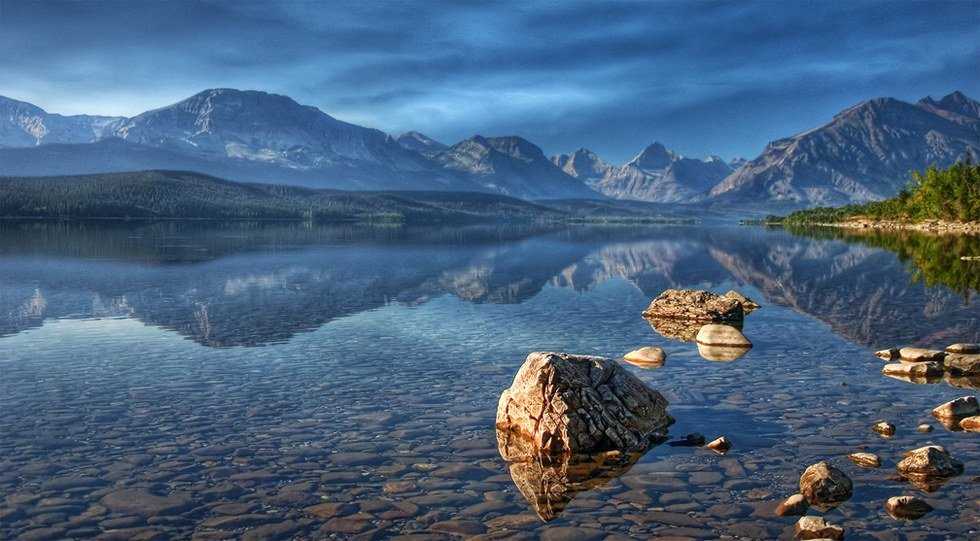
When I read this for the first time, I was scandalized. What about the national parks? What about Yosemite, with its sculpted granite peaks and mirrored lakes? What about the vast salt flats of Death Valley, or the coldly crystalline beauty of Glacier National Park?
As I grow older and (disputably) wiser, however, I’ve returned to Berry’s argument several times and found it more and more compelling with each new contemplation.

In another of Berry’s essays, the charmingly-titled “Getting Along With Nature,” he discusses the necessity not only of wildnesses, but of wildernesses as well. Berry’s distinction is a delicate one. Whereas wildnesses are small gems of natural beauty—the creek that gushes through a family’s backyard, for example, or the quiet cluster of oak trees tucked into the edge of a college campus—a wilderness is a space deliberately left untouched by human hands. Both have their value. The danger comes when we assume that our careful preservation of the latter gives us free license to pollute or destroy the former.
To be perfectly clear, I’m not making any sort of claim that places like Yosemite or Acadia or the Adirondacks are some kind of blight on society. Just the opposite: these explicitly intentional wildernesses serve a role that is socially vital, yet blessedly impossible to quantify economically. Perhaps there is more to be said for the connection between those two qualities.
Just as the sunny clearing opens up invitingly to the traveler along dark forest paths, so these wildernesses carve out a space for us to rest and to contemplate and—most of all—to be caught up in the wonder of nature’s unfailing rhythm and in our own small but indispensable role in it.
Every society ought to have these set-apart places, these oases for sense and spirit. It is good to draw a line confining our ambitions, to say “This here, and no further.” Nearly every ancient culture, from the Celts to the Greeks to the Japanese, honored the “sacred grove,” the untouched places where the communion between human and nature is whittled down to one sharp, essential point of contact.
But what happens when we decide that those places are enough?

In the modern, post-industrial world, we have allowed ourselves to blindly accept an idealogical division between work and leisure, a divorce that echoes that ancient Platonic separation between our bodies and our souls. Part of the reason why this division is so insidious is that it appears healthy. Preoccupied with figuring out our “work-life balance,” we forget to question when our work stopped being an essential and meaningful part of our lives. So, like a hatchet-blade splitting apart the piece of wood, this mentality neatly divides our “real lives” from our “work lives.” And we wouldn’t have it any other way.
Why is this such a problem? Because it encourages both individuals and corporations to operate by separate ethics at work and at home. How else can organizations like Conservation International and the Environmental Defense Fund hold millions of dollars in stocks in fossil fuel corporations? And how can we stand looking down on a pristine coastline, admiring the clear blue of the sea, yet go home at the end of our weekend holiday and toss out the plastics that are choking our own native waterways?
It is because we have divided the land, carved up the vastness of nature itself into easily palatable pieces, in the same way that we have divided our own lives. Nature demands respect. Does the wary preservation of an untouched forest or a virgin coral reef justify stripping down that last bit of local foliage or paving over unsightly wetlands to lay foundations for a new shopping center? It certainly makes us feel better about it.

The places where we work—not only our businesses, but our homes and schools as well—operate according to the rules of "business-as-usual," where gain and greed are prioritized above all else and the environment has no value beyond its profitability as a resource. And the places we enjoy, including our most breathtaking wildernesses, are reduced to nothing more than escapes from a reality that we know is exploitative and cruel.
Later in “Getting Along with Nature,” Berry delivers his grim prediction for the future, a prophecy that reads like a punch to the gut: “If everyone has to go to a designated public wilderness for the necessary contact with wildness,” he says, “then our parks will be no more natural than our cities.”
For then, of course, both would only be serving our own purposes: one as a utilitarian paradise, the other as an escape. And so we make cheap resorts out of the deepest places of nature.
While musing over Berry's ideas on a long car ride, I glimpsed a Parks Service billboard amidst bristling deciduous trees on the edge of a Virginia highway. A family in brightly-colored hiking jackets clustered around a campfire, their smiles as buoyant as the ad's tagline: “Give them the best vacation—ever!”
But nature is not just a vacation. It is something to be cherished in all its forms, from the most magnificent landscapes to the small secret places that only children know. For a society to choose between the two is a false, dangerous dichotomy.
Of course I don't want to live in a world without national parks. But I don't want to live in a world without my grandparents' creek either.