
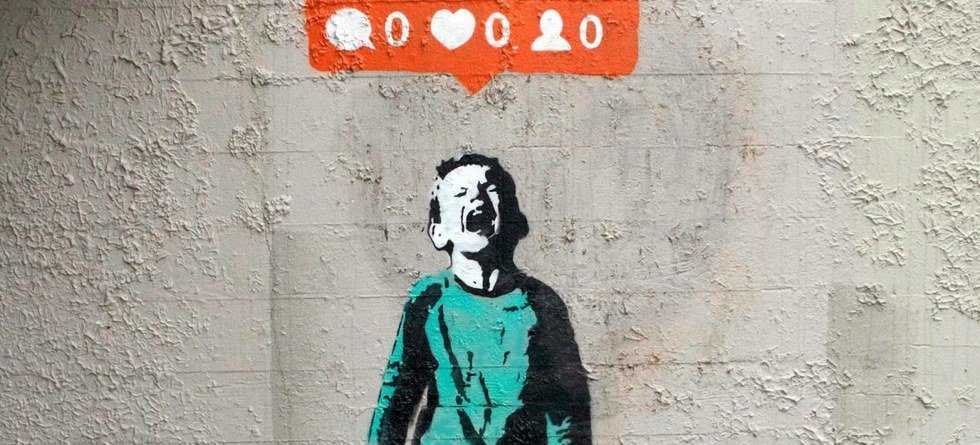
When you walk down the street, it is common to see many people walking by themselves with their eyes drawn to their cell phones texting, messaging or scrolling through their Facebook feed. It's as if people seek to be constantly connected with the world of social media, but at the same time, disconnected from the real world. In our modern world, technology has transformed the ways in which people communicate and interact with each other. There is no longer a need to converse face-to-face, but this has become a problem that disables people from truly getting to know each other.
Social media allows people to edit themselves in order to be portrayed as whatever they want to be seen or known as. Sherry Turkle points out in her TED Talk "Connected, but alone?" that people want to be with each other but also elsewhere because people are able and willing to customize their own lives. Social media only shows certain sides of individuals that people want to show: the good sides. Oftentimes you see celebrities posting about their exotic vacations and red carpet events, but their average day-to-day lives are omitted from their profiles.
In our Western and modern world, society urges people to live individualistically and on the basis of self actualization in order to fulfill our individual purposes. On the journey to fulfilling one's purpose or generating some kind of meaning in one's life, genuine social and familiar connections diminish, and as a result, loneliness sets in. People are unable to cope with loneliness and the state of solitude. Instead of keeping a few close companions around, the measure of one's status and social abilities are determined by the 3,000 Facebook friends or 10,000 Instagram followers one has. Although humans are naturally social creatures, in reality, we are limited to intimately knowing only 150 people. People would rather sacrifice human connection for mere conversation with another person. The problem lies in the back and forth contrasting battle between having a large social media following and the constant state of loneliness one faces.
However, Turkle explains three "gratifying fantasies" as to why people are attached to and intrigued by social networks. One is that we can put our attention wherever we want it to be. Two is that we'll always be heard. And three is that we will never have to be alone. Technology has become a way in which people define themselves by "sharing our thoughts and feelings even as we're having them." Moreover, we fake experiences so we have something to share in order to feel alive.
How are we expected to understand and get to know people on a deeper level when they only put themselves out there as the perfect form of themselves? People are flawed and multidimensional. Many people nowadays are fearful of real human interaction and commitment because in real time you are unable to think of the perfect witty thing to say. With technology, people are able to take their attention away from real time and decide for themselves what they choose to listen to in person and what they really want to pay attention to on their mobile devices. People think that by constantly being connected, they will feel less alone, but the opposite is true: If people are unable to be alone, they will only know how to be lonely. We must reclaim spaces to provoke conversation because the seemingly simpler and optimistic technology has further complicated and redefined human connection.