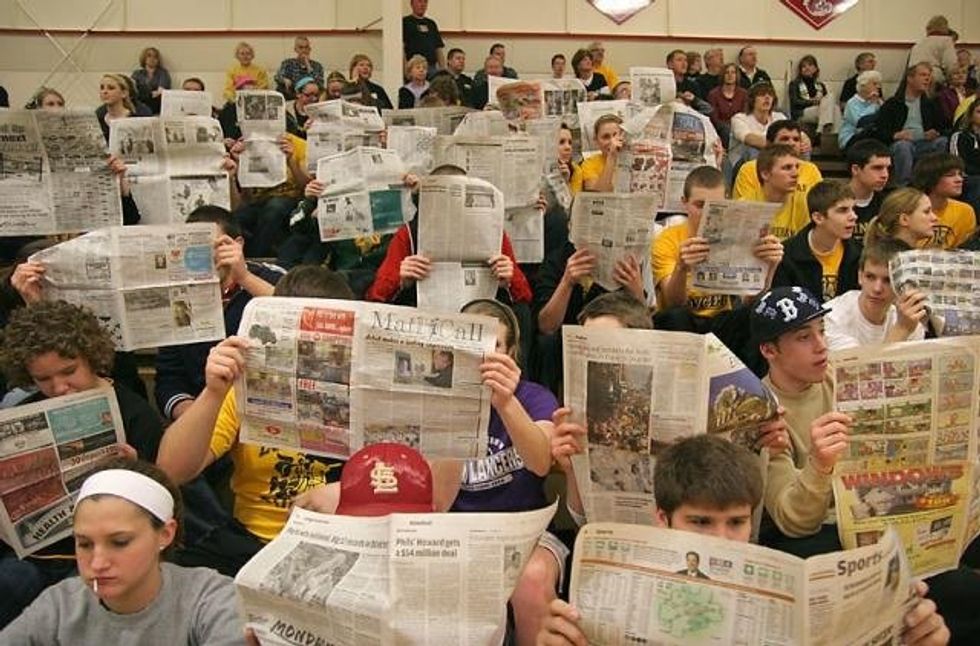
Until recently I was like most young adults. I had the CNN app on my phone and read the alerts on my home screen before dismissing them and going about my day. If my friends were talking about something, or I had seen something on another platform, I would rush to check Twitter to see what was up.
I would have considered myself mostly up to date then. I knew what people were talking about and the controversial or big-event news. But I was very, very wrong.
I’ve had an interest in journalism for some time now. I was part of my high school newspaper for three years and was the editor-in-chief the final year. Despite this role, I didn’t put in any effort into my actual news consumption. But this changed when I decided to take the intro course for journalism at my school, News Media and Society.
Part of my grade in this class is dependent on me reading the news. I have to keep up with the news daily, and we are quizzed on it weekly. Just CNN or Twitter won’t do it either; our professor forms questions mostly from stories from The New York Times and The Washington Post, as well as our school news website.
So every morning, I read the articles listed under the Times’ “Today’s Headlines” email newsletter and skim through the articles under the Post’s similar service for anything I might have missed. I also read the evening edition of the Post’s headline emails. Finally, I read every article posted to our school news site when it’s posted.
Despite the fact that I've only consistently read the news for two months, I have already found that knowing what’s happening in the world has helped me in several ways.
For example, I’m able to speak knowledgeably about current events in my other classes and connect them to the curriculum. One of my other professors loves to bring up the news in class in relation to different topics we cover. I look like a shining star when I’m able to comment on or even summarize an issue or event for the whole class.
But while looking good in your classes is great, there are far more benefits to reading the news consistently. One is that you yourself may benefit from the knowledge you gain. Say you are looking to invest some birthday money. From reading the news, you know the Fed has been back and forth between raising an interest rate recently. That tidbit of information allows you to look into what the effects may be on your investments and gives you insight into your best plan. You are able to take the news and use it to your personal advantage.
Another benefit of keeping up with the news is that you know about issues and events that may affect you. While this is similar to using the news to your advantage, it’s different in that you know what could happen and can take action based on that information. This is most clear when thinking in terms of political elections. Following elections (and not just the horse race between candidates, I’m talking about their actual policy stances) allows you to be an informed voter. Also the news is fulfilling its duty in supplying citizens the necessary information they need to be self-governing.
Finally, I think the most important reason to read the news is simple. Everyone, but college students, in particular, should be curious about the world. What’s going on out there beyond your own personal bubble? How are other people living? What events are shaping the future? How do these things affect you? What do you care about? How can you make a difference? These are all things the news can help answer if you take the time to educate yourself on it.
I have to admit, I’m an 18-year-old college freshman who only just recently realized the value of reading the news regularly. But if I can find so much value in reading the news in just two months, what are the benefits in a year? Twenty? A lifetime?
They say the habits you make in college stick with you for the rest of your life. Take the time and make reading the news one of yours. I promise you’ll be better off for it.