
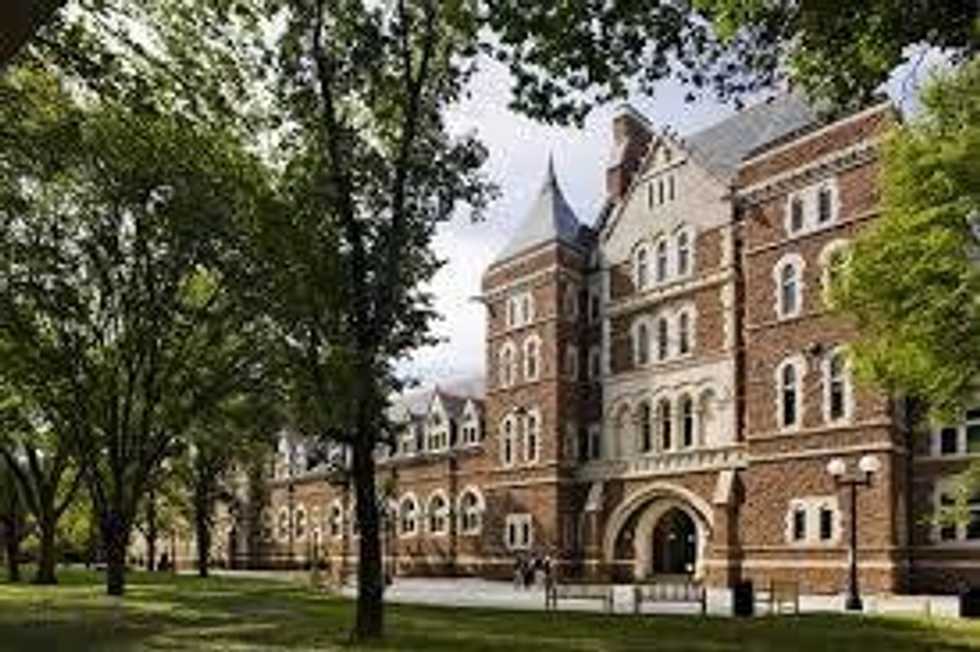
On Tuesday, September 1, 2015, about 160 student leaders gathered together in Trinity College’s Mather Hall, in a room that all bantams know as the Washington room. There were RA’s, Pride Leaders (student leaders that live in residence halls and plan programs to help first year students), Student Mentors, and Campaign for Community Leaders (Campaign for community is an initiative Trinity started this year, to help fix the social problem at Trinity). The purpose: discuss and figure out a way to change Trinity College’s Climate.
As oblivious as I can be to everything going on around me, it is hard to be oblivious that I go to a school that can be socially cold. The common example that I usually hear among my friends are the typically act of seeing someone you know on what is known as Trinity’s Long Walk, but having that person pull out their phone, or avert their eyes, just to avoid saying, “hi” to you. Another example is the fact that one can spend a semester in a class with students, and once that semester is over, it’s like you never knew each other. Students at Trinity can be “chilling” to others and some of the comments made in class can have others from different backgrounds, feel like their voice does not matter. I have heard it said that unless one is “white, rich, and straight,” life at Trinity will be extremely hard.
More than being cold, my school is known as a Party school. It seems to some that unless you are a big partier, there is no way for you to have fun on the weekend. Most Trinity College students will go to frats, or some other party, where they get stupidly drunk. There’s nothing wrong with having fun, but there is something wrong with it being the only thing that we do on campus during the weekend.
So, all student leaders gathered on campus to discuss this toxic climate. We talked about the act of including those who have been excluded. We spoke on what it means to be the part of the “in” crowd and what it means to be part of the “out” crowd. We discussed the divide that is so clearly evident in our school’s main dining hall.
It was an amazing experience. The truth of the matter is that we all know what the problem is at our school. We know that due to our “climate,” many people transfer after their first year because they did not fit in or they did not find a group of friends. We all know that the way to fix this is to break the barrier between the minority and the majority. We know and see the many divides at our school. We know that the way to fix it, is to not allow the divides to define us. We know what to do, because we, as student leaders represent a diverse part of the school; we come from different parts of the world, the United States, and are of different race, faiths and walks of life. So, we know exactly how to bridge the gap.
But the question that I always ask after a meeting like the one we had on that faithful Tuesday is: we can talk the talk, but can we walk the walk? It is easy to speak of ways to include those who have been excluded. It is easy to discuss Trinity’s new Initiative, “The Bantam Network” (an initiative aimed at building a community within each class so that no student, “falls through the cracks”) and have high hopes for the initiative (and I do have high hopes for it), but I am also concerned. I am concerned because we as human beings get distracted easily, and we forget easily. I am afraid that now that school has officially started (THANK GOD), things will change for a couple of weeks and then go back to normal. I am afraid that “The Bantam Network” will fail to make sure that no students “fall through the crack” because, two days after freshmen arrived, I already saw a student that due to no fault of her own, and due to no fault of her peers, she was excluded. Therefore, our discussion and efforts may have little to no effect on the school’s climate.
One of my friends said, “In order to fix the problem, you have to figure out why the problem is occurring.” I agree. Trinity has yet to really figure out or solve why the problem is occurring. Why do students feel the need to ignore each other? Why is it okay to stand for hours waiting to be accepted into a frat for a party but are unwilling to find alternatives to partying? We discussed the problem, we discussed how we can fix the problem, but we did not discuss the why. And I truly believe that without getting to the “why”, we might always have a “cold” campus.