
This article mentions domestic violence and rape.
This past Wednesday, I attended Soraya Chemaly's talk, "Feminism, Free Speech and the Internet," at The University of Virginia. Award-winning feminist writer and activist Soraya Chemaly is known for her advocacy for gender equality in free speech, technology, media, and culture. Her talk challenged whether women today have free speech online, particularly on social media platforms. The talk centered on issues such as censorship of female nudity, misrepresentation of women and the immense amount of violence toward women in advertising, politics, and media.
Before attending Chemaly's talk, I was not fully aware of the length at which women are threatened for simply speaking their minds online. Female journalists, activists, artists, gamers, celebrities, and virtually any women utilizing their voice on the internet have experienced or are at risk of experiencing online threats. Pew Research Center reports that 25 percent of women ages 18 to 24 have experienced sexual harassment online. Regardless of the dangers women face online, many websites do not have regulations to protect them. Chemaly shared a moment she knew action needed to be taken several years ago, when Facebook refused to remove a photo of a woman with her mouth taped shut, reading, "Don't tap her and rap her, tape her and rape her." When the image was reported, Facebook did not take it down, because at the time it did not violate its community guidelines.
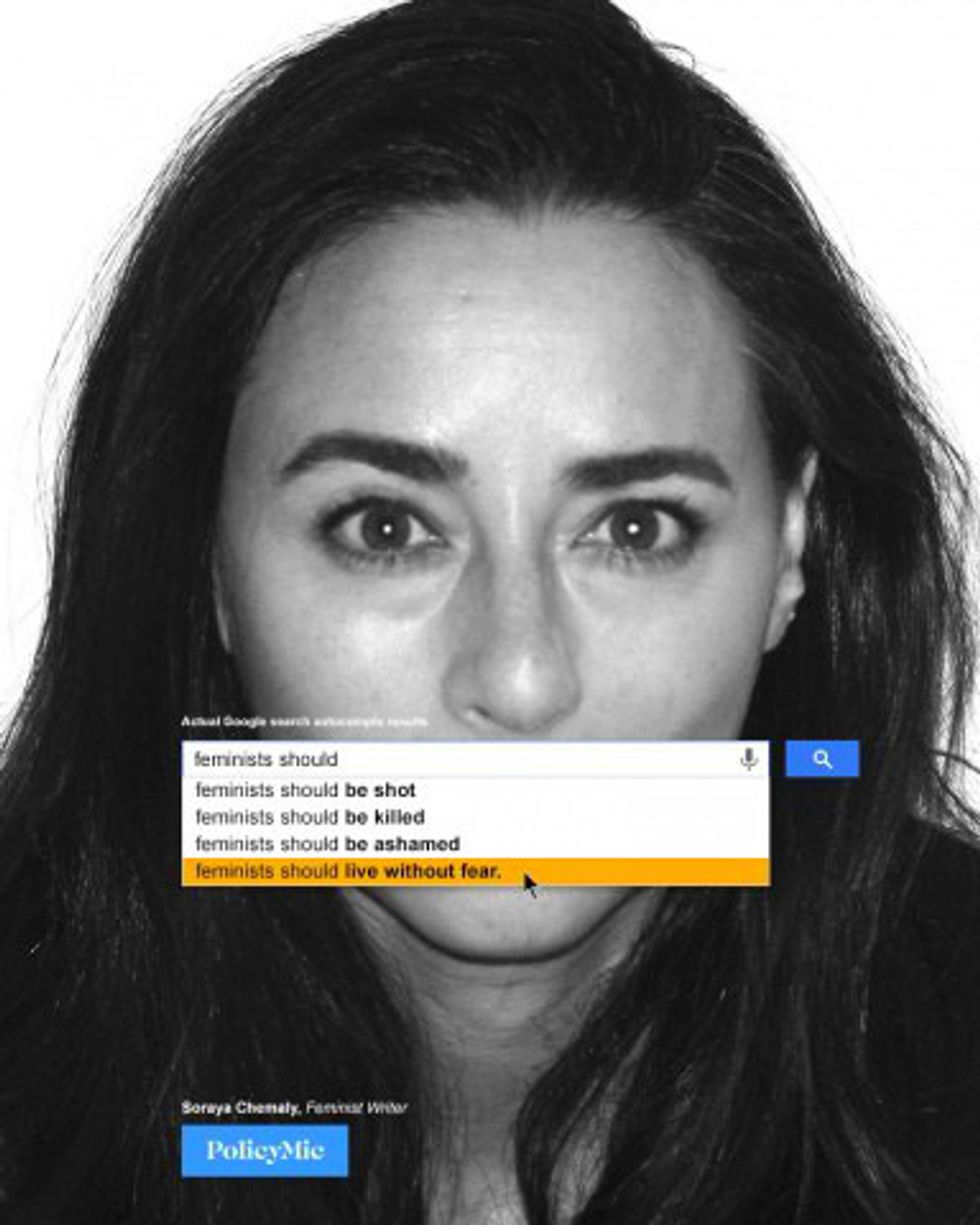
Chemaly is working to establish rules to put a stop to online harassment, particularly concerning domestic violence and rape threats. A few years ago, Chemaly worked on the #FBRape campaign alongside fellow activists Laura Bates and Jaclyn Friedman to establish proper regulations to keep these violent groups, pages, and other threatening content off Facebook. The end result was Facebook teaming with Women, Action, and the Media and The Everyday Sexism Project to create stricter rules in order to eliminate and better police hateful content on their website.
Chemaly continues to write and advocate for better representation of women and less gender-based violence and hate. Her recent article in The Huffington Post, "12 Reasons Why Gender Matters to Understanding Teenage Sexting" is on a topic covered in her talk at UVA. She is currently working to give targets of "revenge porn," who are primarily women, rights to their private content when it's shared without their consent.
She also shared a personal story about a topic she discusses in her New York Times article "Make Bathrooms More 'Accommodating.'" Chemaly described an instance when she realized how little women are kept in mind in the building of public spaces, specifically public restrooms. She recalled checking on her daughter while waiting over half an hour for her outside a women's public restroom. When she stepped inside, she saw over 50 women and children in line to use the stalls. Meanwhile, the men's restroom did not have a line, and Chemaly understood that women's needs, like having a place to breastfeed a baby, were not considered in the building of most public spaces. This results in many women breastfeeding babies on the toilet because of the stigma surrounding public breastfeeding and the lack of private rooms for them to use. Additionally, some women may spend more time in the bathroom when they are on their period. That is one reason why Chemaly is so ardent about advocating for public facilities to equally accommodate all genders.
Soraya Chemaly continues to be a feminist leader, working tirelessly to shed light on an immense amount of gender issues related to politics, race, technology, religion, media, and beyond. Striving to achieve gender equality through her writing and activism, Chemaly continues to educate people using her insightful knowledge and wholesome passion for women to attain equal human rights. You can listen to her Ted Talk, "The Credibility Gap: How Sexism Shapes Human Knowledge" to learn more.