A couple weeks ago, a moderately popular YouTube star posted a clickbait video about fat people. In the video, she recalled a time that a family that smelled like sausage was seated beside her on an airplane and spewed a sizable amount of vitriol before insisting that she just wanted to be a friend to fat people by telling them that they need to stop being fat, as friends are evidently wont to do. I will not link to that video because she does not deserve any more attention than she has already received, but I am sure a little Googling will pull it up should you want to see it that badly.
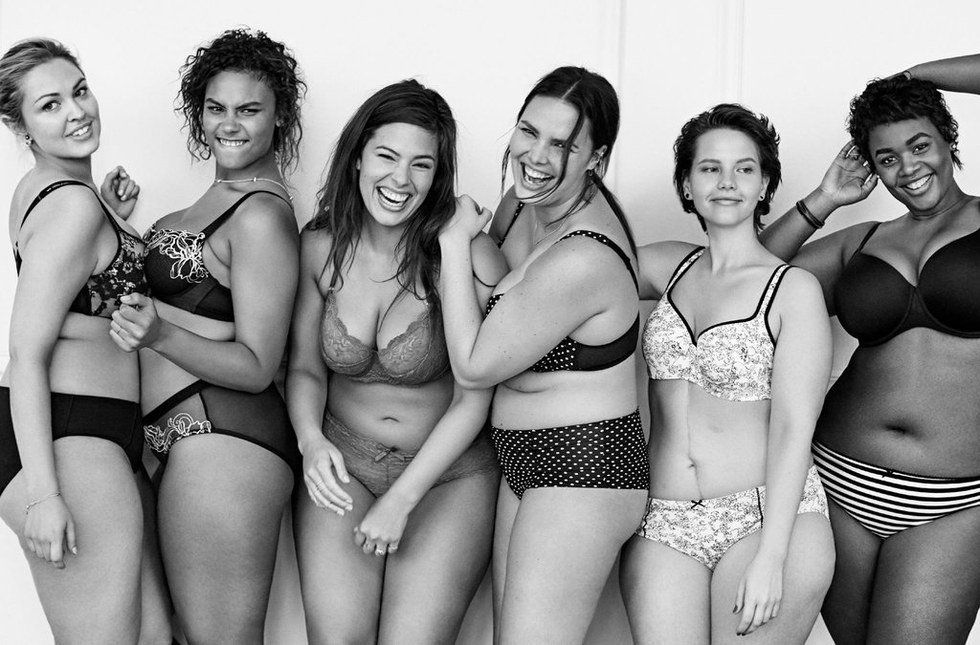
On the other end of the spectrum from this aforementioned YouTube star sits another camp that believes in body positivity for people of all sizes. These are people who believe that we should be accepting of people at every size, regardless of the health-related ramifications for those individuals. This group has also been vocal in response to the video, naturally.
Unfortunately, little noise has come from the in-between group in the wake of this incident. This is the camp where most people lie. We do not think that anyone who is overweight needs to be fixed, but recognize that there is a point at which we have to consider health. So, where is that line? How fat does someone have to be before we are concerned for them? How do we know when we need to speak up? How do we approach this topic without being cruel to anyone while considering that there are very real health concerns pertaining to obesity?
First, we have to recognize some realities.
1. We statistically hurt the chances that an obese friend or family member will lose weight if we tell him or her that he or she needs to do so.
To answer my question above, that route has to be a last resort and only for family members and best friends, if anyone. Do not tell your friend who put on 20 pounds during a stressful semester that she needs to watch what she is eating, because this is likely to just make her cling onto food more. For those of us who stress eat, there is nothing that makes us feel better than a bag of Halloween chocolate or an entire box of Cheez-Its. If you are really worried about someone, ask him or her to go on a jog with you or to go to the gym with you or to help you make a healthy dinner. Make it a joint effort and it will be that much easier for both of you.
2. Many people who are obese are not obese because they overeat, but rather because of health conditions or economic conditions.
Not everyone has a perfectly working thyroid or perfect mental health or a 9 to 5 job that allows plenty of time to go to the gym that he or she can use his or her disposable income to afford or money to buy and time to prepare fresh food when trying to put enough food on the table for a family on government assistance or a low income from a service job. You do not know the particular set of circumstances facing an individual, and to judge without full knowledge leads to incorrect, egregious assumptions.
3. It sucks to be overweight.
I live in constant fear of becoming obese because society is so very cruel, and I do not want to worry about my health. I have exactly two glaring, red stretch marks on my stomach from a heavier time earlier this year, and my thighs do not fit in a lot of my clothing from high school anymore. I need an extra large and a 12 or 14 in all clothing now, which means that a lot of clothes for young people are not made for me, and I dress like I am several years older than I am most of the time because of it. It is pretty disheartening to walk into a cute boutique and not fit into anything, but loose fitting sweaters, some of which have tight sleeves that prevent me from wearing them, to say nothing of the fact that I am also too small for plus size clothing and can only consistently shop at a couple stores.
I have gradually gained weight since high school graduation in a gain/lose cycle so it doesn't seem like I have gained 30 pounds, but the cellulite on my thighs that was not there three years ago is an ever present reminder that I have. I shudder to wonder about how many times "she has such a pretty face" has been said about me behind closed doors. It is not likely that a young person who is overweight has not tried to lose that weight at some point, and he or she has most likely done so repeatedly. There are some people who simply have a harder time with achieving and maintaining an ideal weight, despite our best efforts.
I understand that not all bigger people feel like I do about their bodies. I am so genuinely happy that there are women who are happy with their bodies despite and because of their curves. I want everyone to feel comfortable in their own skin because no one deserves to feel less than for something that is difficult and sometimes impossible to control. Where it gets sticky is when those who are truly at risk for obesity-related diseases are not only comfortable in their skin, but also complacent.
Despite my own negative feelings toward myself, I am comfortable and confident on most days, and I like my large, feminine breasts and hips, the way my waist is small and distinct, and how my thighs are full but my legs are strong and muscular. However, I am actively trying to be healthier. While, yes, I would like to be a little smaller, my main priority is making sure that I am healthy, regardless of the numbers or letters on the insides of my tags. It does not matter if you are a size 8 or an 18, we need to make sure that we are eating the right foods and drinking the right amount of water and sleeping well and moving the right amount. It is just usually a consequence of doing those things that weight falls off at one rate or another, albeit sometimes painfully slowly.
So, what do we do? We create a culture where bigger women and men do not feel embarrassed to go to the gym or go for a jog, with the knowledge that no one is going to post a photo of it on Snapchat because people are not totally terrible. We stop separating plus size clothing from straight sizes in department stores. We petition designers to extend their sizing so young people do not end up wearing clothes for thirty-somethings. We support policies that help people in food deserts and lower income people receive access to low cost healthy foods. We stop saying "she has such a pretty face," with the underlying connotation that her body is not pretty. We need to get it into the collective consciousness that it is okay to be comfortable in your own skin while recognizing that you are still a work in progress. Switch your salad dressing to something transparent. Jog a mile even if it's slow. Take up yoga. Do some squats. Drink some water. Healthy is the new skinny, and my thick thighs are thanking me for it.