On June 23rd, Officer Joseph Hall shot Lee F. Berry Jr. in Detroit, Michigan. Berry had recently graduated from Wayne State University with a Bachelor’s degree in communications. Though he worked for his family’s moving business, he aspired to be a news anchor. He died that day.
It was looking to be another long, summer day as Berry drove a white Chevy van recklessly through rush hour traffic. The passengers, his teenage brother, Dwayne, and 8-year-old nephew, David, corroborated the fact that Berry passed three vehicles that had stopped for a red light, ran at least one light, and drove on the wrong side of the road. Though no one was injured by Berry’s careless driving, he did commit multiple misdemeanor traffic violations.
The traffic violations caught the attention of 48-year-old Officer Joseph Hall. According to Hall, a high-speed chase ensued for a mile and a half to stop the driver. Hall testified that he was behind Berry at speeds of 70 to 80 miles per hour, with lights flashing and siren blaring. The officer was also quoted saying his motorcar reached speeds of 100mph while in pursuit of Berry.
This report of a high-speed chase was a slightly inconsistent from the civil servant’s initial deposition testimony. Curiously, in contrast to Hall, Dwayne and David maintained that Berry was not speeding, nor was he evading.
“It wasn’t a chase. We didn’t see a scooter.” Dwayne, 16, said in an interview. “How do you know if he’s trying to stop you if there’s no siren?”
In fact, no one—the boys, the neighbors, nor the employees working on the home’s fence—heard a police siren. The two neighbors did hear a voice yell, “If you make another move, I’ll kill you.”
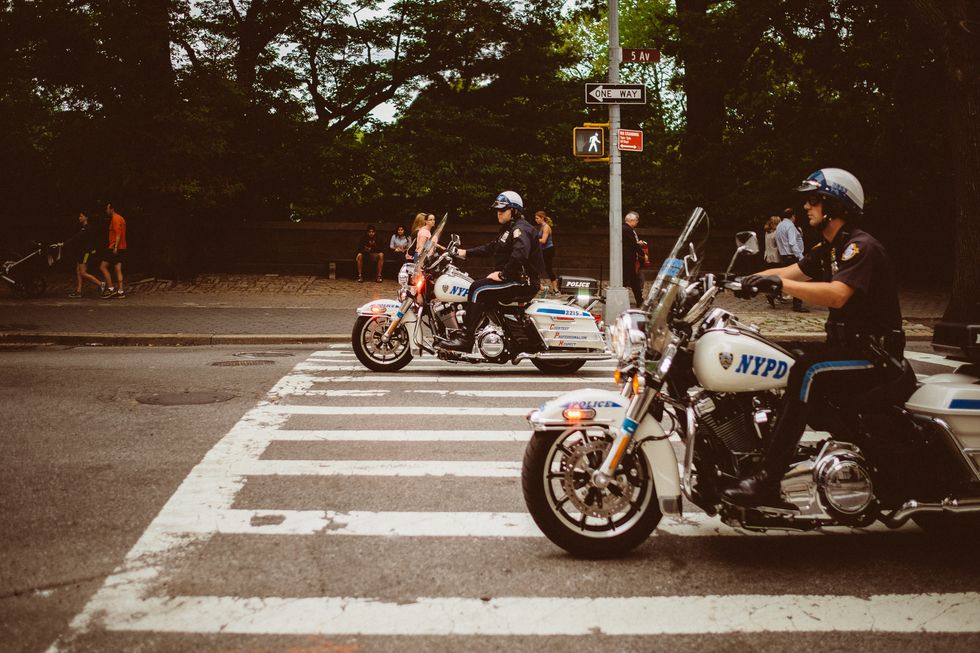
The officer later clarified to a reporter that the motor scooter’s siren is only operational when the bike is in motion, so that should explain why neighbors did not hear anything when he pulled into the driveway. It does not explain, however, why a siren was not heard prior to the officer arriving at the Berry home, considering his claims of a 1.5 mile high-speed pursuit.
When Berry arrived home, Hall pulled in just moments behind him. With weapon drawn, the police officer of 17 years approached the van to make an arrest. Hall said that as he went to holster his gun and retrieve his handcuffs, the 137-pound, 5’7.5” tall man surprised him and punched him in the face.
“He had his hands up and I placed them alongside the van,” the officer recalled to a local news outlet, days after the shooting. “We never spoke through the entire interaction. When I reached for my handcuffs—boom—he started hitting me.”
During the struggle that followed, Hall said, Berry broke his glasses, cutting his eye and weakening his vision. He then hit Berry on the head with his gun. Hall was treated at Mt. Carmel Mercy Hospital that same day for facial injuries. The medical examiner concluded it was implausible that the officer’s vision was hindered.
“I fought off the attack and he ran into the backyard. I went into the backyard to see where he was going, then retreated out of the backyard.” Hall said.
After seeing two unarmed workmen in the backyard and remembering that the unarmed teen and unarmed child were still in the van, the officer felt he needed to leave the scene immediately, “for [his] own protection.”
Hall had already called for backup when Berry reappeared and blindsided him. “I didn’t even see him coming at me again,” he said. Berry allegedly rushed Hall and knocked him to the ground, all in attempts to wrestle away the .45 caliber revolver.
“During the struggle for my gun, the weapon was discharged four times, striking the perp [perpetrator]. The perp was continuing to pull on my gun as it was discharging,” Officer Hall remarked. Berry suffered fatal gunshot wounds to the head, back and right leg.
Forensic evidence, the legal team, and several witnesses, however, offer a different version than the officer’s recap of the incident.
Witnesses did not see a fight and they testified that Hall, who weighed 240 pounds and stood 5’11” tall, did not appear injured afterwards. They stated that the instant Officer Hall arrived at the property, he used profanity, threats, and physical force when trying to arrest Berry.
“Get out of the van, you motherfucker,” Hall supposedly shouted. Along with his brother, Dwayne exited the vehicle, but he was ordered by Hall to get back inside. There, he heard the sounds of a struggle and, through the rear-view mirror, watched his brother’s death.
N.C. Deday LaRene and Juan Mateo, the lawyers for the estate of Lee F. Berry Jr., argued that Officer Joseph Hall began to pistol whip Berry on the head, substantiated by the medical examiner reports. During the beating, the officer inadvertently hit himself, shattering his glasses and cutting his face (Hall asserted that his eyes, specifically, were injured and partially blinded). Infuriated, the officer fired at least four shots, fatally wounding Berry in his head, back, and his right thigh.
The forensic tests specified that Berry was shot from an estimated distance of three to 10 feet, but the veteran police officer reported that Berry was shot while he was holding onto the gun. Oddly, the laboratory results did not prove this claim. Instead, they indicated that Berry’s hands were absent of any chemical traces present on the officer’s weapon, meaning his hands could not have been on the gun when it was fired. Witnesses had emphasized that Berry had not grabbed at the officer’s gun, as he was already many feet away when the first shot was fired.
Hall also stated that he continued firing shots at Berry, while Berry’s back was turned and he was fleeing, because his firearm was set on “automatic.” It was later confirmed that the firearm did not have any type of “automatic” firing mechanism.
It was revealed that Hall was using hollow-point bullets, which expand upon bodily entry. Detroit police are not permitted to carry this type of ammunition, but the officer admitted to hiding them during departmental inspections. He referred to them as his “get off me” bullets.
Shortly after Berry’s death, the Detroit Police Department held an investigation. They determined their member, Joseph Hall, innocent of any wrongdoing or misconduct. Everything he did was in his own self-defense. Hall retired from the department soon after he was awarded disability payments for the psychological trauma from the shooting.
The FBI initiated an investigation to determine if Berry’s civil rights were violated — nothing came to fruition. The Wayne County Prosecutor’s Office did not pursue any criminal charges, either.
However, the family was awarded six million dollars for the violation of Berry’s 4th and 14th amendment rights, battery, and gross negligence. To avoid a lengthy appeals process, Doris Berry, Berry’s mother and head of his estate, accepted 4.2 million dollars from the city instead.
Lee F. Berry Jr. was an unarmed Black man. He was shot and killed by a white police officer on June 23rd, 1987, 30 years ago.
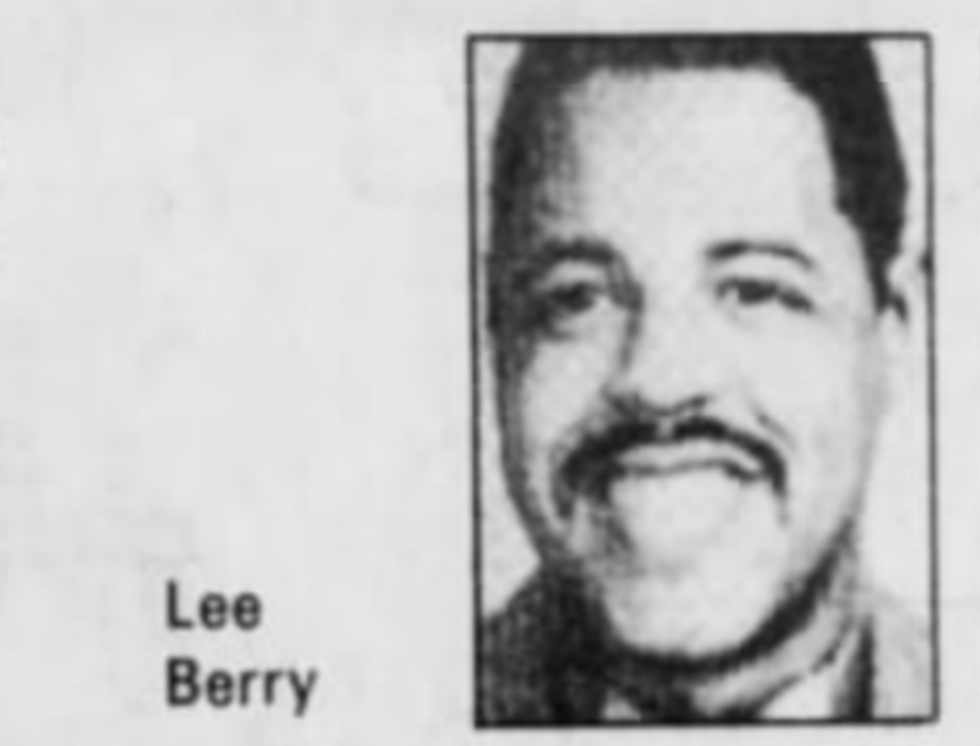
Berry’s death sounds eerily familiar, doesn’t it? As does the justification. Though he has been dead for a long time, his story sadly parallels countless contemporary police shootings of unarmed Black men, women, and children.
There’s an undeniably vicious cycle to these shootings that permits too many deaths to be trivialized and too few officers to be penalized.
What is it going to take to break this cruel cycle and to end police violence indefinitely?