
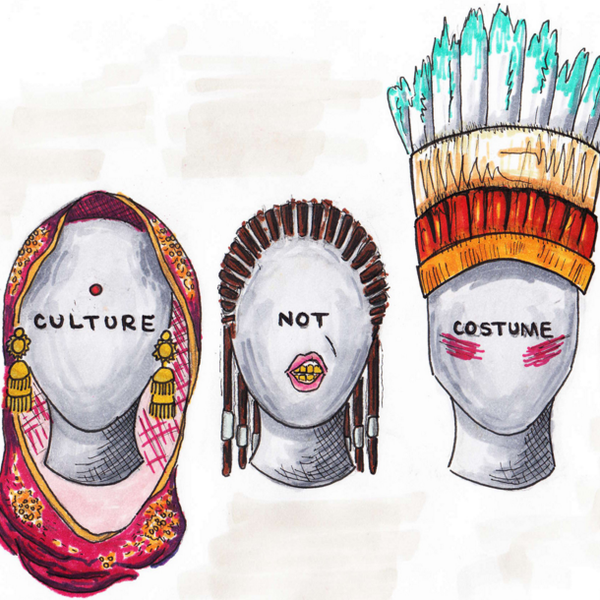


A trend has recently become popular among A-list celebrities, whose fans then latched onto, called “boxer braids." It is rumored to have been created by Kim Kardashian. The issue with this is that the trend was actually originally known as "cornrows," and cornrows come with a long cultural history originating in Africa.
Braids are historically found all over the world, and the exact origination isn’t officially claimed. Although, the oldest representation of any form of braid, whether it is box braids or cornrows, is in African art and literature.
"Hieroglyphs and sculptures dating back thousands of years illustrate the attention Africans have paid to their hair. Braids were etched into the back of the head of the majestic Sphinx."
In the African culture, hairstyles symbolized social standing, marital status, tribe and more. Braiding, specifically cornrows, was often intricate, and many times used as a social event.
“In ancient times – just as in modern times – hours were spent creating intricate hairstyles for daily wear and special occasion alike…This traditional way of styling the hair is popular throughout all of Africa, especially in North and West Africa, where you will find some of the most intricate styles adorning the heads of men, women and children alike.”
Cornrows were documented as far back as 3500 B.C. It can be assumed none of the Kardashians or any other A-list celebrities were around at that time.
Cornrows didn’t stay isolated in Africa. In fact, they were passed down onto their descendants. During the time of slavery, traders initially shaved the heads of their captives for sanitary reasons, but it was also to strip them of their sense of self or culture. Wherever they may have ended up, whether in the Americas, Caribbean, or anywhere else, they kept that practice and passed it down to later generations to this day.
As time passed, the popularity rose and waned, but it never died away. With the current pro-African movement, more African-Americans are wearing their hair natural, making braids more popular. It makes sense for others to notice, appreciate and replicate, but to take credit and claim something rich in culture as something ‘new and recently created’ is cultural appropriation. To change the name, meanings and history behind it cannot be excused or accepted as ignorance.
This isn’t the first nor will it probably be the last time African based cultures have fallen prey to cultural appropriation. Another example would be "twerking." Miley Cyrus coined the term, but she didn’t create the dance. Similarly to cornrows, it was also derived from the African culture that she emulated through hip-hop. Though, it is clear she understood nothing of the actual culture behind the dance.
Some people often view cultural appropriation from a desensitized standpoint, frequently because it isn’t their culture being exploited. Before now, cornrows weren’t something celebrated by popular culture; they were actually commonly seen as unprofessional, and weren't as widely accepted as an "appropriate" or "fashionable" hairstyle. Now, it’s "cool" on everyone--that is, everyone except its African descendants.

















