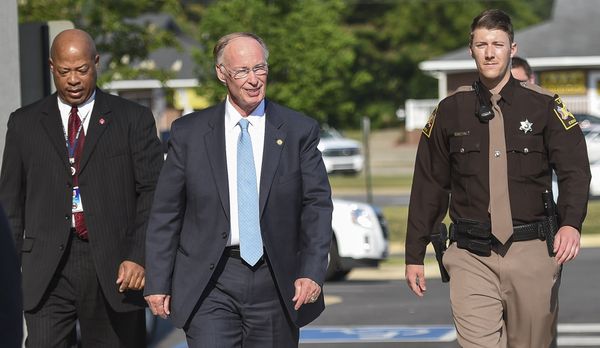

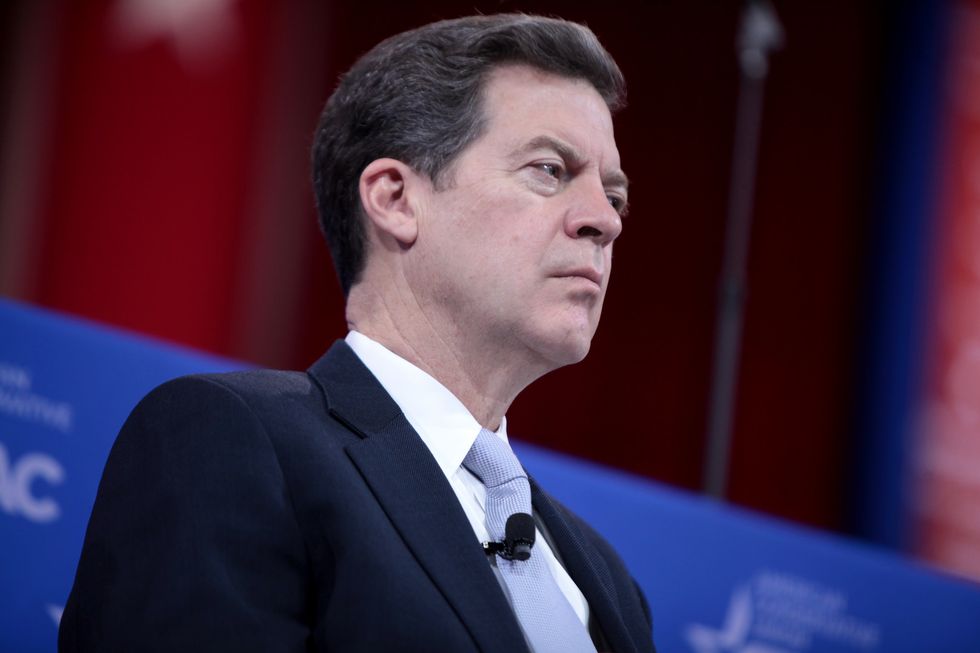
Kansas has been the subject of a multitude of articles everywhere from the Kansas City Star to The Economist. The stories revolve around the bipartisan action taken by state legislators in overriding Kansas Governor Sam Brownback’s veto of a bill seeking to raise $1.2 billion in tax revenues over two short years. This is not an effort driven by tax raises, but rather by the repeal of Governor Brownback’s tax cuts, part of an experiment in Supply-Side economics that may have gone too far.
For those unfamiliar with Supply-Side economics, this theory asserts that tax cuts for top earners and businesses, lowering barriers to positive economic activity, stimulate economic growth thereby benefiting every actor in the economy from the Jeff Bezos to your local grocery market cashier. The theory gained fame and notoriety, by many on the left, throughout the Ronald Reagan era. Some called it Reaganomics while others, like Reagan’s Republican primary opponent and future vice president George H.W. Bush, mockingly labeled the approach “Voodoo Economics.” For the purposes of this article, we will refer to the theory as trickle down as this particular moniker has become the most recognizable, pointing out the theory’s postulation that economic progress will transcend into the middle- and lower-classes as the wealthy benefit from tax cuts.
At the heart of trickle down thought and the Kansas experiments lies the Laffer Curve, a representation of the relationship between taxation and government revenue. Arthur Laffer, the advocate of the curve and father of trickle down economics, utilizes the theory of the curve to claim that it is possible for a government to generate more revenue at a lower tax rate. The logic behind this lies in the notion that by cutting taxes, thereby activating an economic stimulus for all, the number of people paying taxes, the taxable income base, rises. In fact, ‘lowering rates, widening the base’ is the mantra that fuels the trickle down movement and it is the promise Governor Brownback pitched to the people of Kansas.
As we all know, the American tax system is quite complex. The Laffer Curve fails to adjust for this complexity. Many economist remain skeptical about the growth assumptions woven into trickle down economics and the Laffer Curve. A group of economists surveyed at the University of Chicago Booth School of Business in 2012, challenged the notion that widening the base of taxable income by cutting income taxes would lead to increased government revenues. Specifically, 71 percent of the economists disagreed with the statement that a “cut in federal income tax rates in the U.S. right now would raise taxable income enough so that the annual total tax revenue would be higher within five years than without the tax cut.”
Despite challenges, the Laffer Curve and trickle down economics continue to play a vital part of the Republican strategy at all levels of government. When you think about it in terms of political strategy, the approach really is quite genius. Republican ideology utilizes trickle down economics in a way that exploits the inherent dislike Americans wield against taxation. Meanwhile, Republicans capitalize on the American fascination over entrepreneurship by portraying laissez-faire markets and unbridled business activity as a precondition that catalyzes any significant economic growth. All of these strategic bells and whistles supplement the core component of Republican ideology: limiting the scope of government. Again, another genius addition that allows any Republican candidate to parade as an advocate of the people against a supposedly abusive government with declining credibility spurred by Nixon’s Watergate scandal.
Unfortunately, all of this political strategy and messaging did not make for good public policy in Kansas. Such a failure makes sense. When you go on believing that cutting taxes will benefit your constituents and magically grow your government’s revenues, you create a flimsy could of delusion with a short lifespan. Once that cloud dissipates you inherit a cast of disgruntled Americans and anxious politicians, including Republicans, who have to deal with a horrifying synchronization of diminishing state budgets and decaying public services.
At this point, the Kansas perspective of trickle down and Mr. Laffer’s curve is the same one would have towards an email received from a Nigerian prince promising a future of riches. Governor Brownback and his fellow Republicans promised the people of Kansas a high-octane economy running on the power of unfettered markets and limited government. Contrary to the Laffer assumption, a Census report on state government tax collections highlighted Kansas as a state that had state government revenue decline by 3.8 percent. So when the middle class folks of Kansas looked up to the golden faucet, no water trickled down to them.
Stepping outside of Kansas and returning to the national stage again, Republicans tend to fuse this dangerous tax policy with a fervent antipathy towards public services. The narrative presents public services like food stamps, unemployment insurance, WIC, Medicaid, public education (particularly in the case of Kansas), free lunch programs, and other safety net mechanisms as growth inhibitors that cultivate a culture hostile towards the idea of hard work (the exact opposite is true of many programs). Those recipients of public services are demonized as leeches encumbering hard-working Americans, as if people choose to suffer financial devastation and enjoy having their lives depend on measly benefits to feed their families.
This unholy amalgamation of political messaging that corrupts the public policy process lead to a Kansas Supreme Court decision that ruled the state’s spending on public education as unconstitutionally low. Misery truly sets in when one realizes that the Kansas elite do not have to deal with the decay of public services in the state. It is the middle-class and lower-class people who voted for President Trump and Governor Brownback, who bought the bootstrap mythology sold by the Republican Party and hoped for an improved financial situation, that have to deal with a decimated public school system. These Kansans do not have the privilege of mobility to simply move to another state with various services.
Of course, there is a completely separate dynamic involved in Kansas’ melancholy that we have not addressed: the influence of money in America’s political system. This vice is not unique to Kansas, but it is important to fight against this shameless display of avarice if we hope to quell political polarization and bring back dignity to the public policy process. Be wary of those who claim to be for the common American while espousing policies that directly benefit the wealthy. Even the Nigerian prince is a bit more subtle.