
Overweight. Fat. Obese. Chubby. Plump. Big. Thick. Stout. Big-boned. Curvy.
No matter what word we choose, we all know what they mean. We are referring to someone whose weight and/or measurements are higher than what is considered healthy for the average person of their height, age, etc. While I am all for loving your body no matter the size or shape, we need to rethink the last word on the list. Curvy. This term is innocently cloaked in the guise of politeness and body positivity, but actually continues to promote stereotypical conceptions of beauty.
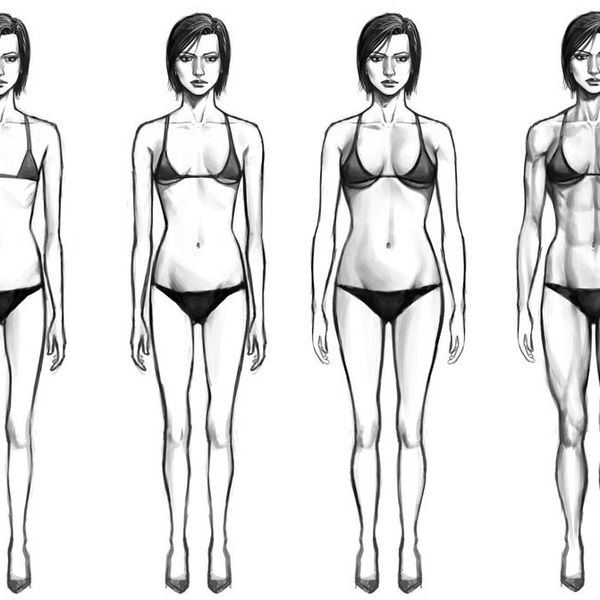
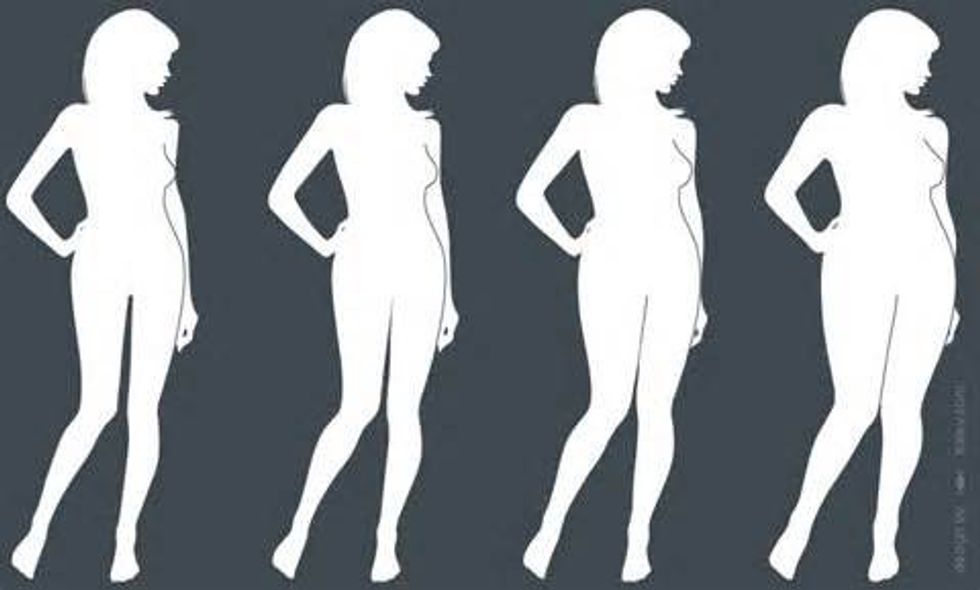
Firstly, the term is simply inaccurate. A curve, according to Oxford, is "a line or outline that gradually deviates from being straight for some or all of its length." There you go. The opposite of a curved line is a straight line. The curved line isn't necessarily bigger than the straight line. It's just, well, curvier. So, it doesn't really make sense to use "curvy" to refer to someone's overall size, weight, or measurements. Curves are about proportion. An hourglass figure in which the waist is noticeably smaller than the hips and bust will contain curves because of the comparable variance in size. A figure in which the waist, bust and hips are much closer in size to each other will naturally have a straighter silhouette. These body shapes and all the ones in between can occur in anyone regardless of weight. Anyone can have curves.
OK, OK, so maybe it isn't the most exact term, but "curvy" sounds so much nicer than "fat." Well, yes, but only because of the negative connotation our society has placed on the word "fat." When we choose to say "curvy" instead, what we are really saying is that there is something wrong with fat. Fat makes us uncomfortable. We don't even want to say the word. It is politically incorrect to acknowledge if someone weighs more than their doctor recommends. And as J.K. Rowling put it, "Fear of a name only increases fear of the thing itself" ("Harry Potter and the Chamber of Secrets"). Coming up with pleasant sounding but largely inaccurate euphemisms only enforces the idea that being overweight is usually bad and unattractive. Humans created language, and it continues to evolve as we interact with it every day. We made "fat" a bad word. And now, instead of working to remove this shallow stigma, we are twisting the meanings of other words to pretend fatphobia never existed.
For people such as myself, this term is especially troubling. I am short, fit and of an average weight. I also have a definite hourglass figure and major body-image issues. I always wanted to be skinny. And though some people may apply that term to me anyway, I would rather lose my curves and just be thin all over. But even when my weight fluctuates, the overall shape of my body remains the same. Whenever someone refers to me as "curvy" or mentions my "curves," I start feeling paranoid that they are secretly insulting my weight or the size of my body. I know that my body is small, but my mind tells me I am fat everyday. As someone who lives with this tension everyday, the "curvy" euphemism only makes me doubt whether people really think curves are attractive or if they are trying to soothe the feelings of someone society tends to call unattractive. This is the problem with such inaccurate terms. It is hard to tell what someone actually means when they use them, if they mean what they say or if they are simply putting on the face of a good, politically correct citizen.
If, as our language seems to imply, fat is the opposite of skinny, and fat equals curvy, then you cannot be skinny and curvy at the same time. So what am I? What are all the other people who, like me, fall somewhere between the two extremes? Skinny is valued for being petite, slender and youthful. Curvy is valued for being feminine, sexy, and voluptuous. Considering those as the two options creates an extreme binary that claims you must be one or the other. A slim curvy woman or a overweight woman with a straight figure are both worthy of beauty. Body positivity is about accepting people of all types. Thinking of skinny and curvy as opposites is still feeding into predetermined notions of how women are supposed to look. Bigger women don't need curves to be attractive. There is so much more than skinny vs. curvy that we fail to acknowledge when these terms are used as two extremes of a spectrum.
Language is fluid and people should feel free to use whatever words make sense to them. I only ask that we think about what we are saying. We can talk honestly about our bodies without being offensive if we work to remove the stigma associated with certain words, rather than discarding the words completely. Couching our labels in inaccurate euphemisms doesn't change the fact that they are still labels. Language should liberate us, not restrict us.
Thin. Tall. Muscular. Petite. Pear-shaped. Heavy-set. Fun-sized. Chunky. Curvy.
There's a whole dictionary of words to choose from. Don't let just one define you.