
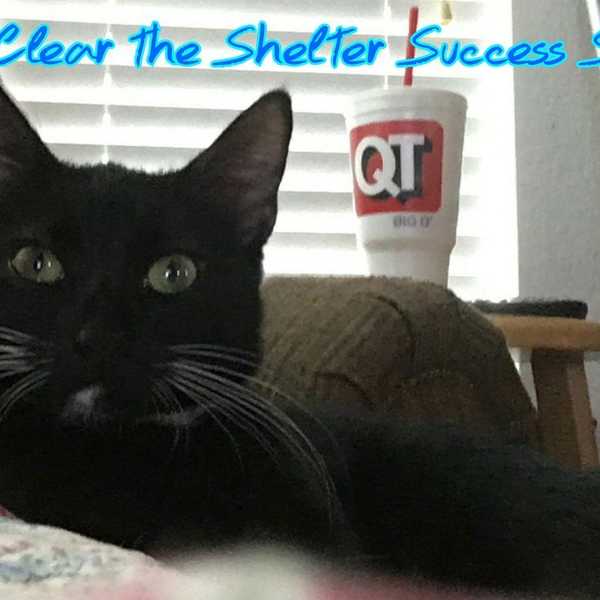

Without a doubt, cats are my favorite animal. They're so smart, and each has their own unique personality. My own cat, Loïc, is inquisitive and pretty smart: my family taught him to respond to English words!

(This is Loïc)
Not all cats are as lucky as Loïc. According to an ASPCA poll, about 3.4 million cats are brought into shelters each year, and 1.4 are euthanized. Of these cats, stray/feral cats, also known as community cats, are the most likely to be put down. However, not all is lost! There are many programs across the country that provide assistance to those who want to help community cats, including Best Friends Animal Society. Their popular program to help community cats has been brought to many cities across the country, and it has worked very well.
What is Best Friends?

Best Friends Animal Society is, in my opinion, one of the most important animal societies in the United States. There are two Best Friends locations in Utah, as well as offices in New York and Los Angeles. The Sanctuary, located in Kanab, has about 1,600 companion animals, including horses, parrots, and potbellied pigs. Each worker and volunteer shares so much compassion with each animal, and the appreciation is practically palpable. The Pet Adoption Center in Salt Lake is one of the cutest places ever (there are kittens to be adopted at the moment), and my weekly volunteer shifts bring me closer to the cats. Best Friends mission statement is simply "To bring about a time when there are 'No More Homeless Pets.'" Their initiatives include stopping puppy mills and breed discrimination legislation (especially against Pit Bull Terriers), as well as trap-neuter-return (TNR) for community cats.
TNR?
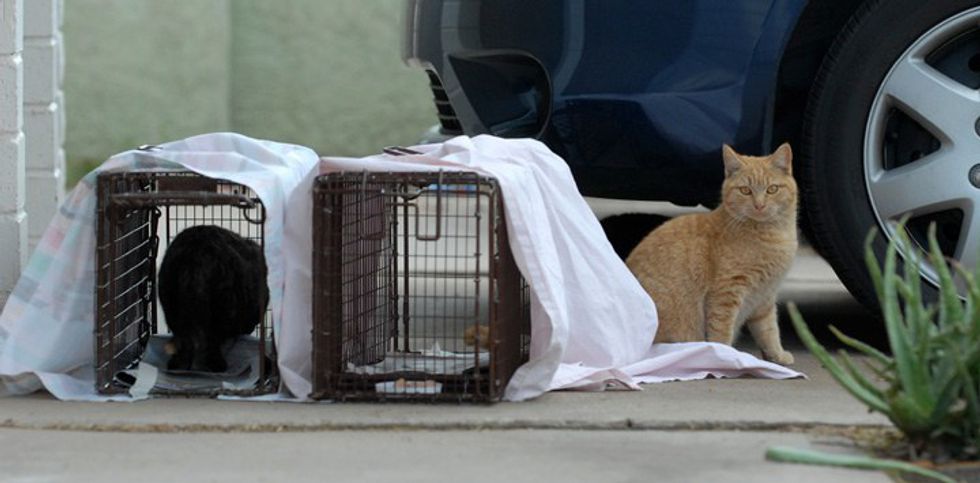
Trap-Neuter-Return is Best Friend's nationwide program to help end homelessness of cats: too many cats are homeless. However, not all stray cats are negative for the environment. They keep pests and unwanted animals in check; providing the role of predator for natural environmental cycles. Best Friends recognizes the community cats role, and they keep the environmental order with minimal disruptions. The process is fairly simple: strays are trapped, spayed/neutered at a Best Friends-partnered clinic, and then returned to where they came from to keep the natural order.
Why Does it Work?

TNR is unlike the trap-kill programs of the past. That system is pretty brutal to the cats and doesn't recognize the fact that strays can be adopted and are useful to communities. The euthanized community cats that are also replaced by other strays and those new cats continue to breed. Because many of the community cats are spayed/neutered, the population of feral kittens is reduced significantly yearly. TNR also helps limit breeding-related behaviors, like spraying and howling. This system has been implemented all over the country, including my home city of Baltimore!
What Can You Do?
Community cats are found in so many neighborhoods, and animal shelters can't get to them all. If you want to know if your community cat has already been spayed/neutered, look for the ear tip/notch on the left ear. This is the universal sign that this cat has already been fixed. If not, please contact your local shelter and notify them of a community that needs to be fixed. You can also keep a lookout for any kittens, and again let a shelter know so the kittens can be fixed and adopted. During the winter months, a shelter for the cats is much appreciated!

Community cats are not the only animals that need help. Millions of adoptable pets are in shelters daily, needing good homes. If adoption isn't an option, monetary and material donations are always welcome and appreciated!
If you're interested in your community cats, visit http://utah.bestfriends.org/our-programs/community...
For information about Best Friend's programs: http://bestfriends.org/our-work
Interested in volunteering? http://bestfriends.org/sanctuary/volunteer/volunte...
 We Thank You! Together, We Can Save Them All.