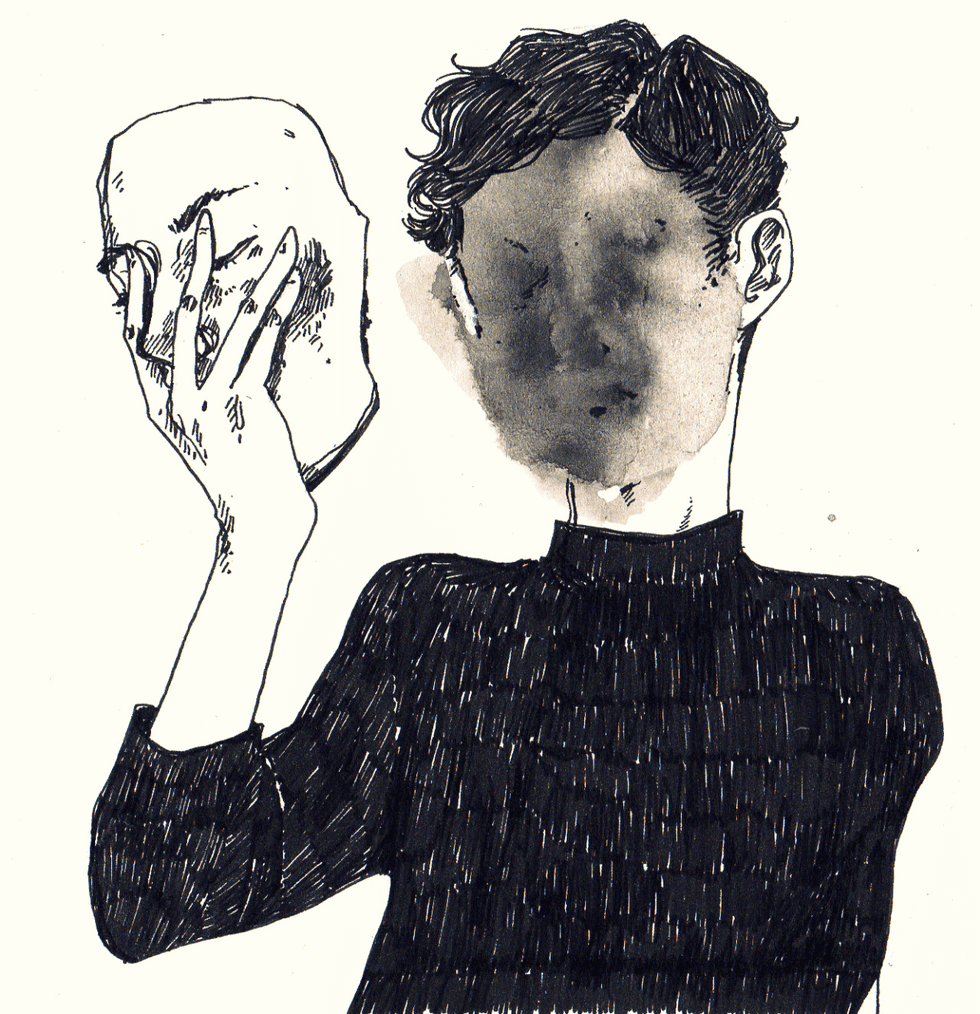
Certain places on the internet, which are almost reserved for female-presenting people, overflow with self-focused positivity. Someone’s process of healing can occur in conjunction with a reliance on a quasi-private, wholly-public cyberspace. When people feel down, they turn to the internet — you scream into the void, you breathe, you feel better.
Within this void are pockets of intense love and unconditional acceptance, specifically for girls struggling with body image. And now, instead of girls trying to prove to themselves that they are beautiful (whatever that means), they create new concepts of self.
This entire movement is rooted in the rejection of beauty standards — and, consequently, of beauty itself. Aside from the very rigid beauty standards plaguing our Westernized society, there is no objective definition of “beauty.”
Knowing this, women, whose entire identities as created by outside observers are based on their perceived beauty or lack thereof, remain stuck in a kind of limbo. How do we define ourselves if not by our beauty? How do we quantify our appearance-based worth, if we have any, besides on a scale of one to ten?
The truth is, the idea of beauty is so much flimsier than your self-concept could ever dream of being. Throw out the idea that beauty has to be beautiful. Without the cumbersome label, people can gain valuable insight into their own identities.
Now that beauty isn’t an issue, we can be ugly all we want. I see the concept of ugly in the same way I see the concept of fat — both are just adjectives that people can choose to identify with as part of their self-image. More specifically, we are allowed to revel in the (seemingly) gross aspects of our bodies.
I remember one summer night, sitting on my bedroom floor with my best friend. I was hunched over, and I saw very clearly the folds of fat created, squished, between my top and my shorts. Instead of moving to make my stomach flatter, I admired the rolls. My midriff was damp with now-cold sweat, my hair was greasy from extended exposure to my face or vice versa (I never know the origin of my grease).
I looked up at my friend, revelatory, and said, “I’m like totally a fat lizard. I’m so swampy.” I was ecstatic with my words as soon as I spoke them. “Swampy!” I repeated. It was so perfect, so fitting for me. By some standards I was ugly, but surely I was worthy of other, more specific adjectives. Although I’m OK with “ugly,” my newfound word and corresponding identity gave me a unique view of myself. Only by embracing my grossness did I discover this unbelievably accurate concept of self.
The sense of liberation, which comes with creating your own organic identity, is unreal. You feel responsible for your own worth, your own sense of self. You do not have to shove yourself into a mold of “beauty” or some preconceived, predesigned descriptor. Grossness doesn’t always have to factor into this liberation, but it almost comes with the rejection of beauty — we sweat, we spit, we bleed, and yeah, it’s gross; but it’s who we are (and it’s awesome and honest). I have two celestial-looking friends who take Snapchat videos of themselves spitting, streams flowing from their lips, smiling. I want to call it beautiful, and now I can. We took beauty as it was, ripped it up, turned it inside out, and now we’re beautiful in our own ways. The thing is, we’re the ones manipulating beauty now, and we have control.