
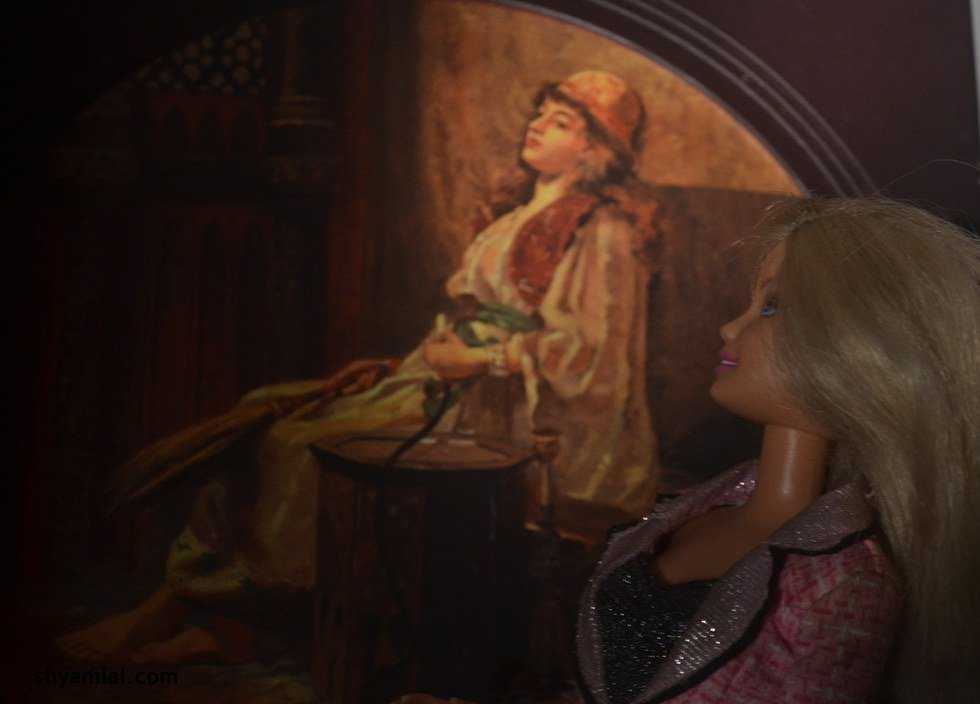
When I was a kid, my parents didn't give me Barbies to play with. They felt that the dolls, with their unrealistically long limbs, and their tiny waistlines contrasting with large busts, didn't promote good body image. They wanted me to grow up knowing that femininity is so much bigger than the impossible body ideals society comes up with, so when someone gave me a Barbie as a gift, my parents warned me, "You can play with it as long as you don't think you have to look that way."
Recently, however, Barbie has undergone a radical makeover: no longer shape-shifting along with the vacillating beauty standards of different decades, she stands changed into something more diverse, more realistic. Last month, Mattel introduced new petite,curvy and tall Barbies in a wide variety of skin tones, eye colors and hair colors. These new dolls look strikingly more similar to real, healthy women than anything that was available when I was growing up. Their feet are now comfortably flat, no longer permanently arched into high-heel position. Their silhouettes aren't identical anymore - rather than bodies made from identical plastic molds, they now come from a few differently-shaped molds - a step in the right direction.
Little girls need to know that there's no such thing as "the perfect body", but that all bodies of all shapes, sizes and colors are valid and good (and in fact, there are far more body types than just petite, curvy and tall.) If Barbie is going to celebrate the normal, un-idealized human body, I'm definitely more of a fan of her than I was before - although I do recognize that some people argue that Barbie has been a good role model all along, because of her ambitious array of professions - ranging from astronaut to military officer to surgeon. Add the wide range of vocations to the wider range of bodies she now has, and Barbie seems to offer an increasingly edifying influence on girls - and not only girls...
Last year a Mattel ad featured a chipper young lad, affirming that boys do, in fact, enjoy playing with dolls. (Legend has it this has been going on for some time.) In all seriousness, all children are interested in all kinds of toys. That's why it's so important that kids are given toys that shape their growing minds in healthy ways, rather than being exposed to anything that portrays femininity in a repressed or stereotyped way. In my opinion, creating dolls that look more like real people than some photo-shopped ideal is a great way to affirm the actual bodies we live in. Way to go, Mattel!