
“Come in!” Melbelys opened the door to me on Sunday afternoon. We were going to make some Puerto Rican food for my anthropology project. To be honest, I was not sure if it was going to be uncomfortable. I know Melbelys because her daughters dance at the studio where I teach, but I had never been to her house before or even had a conversation with her for more than a few minutes. When I had made the post on Facebook pleading for someone to let me interview them for my project, Melbelys immediately volunteered. “My friend is going to be visiting, so I was planning on cooking anyway!” she wrote. I was so grateful. Melbelys welcomed me into her home and introduced me to her friend Martha, a longtime friend of hers and another Puerto Rican woman, visiting from Florida.
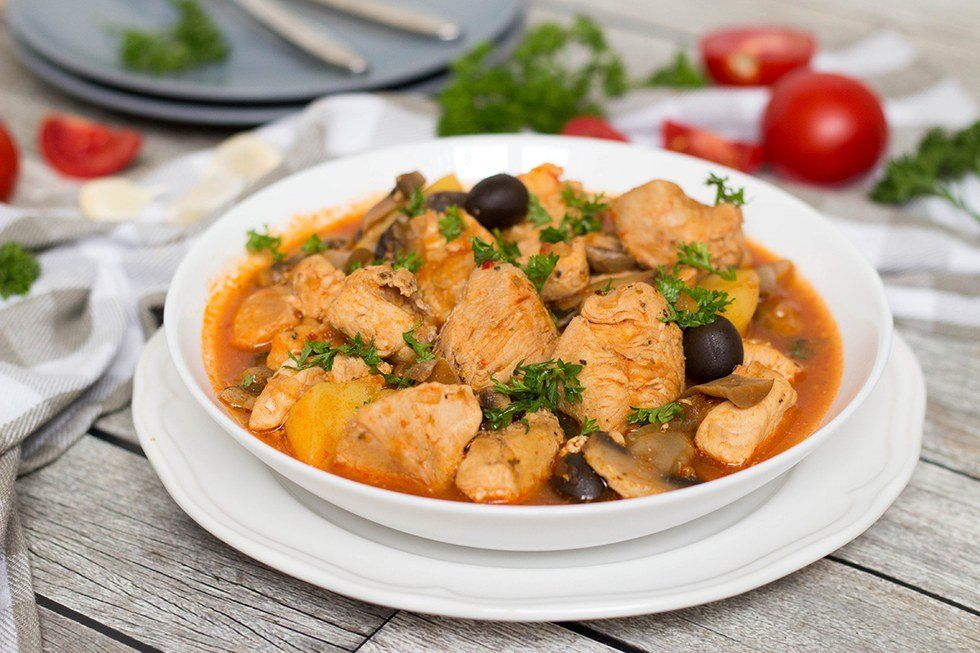
Melbelys told me that she has very specific ways of doing things in the kitchen. However, she gave me the job of peeling carrots and washing potatoes. Together the three of us made arroz blanco with Puerto Rican beans, pollo guisa’o, arranitas (the Spanish word for ‘spider’ used to describe shredded plantane clusters), and a salad with homemade dressing. These are all common dishes enjoyed by people all over Puerto Rico throughout the year. People may use different names for dishes or foods, or they may use slightly varying ingredients according to family tradition/preference, but as Martha said, “everyone in Puerto Rico will know what you’re talking about if you ask for pollo guisa’o.”
Melbelys was born in New York City. When she was six months old, her family moved to a busy metro area in Puerto Rico. Melbelys lived with her parents and sister, and her grandparents were very involved in her life growing up. In fact, the practices of her grandparents in the kitchen still resonate with her today. Melbelys and Martha both say it is normal in Puerto Rican culture for grandparents to teach their grandchildren how to cook.
Melbelys got into the zoology program at North Carolina State Univeristy. Her father started looking into transferring jobs that would allow the family to relocate to North Carolina so that the family could be together. When she came to the US, she knew some English, but the language barrier was greater than she expected. She decided to go to a community college for a year while she acclimated to life in the US and worked on her English, and that is where she met Martha. Melbelys said the biggest differences between life in Puerto Rico and life in the United States are the relationships between people. “Here, people say, ‘You are welcome to come anytime’ but they don’t really mean it. It’s just something you say to be polite. If you want to come over, you have to call beforehand. In Puerto Rico, you don’t have to call! The door is open to you.” Martha added, “In Puerto Rico, we take you in as family immediately. My friend is my sister, my cousin, even if I just met her.”
In Puerto Rico, rice is a staple in any and every meal, and never just plain rice – always with beans, other vegetables, or something else to flavor it. “I could make rice for my family at every meal for a week, and I would never make the same rice twice,” said Melbelys as she dragged a twenty pound bag of rice out from her pantry. “No, you could make rice at every meal for a MONTH and never make the same rice twice!” retorted Martha.
Melbelys retrieved a small green pumpkin from her freezer and started cutting it to add to the beans. Pumpkins are grown year-round in Puerto Rico, and used in a variety of dishes. Martha told me that green pumpkins are like potatoes: the skin is edible, and orange pumpkins are more like watermelons, the “shell” should not be eaten. Melbelys said that when she got to the United States, she went looking for pumpkins at the grocery store, and a clerk broke the news to her that they only carry pumpkins in the fall. A staple in her diet and cooking, she was shocked to hear this, but now she has a solution to her dilemma. She will stock up on pumpkins in the fall, and freeze them. The pumpkin stash will usually last her family through the spring time.
For Melbelys, food is a way of bringing people together. “(I like to prepare) any kind of food, for anyone. Where one person eats, ten can eat.” She told me that she makes a delicious flan. “Oh, I love flan,” I said. The ladies quickly assured me that I “have never had real flan.” Martha said that Puerto Rican flan is cheesy rather than egg-y, almost creamy like a cheesecake. Melbelys proudly told me that a cook in a Mexican restaurant wanted her flan recipe, but she refused to give it to him. “I’ll make it for you and bring it to you, but you can’t have my recipe!” she said.
As we sat down to eat our delicious meal, I thought about how I had experienced many of the elements of Puerto Rican “kitchen culture” that Melbelys and Martha had described to me. I was welcomed in with open arms when they barely knew me, and put me to work as well. Melbelys must have been reading my mind, because she said, “Cooking with you two is like cooking in Puerto Rico. Something that should take thirty minutes ends up taking hours because we are all just talking, enjoying the company.” I looked at the clock and realized that I had been there for five hours! Time flew by, but I loved hearing the two old friends reminisce about their home and the food that made their childhoods special. I asked them if they had any memories tied to the specific food we made that afternoon.
Martha told me that this was the first time she had homemade Puerto Rican food in years, so it was bringing back lots of good memories for her. As for Melbelys, she said every Puerto Rican dish reminds her of her grandparents. Her grandfather would make the same salad that we were eating, every day and now Melbelys says her family eats it almost every day as well. She remembers shredding the plantanes for the arranitas with her grandmother: “I couldn’t shred them right so my grandma would say that I wasn’t making spiders, I was making ‘ants! … I try to do everything like my grandmother did. When I close my eyes, I feel like I’m cooking with her,” Melbelys shared. “When you’re out of your country, the closest you can get to home is your kitchen.”